Forgotten Dairies
When Fuel Prices Rise, The Common Man Pays The Price -By Isaac Asabor
The common man should not carry the entire burden of global energy crises. For millions of Nigerians struggling to survive in cities like Lagos, fuel price increases are not abstract economic developments. They are daily reminders of how fragile household finances have become.

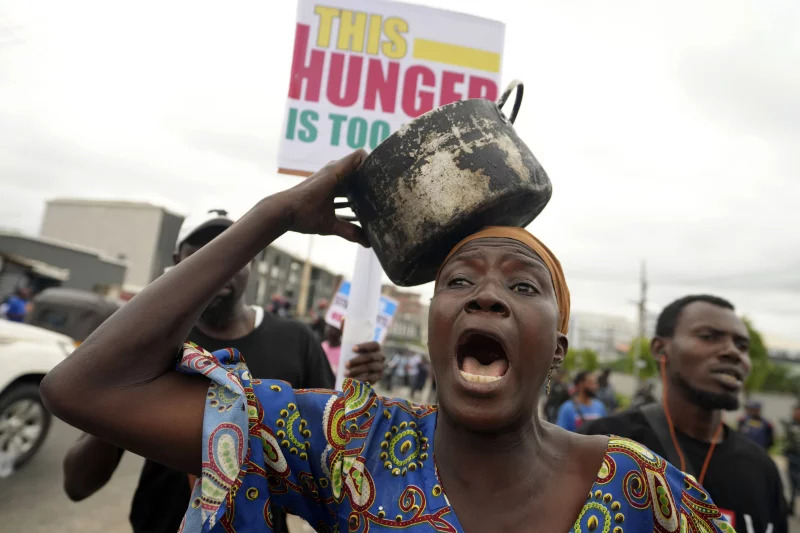
Every time the price of fuel rises, economists reach for technical phrases, “negative supply shocks”, “exchange rate pressures”, and “global market volatility.” But for the ordinary Nigerian, it simply means one thing: life just got harder.
The current surge in global oil prices did not start in Nigeria. It is tied to growing geopolitical tensions in the Middle East, particularly conflicts involving countries like Iran and the threat of disruption around the Strait of Hormuz, one of the world’s most critical oil routes. Nearly a fifth of the world’s oil supply passes through that narrow waterway. Whenever tensions rise in that region, global crude prices quickly follow. Within weeks, oil prices can surge past $100 per barrel, sending shockwaves through global energy markets.
But while many countries feel the impact, Nigeria experiences it differently, and more painfully. In cities like Lagos, the consequences of fuel price increases are immediate and visible. The city wakes up each morning to the roar of buses, taxis, motorcycles, and delivery vans moving millions of people to work. Transport is the lifeblood of Lagos, and fuel is the blood in that system. When pump prices rise, transport operators adjust fares almost overnight.
For the average worker who commutes daily from suburbs such as Ikorodu, Badagry, Mowe or Iyana-Ipaja to the business districts of the island or some other business districts in the mainland, like Ikeja, the experience is usually not a joking matter. A transport fare that used to cost ₦500 suddenly becomes ₦800 or ₦1,000. For someone earning a modest salary, this means a painful choice: spend more of an already stretched income on transportation or reduce spending on food, healthcare, or school fees.
This is how fuel price increases quietly drain household budgets. They do not arrive as a single large bill. Instead, they creep into every corner of daily life.
Food prices are often the next casualty. Nigeria’s major food supplies travel long distances before reaching urban markets. Tomatoes from the north, rice from farms across several states, onions, yams, and vegetables all rely on diesel-powered trucks to reach markets in cities like Lagos. When fuel prices rise, the cost of transporting these goods rises as well.
Traders pass these additional costs to consumers. The bowl of Garri becomes more expensive. The price of rice increases. Pepper, tomatoes, cooking oil, all begin to inch upward. What started as a global oil price shock gradually became a household food crisis.
For families already struggling with inflation, this is devastating. A salary that once covered basic expenses begins to fall short. Parents reduce meal portions. Children are pulled out of private schools and transferred to cheaper alternatives. Health concerns are postponed because clinic visits now compete with transportation costs and rising food bills.
The ripple effects extend even further. Small and medium-scale businesses, the backbone of Nigeria’s urban economy, are among the hardest hit. In markets across Lagos, from electronics traders in Computer Village to tailors in Mushin and food vendors in Surulere, fuel costs determine whether businesses survive or collapse.
Many businesses rely heavily on generators due to unreliable electricity supply. When petrol or diesel prices increase, the cost of running these generators rises sharply. Shop owners must then decide whether to absorb the extra costs, increase prices, or shut down operations earlier to sav fuel. Sincerely put, none of these options is good.
If prices increase, customers buy less. If operating hours are reduced, revenue drops. If costs become unbearable, some businesses simply close. Each closure means lost jobs, lost income, and another household pushed closer to poverty.
The logistics sector faces similar pressures. Delivery companies transporting goods across cities and states see their operating expenses soar. These costs are eventually reflected in higher prices for everyday products, from household goods to clothing and building materials.
What begins as a fuel price increase soon becomes an economy-wide inflation spiral. Nigeria’s vulnerability to these shocks is largely self-inflicted. Despite being one of the world’s major crude oil producers, the country still depends heavily on imported refined petroleum products. In other words, Nigeria exports crude oil but imports the petrol it consumes. This paradox has haunted the country for decades.
In fact, when global oil prices rise, the cost of importing refined fuel rises as well. When the naira weakens against the dollar, the situation becomes even worse because fuel purchases are made in foreign currency. The combination of high global prices and a weak currency make domestic pump prices extremely volatile.
In fact, the removal of fuel subsidies has further exposed Nigerians to these fluctuations. For years, subsidies were used to keep fuel prices artificially low. Economists frequently criticized the policy, arguing that it was expensive, inefficient, and prone to corruption. In many respects, those criticisms were valid. However, subsidies also served as a buffer that shielded ordinary Nigerians from sudden global price spikes.
With the subsidy largely removed, Nigerians now face the full force of global oil market volatility. Meanwhile, many governments around the world actively intervene during energy price shocks to protect their citizens. Some release strategic petroleum reserves to stabilize supply. Others introduce temporary subsidies, tax reductions, or price caps to prevent fuel costs from overwhelming households and businesses.
These measures are not always permanent. In many cases, they are short-term interventions designed to help citizens survive periods of economic turbulence. Nigeria could consider similar strategies.
Temporary subsidies, targeted transport support, or relief measures for critical sectors such as agriculture and logistics could help cushion the immediate impact on citizens. These policies would not necessarily represent a return to the unsustainable subsidy systems of the past. Instead, they could serve as emergency stabilizers during periods of extraordinary global volatility. Without such interventions, the social consequences may become more severe.
When the cost of living rises faster than incomes, poverty deepens. Families fall into debt. Small businesses close. Youth unemployment increases. Frustration grows within communities that already feel economically marginalized.
The danger is that economic hardship does not remain confined to financial statistics. It spills into social stability, public health, and long-term national development.
Fuel prices affect far more than transportation. They influence the cost of electricity generation, food production, construction, manufacturing, and trade. When energy becomes expensive, every other sector of the economy becomes strained.
Ultimately, the solution lies in structural reform. Nigeria must expand its domestic refining capacity, strengthen the value of its currency, improve energy infrastructure, and reduce dependence on imported fuel.
Until these deeper problems are addressed, the country will remain vulnerable to every global oil market shock.
But structural reforms take time. Refineries cannot be built overnight, and currency stability cannot be achieved instantly. In the meantime, the government has a responsibility to protect its citizens from the worst effects of economic turbulence.
The common man should not carry the entire burden of global energy crises. For millions of Nigerians struggling to survive in cities like Lagos, fuel price increases are not abstract economic developments. They are daily reminders of how fragile household finances have become.
Every increase in pump price echoes through transport fares, market stalls, generator costs, school fees, and family meals.
And unless deliberate action is taken, that burden will continue to fall on those least able to bear it, the ordinary citizens whose lives are shaped, day by day, by the rising cost of simply getting through tomorrow.