In the Holy Scriptures, God once asked a searching question: “Whom shall I send, and who will go for us?” (Isaiah 6:8). It was not merely a question of availability, but of disposition, purpose, and responsibility. That ancient question echoes with painful relevance in the present circumstance of the Tiv people—a nation within a nation—crying out today not for rhetoric, but for healing; not for recrimination, but for reassurance; not for division, but for survival.
It is against this moral and historical backdrop that the sad events surrounding this year’s Tiv Day celebration in Gboko—the capital of the Tiv nation—must be examined. Tiv Day is not an ordinary cultural festival. It is a sacred civic space, meant to foster unity, collective memory, reconciliation, and hope among a people who have suffered deeply from violence, displacement, and mass deaths in recent years. It is a day for balm, not bile.
Yet, by widespread reports, the event was turned into something else entirely.
The presence of Senator George Akume, Secretary to the Government of the Federation (SGF), at Tiv Day was not incidental. He attended as the official representative of President Bola Ahmed Tinubu. In constitutional and political terms, such representation is not symbolic theatre. When a high-ranking official is formally designated to represent the President, his words, tone, silences, and conduct are, in effect, the words, tone, silences, and conduct of the President himself—unless expressly disowned.
This is the crux of the matter.
Instead of offering a statesmanlike, unifying message to a traumatized people living under the shadow of insecurity, Senator Akume is reported to have used the occasion for sharp, vitriolic, and divisive political commentary. At a time when the Tiv nation is burying its dead, counting its displaced, and wondering whether it still fully belongs in the Nigerian project, such an approach was, at best, insensitive—and at worst, incendiary.
One must therefore ask, soberly and without malice: Was this the message President Tinubu sent to the Tiv people?
If not, why has the Presidency not clarified, corrected, or distanced itself from the reported conduct and utterances of its emissary?
Representation matters. In diplomacy, governance, and conflict management, emissaries are chosen precisely because they stand in for authority. Their presence communicates intent; their speech signals policy; their posture reveals priorities. Consequently, all actions and non-actions of the SGF at Tiv Day—what he said, what he chose not to say, the pain he acknowledged or ignored—are inevitably read as the actions and non-actions of President Tinubu.
This is especially troubling given the broader context.
The Tiv people have suffered grievous losses in recent times—entire communities wiped out, families shattered, livelihoods destroyed. Benue State has become emblematic of Nigeria’s unresolved security crisis. It is therefore not insignificant that a delegation of American congressmen recently visited Benue, drawing international attention to the humanitarian and security dimensions of the crisis. That visit alone should have signaled to the Presidency that the eyes of the world are watching, and that sensitivity, restraint, and healing rhetoric are urgently required.
Against this backdrop, the reported divisiveness of the President’s emissary at Gboko raises disturbing questions about social dynamics and political intent. What game, if any, is the Presidency playing? Does it stand firmly behind the reported vituperations attributed to its representative? Was Tiv Day used—deliberately or carelessly—as a stage to prosecute internal political battles, regardless of the fragile security environment? And if so, to what end?
History teaches that divided communities are vulnerable communities. Words spoken by powerful figures can either lower the temperature or ignite embers into infernos. In a region already soaked with grief and fear, careless or combative rhetoric carries dire security implications. It risks deepening internal fractures, weakening communal solidarity, and emboldening external aggressors who thrive on social disintegration.
Nigeria does not need such outcomes. The Tiv nation certainly does not.
The Presidency bears a moral and constitutional responsibility to assist in healing the land. This includes not only deploying security forces, but also deploying empathy, justice, and inclusive leadership. When a presidential representative fails—by action or omission—to embody these values, the burden shifts squarely to the President to clarify where he stands.
Silence, in such moments, is not neutral. It is interpretive.
The Tiv people are not asking for special treatment. They are asking for recognition of their humanity, their pain, and their right to communal survival within Nigeria. They are asking for leadership that understands that unity is not enforced by intimidation, but nurtured through respect and truth.
“Who shall we send, and who will go for us?”
In today’s Tiv context, that question must also be turned toward Aso Rock. When the President sends a representative to a wounded people, does he send a healer—or a hardliner? A bridge-builder—or a provocateur?
The answer matters. Not just for Tiv Day. Not just for Benue. But for the soul of Nigeria itself.
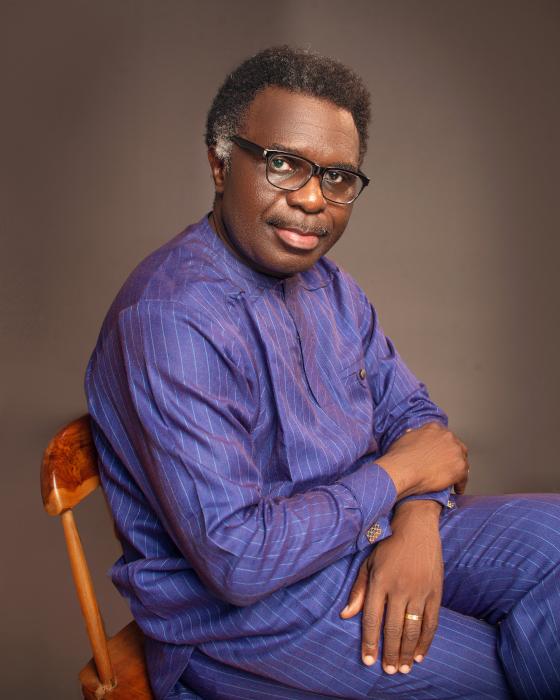
LEONARD KARSHIMA SHILGBA is a professor of mathematics and public commentaror




























You must be logged in to post a comment Login