
Breaking News
World leaders condemn Iran’s attack on Israel
NATO spokesperson Farah Dakhlallah said the military alliance condemned Iran’s attack and is “monitoring developments closely”, warning it is “vital that the conflict in the Middle East does not spiral out of control”.

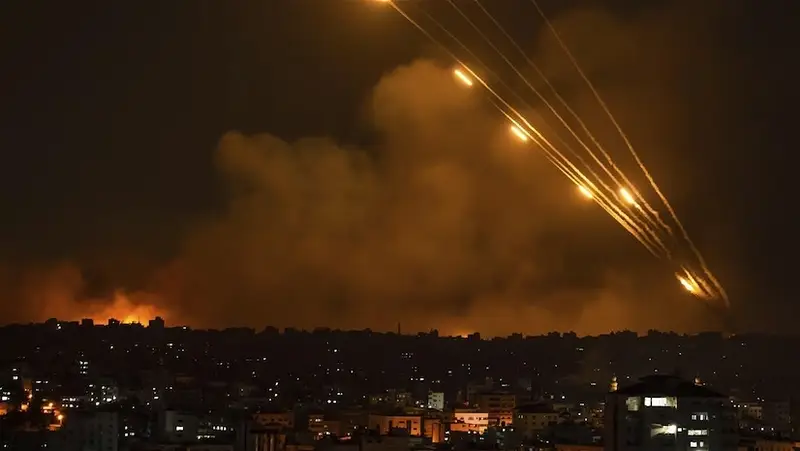
Nations from all around the world denounced Iran’s attacks on Israel Wednesday, raising concerns that they may worsen the region’s already unstable situation.
At the same time as the US and its allies are frantically trying to prevent a spiral into full-scale conflict, Israel is discussing Iran’s attack response in the Knesset.
According to Israeli media sources, Israeli officials claim that Prime Minister Benjamin Netanyahu’s war cabinet supports taking revenge on Iran for its widespread drone and missile attack, but they disagree on the best time and degree of action.
Israeli cabinet debates response to Iran attack
The five-member cabinet, which includes Benny Gantz, Yoav Gallant, and Netanyahu as decision-makers, convened yesterday and was scheduled to get together again for more talks.
Even during Iran’s attack, according to The Times of Israel, which cited numerous Hebrew media sites, Gantz and his political buddy Gadi Eisenkot, an observer in the war cabinet, advised retaliation.
According to Israel’s Channel 12, the Israeli air force was already in place to intercept the approaching drones and missiles, which is one of the reasons Gallant, Army Chief Herzi Halevi, and others were against the proposal.
“Israel against Iran, the world against Iran. This is the result. That is a strategic achievement which we must leverage for Israel’s security.”
Mr. Gantz would not rule out a follow-up attack on an Iranian target or the first overt Israeli strike inside Iran; Israel has frequently targeted Iran’s nuclear programme through cyberattacks, assassinations of scientists and officials, and other means.
However, there may still be time for President Joe Biden to get the diplomatic reaction he desires from the G7, the wealthiest Western nations, at the summit he has called.
When Israel struck Iran’s embassy complex in Damascus two weeks ago, the conflict that has erupted throughout the Middle East since Hamas attacked Israel took a new turn. On April 1, an airstrike killed a senior general, his deputy, and more aides.
Iran attack on Israel: What we know
Iran retaliated against Israel for the deadly attack on Tehran’s consulate in Damascus on April 1 by launching its first-ever direct attack on Israeli soil late on Saturday.
Experts claim that Israel was able to neutralise the majority of the invading drones and missiles, but Iran purposefully tried to maintain the attack’s intensity below what was thought to be the point at which Israel would unavoidably retaliate.
Calculated attack by Iran
Iran’s foreign minister said it had announced Saturday’s retaliatory attack in advance, which it called “limited, minimal”, and “aimed at punishing the Israeli regime”.
Several experts said this shows Iran was seeking a show of strength with its attack, but without sparking an escalation.
Julien Barnes-Dacey, Middle East programme director at the European Council on Foreign Relations, said on X that Iran’s “weak” drone showing was meant to signal that Tehran wanted to “avoid a wider war”.
US political scientist Ian Bremmer called the situation “stressful”, but he also suggested it was “best to breathe a bit”.
United Nations
UN Secretary-General Antonio Guterres condemned “the serious escalation”.
“I am deeply alarmed about the very real danger of a devastating region-wide escalation,” he added, calling on parties to “avoid any action that could lead to major military confrontations on multiple fronts in the Middle East”.
European Union
President of the European Commission Ursula von der Leyen called on Iran to “immediately cease” attacks, saying in a message on X, formerly Twitter, that “all actors must now refrain from further escalation and work to restore stability in the region”.
Foreign policy chief Josep Borrell said the bloc “condemns in the strongest terms” the attack, calling it “an unprecedented escalation and a threat to regional security.”
G7
The G7 group expressed its “full solidarity and support to Israel and its people and reaffirm our commitment towards its security”, the group said in a statement following video talks.
“We demand that Iran and its proxies cease their attacks, and we stand ready to take further measures now and in response to further destabilising initiatives”, it said.
NATO
NATO spokesperson Farah Dakhlallah said the military alliance condemned Iran’s attack and is “monitoring developments closely”, warning it is “vital that the conflict in the Middle East does not spiral out of control”.
China
Beijing also urged restraint, calling the attack “the latest spillover of the Gaza conflict” and calling for the implementation of a recent UN Security Council resolution demanding a ceasefire.
“China calls on the international community, especially countries with influence, to play a constructive role for the peace and stability of the region.”
United States
US President Joe Biden promised “iron-clad” support for Israel after holding an urgent meeting with top security officials.
“Our commitment to Israel’s security against threats from Iran and its proxies is iron-clad,” Biden said on X, posting a picture of the meeting in the White House Situation Room.
White House National Security Council spokesman John Kirby said on NBC’s “Meet the Press” later that “we don’t want to see this escalate”.
“We’re not looking for a wider war with Iran”, he said.
Britain
UK Prime Minister Rishi Sunak condemned the “reckless” strikes, which he said “risk inflaming tensions and destabilising the region”.
He called for “calm heads to prevail” and added Britain will “be working with our allies to de-escalate the situation”.
Canada
Canadian Prime Minister Justin Trudeau said Ottawa “unequivocally condemns Iran’s airborne attacks”, adding: “We stand with Israel.”
Egypt
Cairo expressed “deep concern” at the escalation of hostilities and called for “maximum restraint”.
The foreign ministry also warned of the “risk of the regional expansion of the conflict”, and added Egypt would be “in direct contact with all parties to the conflict to try and contain the situation”.
France
French President Emmanuel Macron said on X: “I condemn in the strongest terms the unprecedented attack launched by Iran against Israel, which carries the risk of destabilising the region”.
Germany
German Chancellor Olaf Scholz condemned the Iranian attack as “irresponsible and unjustifiable”, his spokesman said.
Foreign Minister Annalena Baerbock said the attack took the region to the “edge of a precipice”.
Indonesia
Indonesia’s foreign ministry said it was “deeply concerned” and called on the UN Security Council “to act immediately to de-escalate tensions and continue working towards lasting peace in the Middle East, including by ending the illegal occupation of Palestine and various violations of international law by Israel”.
Iraq
Iraq’s President Abdel Latif Rashid called for a “reduction of tensions”, and warned against the “spread of conflict” and emphasised “the need to stop the aggression against the Gaza Strip and to find a solution to the Palestinian question, given this is a fundamental element to the stability of the region”.
Italy
Prime Minister Giorgia Meloni condemned the attack and said she feared “destabilisation of the region”.
Qatar
Qatar expressed “deep concern” following the strikes and called on “all parties to halt escalation” and “exercise maximum restraint”.
The gas-rich emirate, which has been engaged in weeks of talks with Israel and Hamas, urged the international community to “take urgent action to defuse the tension and de-escalate.”
Russia
Moscow expressed “extreme concern over the latest dangerous escalation in the region” and urged all sides to “show restraint”.
“We are counting on the regional states to solve the existing problems with political and diplomatic means,” the foreign ministry said.
Saudi Arabia
The Saudi foreign ministry called on “all parties to exercise utmost restraint and spare the region and its peoples from the dangers of war”.
It urged the UN Security Council “to assume its responsibility towards maintaining international peace and security”.
South Africa
Pretoria, which has brought a lawsuit against Israel at the top UN court over its offensive against Hamas in Gaza, said it was “gravely concerned” over possible escalation of hostilities in the region. “South Africa has continuously stressed that irrespective of whether states believe that their use of force is lawful, it is never wise to resort to war as inevitably, it is ordinary people who bear the brunt of conflict”, its foreign ministry said in a statement.




















You must be logged in to post a comment Login