World News
Adieu Ron Kenoly: The Man Who Musically Evangelized Nigeria -By Isaac Asabor

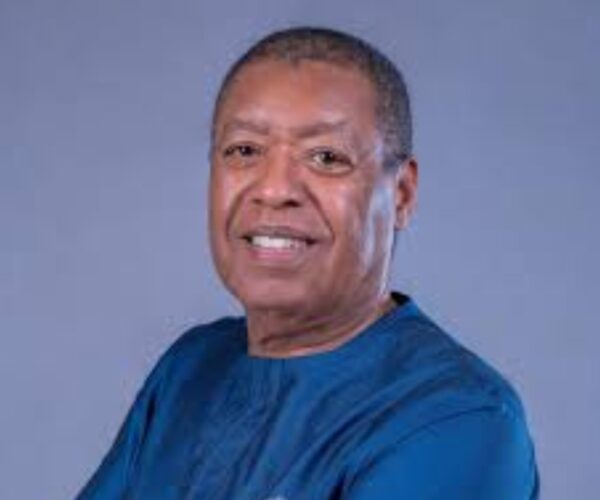
The Christian world woke on February 3, 2026 to the news that a monumental voice in worship music had fallen silent. Ron Kenoly, the American worship leader, singer, and songwriter whose voice became familiar in Nigerian churches and living rooms alike, died at the age of 81. His longtime music director, Bruno Miranda, announced his passing on the singer’s official Instagram account early on Tuesday morning, noting that he died peacefully. No official cause of death has been disclosed.
However, it will be recalled that on June 17, 2024, Ron Kenoly’s son, Samuel Kenoly, took to Instagram to disclose a health scare involving the gospel legend. The post, which showed Ron Kenoly seated on a hospital bed and surrounded by his three sons, revealed that he had been battling pneumonia and was subsequently hospitalized after experiencing adverse reactions from conflicting medications. Samuel reassured followers that his father was responding to treatment and recovering steadily. “The last couple of days we’ve had some scares, Dr. Ron Kenoly picking up pneumonia and then having adverse effects from conflicting medications. But God is good! He’s getting better; in his own words, ‘I’m out of the woods, but not out of the swamp,’” he wrote, adding, “Thank you for all of your many prayers. So grateful God hears us when we call.”
In Nigeria, the news rippled through Christian communities across Lagos and Abuja, Port Harcourt and Kano, like a sudden stillness in a song once vibrant. For decades, Ron Kenoly’s soundtracks had become the musical heartbeat of worship services, evangelistic rallies, youth gatherings, and family devotion moments. In Nigeria, where spirit meets rhythm in worship, Kenoly did something rare: he helped evangelize the country not through sermons, but through music that felt both spiritual and deeply human.
Kenoly’s influence in Nigeria was never accidental. In a landscape where gospel music often struggled to balance solemnity with expression, he found a groove that resonated with the Nigerian spirit. His sound was jubilant without being shallow, rooted in Scripture without feeling distant from everyday life and unmistakably Christian without alienating those outside formal church circles.
Songs like “Ancient of Days,” “Jesus Is Alive,” “Lift Him Up,” and “Anointing Fall on Me” were more than tracks on a tape or CD. In Nigerian churches at the turn of the 21st century, they became celebratory anthems: bridges between theology and emotion, between doctrine and dance. In a country where worship physically expresses belief, where hands are lifted high and feet clap in rhythm, Kenoly’s music seemed custom-built for the cultural moment.
Beyond imported recordings, Kenoly’s impact deepened when he directly engaged Nigeria’s contemporary worship movement. A notable example was his collaboration with Nigerian-based worship leader Ese Chekwa on the high-energy single “Worship Anthem.” Released on June 21, 2018, and later listed on some platforms under Chekwa’s album “His Glory Revealed”, the song blended Kenoly’s seasoned praise leadership with Nigeria’s evolving worship sound. Credited to Ese Chekwa featuring Ron Kenoly, the track, running just over three minutes, found wide circulation on platforms such as Apple Music, Audiomack, Anghami, and Boomplay. More than a collaboration, it symbolized Kenoly’s willingness to step into Nigeria’s worship space, not as a distant icon, but as an active participant in its musical evangelism.
For the unversed, Ron Kenoly served in the United States Air Force from 1965 to 1968. During his tenure in the military service, he performed with a cover band, the Mellow Fellows. Later, after his service, he returned to LA and pursued a full-time music ministry.
That his praise style was embraced across congregational labels, Pentecostal, charismatic, mainline, and beyond, speaks to how deeply he embedded musical evangelism into the Nigerian Christian psyche. People did not merely attend to sing; they came to feel. They came to participate. More importantly, they came to believe, sometimes even before they could articulate it in words.
What set Ron Kenoly apart from many gospel artists was not his vocal range or stage presence, though both were formidable. It was his approach to worship as an invitation rather than an argument.
Kenoly did not evangelize through pressure or proclamation; he evangelized through an atmosphere of worship that invited people in, not pushed them away. Nigerian youth in the 1990s and early 2000s learned these songs before learning theological terms. On Sundays, those songs were played in churches; on Mondays, they were hummed in buses, hostels, and markets. That seamless transition from sacred setting to daily life is the mark of true cultural impact.
Even Nigerians with no formal religious affiliation found themselves moved by his sound. His music became a kind of spiritual common ground: uplifting, joyful, and grounded in a language Nigerians inherently understood, rhythm. That crossover effect is evangelism in its most organic form.
To speak of Nigerian worship leadership without acknowledging Kenoly’s imprint is to ignore a key chapter in the story. Worship leaders across Nigeria consciously and unconsciously borrowed from his playbook: extended praise sets, dynamic congregational participation, call-and-response structures, and a kind of physical joy that matched lyrical faith.
Kenoly led with authority but without ego. His style was less about performance and more about leadership into collective encounter. He taught that worship was not a showcase of talent but a space for shared spiritual experience. That lesson resonated deeply in Nigerian contexts where communal expression is not just cultural, but spiritual.
Ministers like Nathaniel Bassey and Dunsin Oyekan have publicly acknowledged his foundational role in shaping their own approaches to worship, and in Nigerian gospel circles, the lament over his passing underscores a collective sense of loss, not only for the man, but for what his music helped build.
Ron Kenoly’s influence was global, but its effect in Nigeria was intensely personal for many. In households where his albums provided the soundtrack to both ordinary Sundays and extraordinary revival nights, people learned to connect praise with presence, not just a song, but an encounter.
For non-Christians in Nigeria who might have been skeptical of faith, his music offered an entry point: vibrant, energetic, and genuine, without a heavy sermon on the other side. It was familiar enough to embrace, yet spiritually anchored enough to challenge. That balance is rare. That is why his music did not just travel here; it took root.
His passing leaves a silence not easily filled. Worship services this coming Sunday will not just miss a familiar soundtrack; they will feel the absence of a sound architect whose work helped define how praise feels in Nigerian churches. Yet while Ron Kenoly’s voice may have quieted, his music continues to speak, in choirs that still lift those songs, in youth movements that still dance to those rhythms, and in everyday believers who still find connection and joy in what he brought to the world.
Ron Kenoly did not preach in the traditional evangelical sense. He did not need to. His music did the evangelism for him, drawing Nigerians into praise, drawing praise into belief, and drawing belief into communal participation. For many in Nigeria, that has been his lasting gift.
As the nation’s worship leaders and congregations reflect on his life and career, the core of his legacy remains clear: he turned worship into invitation, rhythm into revelation, and music into ministry. His passing is mourned not just as the death of an icon, but as the end of a particular season in how worship was felt and lived in Nigeria.
Adieu, Ron Kenoly. The man who musically evangelized Nigeria. Your songs will not be silenced. Your legacy will not fade.