
Economy
Africa’s Food Security: Promotion of Millet Consumption and Cultivation, by Shmuel Ja’Mba Abm

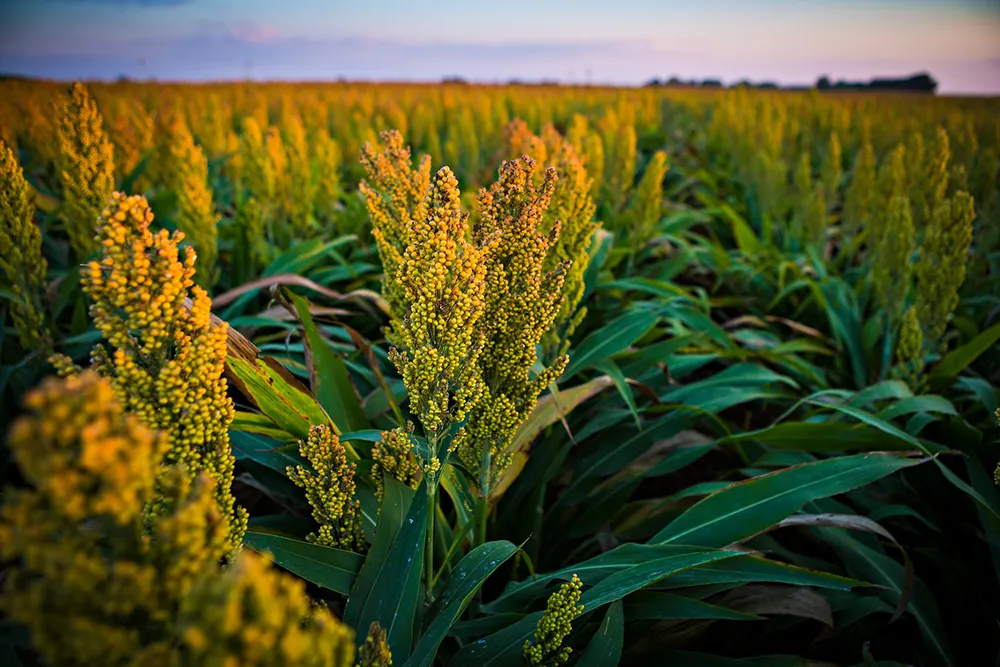
The year 2023 was the year millet was declared by none other body than the world renowned United Nations as the Crop of the Year. Apart from its nutritional values, scientists have discovered, that millet doesn’t only reverse diabetes (type II) but it also prevents the onset of diabetes. When it’s potentials are exploited to the fullest, millet comes as the best of crops to give optimum attention and consideration for food security on the following grounds.
Millet is considered the sixth most important cereal in the world. It is a drought resistant crop and adapts well in less fertile lands. When nursed and transplanted, a single sown grain is capable of shooting several tillers making up to 20 stalks to carry several panicles, which gives it an increased yield per grain, thereby increasing it’s food security measure in density.
A good source of carbohydrates, fibre, minerals, proteins and key vitamins, potential health benefits of millet include protection against cardiovascular diseases. It helps in healthy weight loss and in the management of inflammation in the gut. Millet is also gluten-free.
In Ghana, only pearl and sorghum millet are grown, although several other types of millet is cultivated elsewhere in West Africa, such as fonio. Millet is originally native to the highlands of East Africa with the domestication of finger millet before the third millennium BCE.
Pearl millet is cultivated mainly in the Upper East and in the Upper West Regions, whilst the Northern, North East and Savanna Regions also cultivate sorghum, also grown in the two Upper Regions. Two types of pearl millet grow in Ghana – naara (early bearing millet) and zia (late bearing millet).
Naara millet is processed and eaten in several ways, including freshly harvested and roasted over fire and peeled or eaten from the cob, unlike zia. Both naara and zia are used to prepare local dishes like foroforo, kooko, maasa, zomkom, or tuozaafi – all fermented.
Both naara and zia are used to make kaponu, or buttered zom, using shea butter. Both types could be chewed or eaten in their raw unprocessed state, when dried or freshly harvested. In modern times, tasty biscuits or cakes are made from millet, when the flour is substituted for barley, rye or wheat.
Sorghum is an excellent substitute for barley, rye and wheat for those who can’t tolerate gluten. In general terms, pearl millet or sorghum millet flour is used to do anything barley, rye or wheat flour should do.
It is used to make leavened and unleavened bread. It is used to prepare couscous, including making of fermented and unfermented beverages. It is the raw material for the brewery of pito, name of the indigenous beer.
For the 2023 crop season, an estimated 333,440 metric tons of sorghum was harvested in Ghana. Since 2017, the annual demand of millet grew by an average of 0.2%.
The history of cultivation of millet in Navrongo goes back to the 4,000 or more years of it’s existence. Navrongo is a historic and the second most important town of the Upper East Region in Ghana.
Millet consumption among people within the sahel and savanna regions of West Africa, is rising due to its nutritional values and consciousness in healthy eating habits among the new generation. According to cultures, preparations differ from region to region.
But zomkom is common, from Burkina Faso and Ghana; through Niger and Northern Nigeria, where it is known among Hausa speaking people as kunu. Zomkom or kunu is easy to prepare. A handful or two is enough to serve one person. Zomkom is a drink, with the residue of ground millet eaten after it.
Though others prefer it fermented, zomkom in many homes come unfermented. However, it is uncooked. Ground coarsely, others prefer eating it with pepper and shea butter, after a thorough mixing, kneading and squeezing the flour into palm-sized balls before pouring water into it. The water is drank first. Then the food is eaten scooped in piecemeal. The same mixture could be eaten with sugar and/or milk.
Or when preferred cooked, the coarsely grounded millet flour is poured into a boiling water of mushrooms or a protein of choice with salt, a paste of tomatoes, Bell pepper, chillies and spinach or any preferred green. The quantity is determined according to servings required. Stir till thickened to choice.
Tuozaafi is eaten among sahel and savanna natives. The word tuozaafi is in Hausa, meaning its patronage across Northern Nigeria and Niger, Burkina Faso, Ghana and wherever in West Africa millet is cultivated. Tuozaafi is often prepared, preferably with a small quantity of finely ground flour fermented overnight.
The quantity of water used for the fermentation is according to one’s preference, whether intense or light fermentation. The fermented water is poured out of the container into a larger cooking pot, leaving the fermented flour in the container.
Fresh water is added to the fermented water in the cooking pot and boiled. Then contents of the fermented flour is stirred and drained gradually into the boiling water of mixed fermented water and fresh water in the cooking pot. Stir continuously for a while. Leave to boil into porridge, some of which could be fetched down and drank as kooko.
After the porridge in the cooking pot boils for a while, handful quantities of dry finely ground flour is added gradually and stirred with the porridge. The quantity of dry flour is according to the grade of thickened pulp of porridge sought. Tuozaafi is eaten with okra sauce prepared in the West African style.
Others eat it with peanut butter sauce cooked with protein of choice and ingredients like grounded tomatoes, chillies, cabbage, salt, and aubergine. Add beef or chicken stock to taste, if preferred. Or add dawadawa. Dawadawa is the Hausa word for a local protein-rich fermented and cooked monkey fruit nuts.
The connection to millet cultivation is ancestral, passed on passionately from generation to generation. The Navrongo Millet Experiment Farm is the result and a launch into the future. The prospects are great, according to data and science.
It was a challenge to engage in agriculture at a time the new generation of youth are increasingly westernised, and are under peer pressure hopefully to secure nonexistent-to-secure white collar jobs and live urban lives.
Also, this challenge became intense with uncertainty, when most farmers moved away from the cultivation of millet due to the effects of climate change on rainfall pattern, and declining yield due to several factors of declining soil fertility.
Data, however, puts forward and suggests millet as the future crop, due to the effects of climate change, making the weather drier and hotter, which millet has a proven record of resilience. However, it requires the inevitable development of improved modern agricultural practices techniques to address falling soil fertility and irregular rainfall pattern, which in turn requires the sinking of investment through funding.
The challenge of engagement in agriculture was overcome by the resolve and determination to preserve and maintain an ancient crop, which use in the future is more impactful, imminent and resourceful to generations yet unborn.
This meant a need to modify past practices into modern agriculture to avert challenges in past agriculture practices, by use of improved land preparation methods, such as the use or procured tractor ploughing services. And this comes at a cost, due to rising cost in fuel, in particular diesel, another funding imperative.
Challenge with funding has not yet been overcome, and has become the last hurdle to expand millet cultivation and launch the Navrongo Millet Experiment Farm into mainstream limelight, currently at two acres. The land was underutilised for this season, due to same reason.
Depending on revenue flow in subsequent years, the Navrongo Millet Experiment Farm will expectedly see projected expansion if revenue indicators show positive. Though millet is not highly susceptible to pest attacks, compared to other crops, improved storage is a non negotiable future plan, which needs assistance.
Of course, it makes easier to own a tractor complete with implements to give the project its all. Anything else like funding to finance the drilling of a borehole (s) to supply water for intermittent irrigation is a big boost to the project, too. Injection of working capital to support the project is such a lifeline to sustain the programme into the future
*Shmuel Ja’Mba Abm has extensive scholarly publications that establish him as a leading academic expert in regional geopolitical dynamics and diplomatic relations in Africa. Author of e-monographs on geopolitics, ethnic conflicts, and political philosophy.
























You must be logged in to post a comment Login