
Forgotten Dairies
DAWN and the Northern Consultative Forum: Understanding the Difference Between Development Planning and Regional Advocacy in Nigeria -By Raiyanu Shehu
Whether one agrees with the administration’s priorities or not, the discussion has exposed an important reality: regions that build institutions dedicated to development planning often gain greater capacity to pursue long-term economic transformation.

Nigeria has always been a country where regional voices matter. From the days of the old Western Region under Chief Obafemi Awolowo to the present democratic era, different parts of the country have created platforms to protect their interests and shape their future.
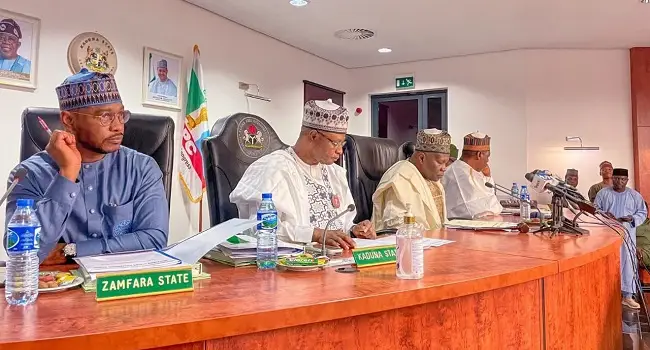
Two of such platforms are the Development Agenda for Western Nigeria (DAWN) Commission and the Northern Consultative Forum (NCF). Although both organizations claim to promote regional progress, they operate with very different philosophies.
Since assuming office, President Bola Ahmed Tinubu has launched several major infrastructure projects that many analysts believe reflect the same priorities DAWN has promoted for years. Some examples are the Lagos-Calabar Coastal Highway to reflect the objective of DAWN on Infrastructure and it’s States connectivity, recreation of the Nigerian Army Training School to Osun & Nigerian Police Academy and recreatiin of Minister of Homeland Security to reflect DAWN objective on Security and Governance, among many examples.
At the commissioning of the first 30-kilometre section, President Tinubu described the project as part of his administration’s effort to improve connectivity, stimulate economic growth, and expand opportunities for investment and commerce.
The DAWN Commission was created as a development institution for the Southwest states of Lagos, Ogun, Oyo, Osun, Ondo, and Ekiti. Its objectives are practical: infrastructure, education, industrialization, agriculture, technology, regional integration, and economic growth.
The Northern Consultative Forum, on the other hand, functions mainly as an advocacy and political engagement platform. It often speaks on issues affecting Northern Nigeria, including security, governance, appointments, constitutional matters, and national policy debates rather than the Human capital projects.
This difference is important because it helps explain why many observers see recent projects under President Bola Ahmed Tinubu as aligning more closely with DAWN’s development philosophy.
What stands out is that the conversation was not primarily political. It was about projects, institutions, infrastructure, investment, and economic coordination.
The Northern Consultative Forum serves a different purpose.
Rather than functioning as a project implementation agency, it largely acts as a pressure group and advocacy platform. It speaks on behalf of Northern interests and participates in national discussions concerning governance, security, federal appointments, economic policy, and constitutional issues. Its influence comes from public engagement, consultations, and political advocacy rather than direct implementation of development projects.
This does not mean one model is superior to the other. However, it means their objectives and methods are fundamentally different.
While DAWN often asks, “What infrastructure should we build next?” the Northern Consultative Forum is more likely to ask, “How does this national policy affect Northern Nigeria?”
Why Critics Raise Concerns
Despite the government’s explanations, critics like Prof. Yusuf Usman argue that many of the administration’s flagship projects appear concentrated around Lagos and the Southwest.
On social media, public debates frequently question whether other geopolitical zones are receiving equal attention, which the answer is not.
Discussions on Nigerian online forums have reflected skepticism about the pace, location, and distribution of infrastructure spending. Some critics believe that projects such as the Lagos-Calabar Coastal Highway risk reinforcing perceptions that the Southwest enjoys greater federal attention because President Tinubu himself comes from the region.
Others argue that commissioning sections of unfinished projects creates political optics rather than delivering complete infrastructure. These criticisms continue to fuel national conversations about fairness and regional balance.
Supporters of the administration with their criminal minded reject the idea that these projects are designed solely for the Southwest. The Presidency and the Ministry of Works have repeatedly described the projects as national economic assets.
The Lagos-Calabar Coastal Highway, for example, is expected to connect several coastal states and open new trade and investment opportunities.
Similarly, the federal government is pursuing the proposed Sokoto-Badagry Super Highway, a major transport corridor that would connect Northwestern Nigeria to Lagos.
According to reports, President Tinubu told lawmakers that the highway would improve national integration, reduce transportation costs, strengthen food security, and expand trade across the country.
Supporters therefore argue that the administration’s infrastructure strategy is national in scope, even if some of the earliest and most visible projects are located in the Southwest.
The debate surrounding DAWN and the Northern Consultative Forum is really a debate about how regions pursue progress. One model prioritizes planning, infrastructure, investment, and institutional coordination. The other prioritizes representation, consultation, and political engagement.
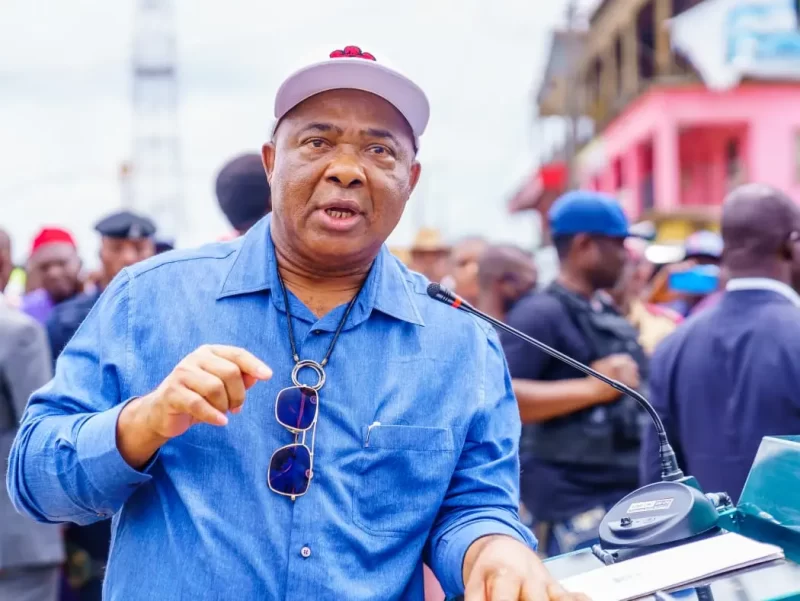
Recent actions by President Bola Ahmed Tinubu, Minister of Works Dave Umahi, Southwest governors such as Babajide Sanwo-Olu and Dapo Abiodun, and development officials like Dr. Seye Oyeleye and Dr. Charles Akinola have brought renewed attention to the DAWN model of regional development.
Whether one agrees with the administration’s priorities or not, the discussion has exposed an important reality: regions that build institutions dedicated to development planning often gain greater capacity to pursue long-term economic transformation.
That lesson may be relevant not only to the Southwest but to every region in Nigeria.
Raiyanu Shehu a concerned citizen and freelance Journalist reporting for public interest can be reach out via alraiyanwanted@gmail.com





















You must be logged in to post a comment Login