
Breaking News
Dollar Sells for ₦1,468 on Black Market as Naira Faces Fresh Pressure
According to the analysts, the recent pressure on the naira does not necessarily point to a structural depletion of the country’s external reserves, but reflects changing demand and supply conditions in the foreign exchange market.

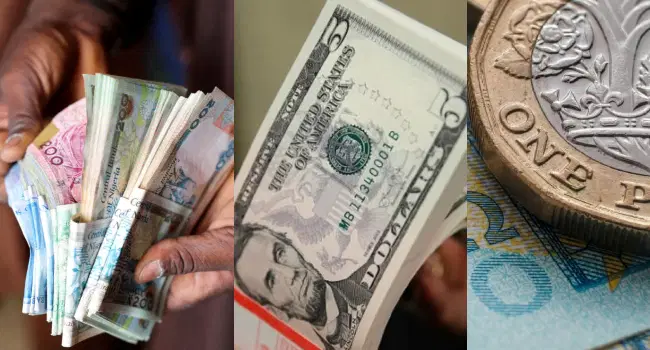
The Nigerian naira extended its downward movement against the United States dollar on Friday, November 20, 2026, with the local currency recording pressure in both the official and parallel foreign exchange markets.
The depreciation comes amid tighter dollar supply and rising demand as businesses and individuals prepare for increased economic activity during the end-of-year festive period.
Dollar Exchange Rate in the Official Market
Data from real-time interbank spot tracking at the Nigerian Foreign Exchange Market showed the dollar trading at ₦1,352.54 in early Friday transactions.
The exchange rate opened at ₦1,351.86 before climbing to an intraday high of ₦1,355.31.
The early morning market performance followed a difficult trading session on Thursday, when the naira weakened to a four-month low based on the Central Bank of Nigeria’s official figures.
CBN data showed that the NFEM weighted average exchange rate settled at ₦1,376.58 per dollar on November 19, while the indicative closing rate climbed to ₦1,388.00.
This was higher than the ₦1,379.99 recorded at Wednesday’s close.
Interbank transactions on Thursday took place between ₦1,370.00 and ₦1,397.00 per dollar.
However, trading activity in the official market recorded a notable improvement despite the naira’s losses. Turnover increased by 59.13 per cent to $800.31 million from $502.88 million recorded in the previous session, with 184 transactions completed.
Black Market Dollar Rate Today
In the parallel market, the dollar exchanged for as much as ₦1,468 on Friday morning, according to quotations from Bureau de Change operators and street currency dealers in Lagos and Abuja.
The latest rates followed Thursday’s trading, when the dollar was quoted between ₦1,461 and ₦1,468.
Informal market buying rates, on the other hand, ranged from ₦1,445 to ₦1,458, with actual quotations depending on location and transaction volume.
The difference between the official and parallel market rates also increased.
Using Thursday’s official closing rate of ₦1,388.00 and the parallel market’s upper quotation of ₦1,468.00, the gap stood at ₦80 per dollar. Earlier in the week, the difference was ₦70.01.
Naira Depreciation and Nigeria’s External Reserves
A comparison with the end of October shows that the naira has lost further ground in both exchange market segments.
At the end of October, the currency traded at ₦1,346.00 per dollar in the official market and ₦1,373.00 in the parallel market. Since then, it has depreciated by ₦42.00 and ₦95.00, respectively.
Meanwhile, Nigeria’s gross external reserves were estimated at $54.71 billion as of November 18, 2026, down by $554 million from the October 27 peak of $55.26 billion.
Financial analysts say the widening difference between the official and parallel market rates is being driven mainly by increased demand for foreign exchange ahead of the festive season, corporate payment obligations and weaker autonomous dollar inflows.
According to the analysts, the recent pressure on the naira does not necessarily point to a structural depletion of the country’s external reserves, but reflects changing demand and supply conditions in the foreign exchange market.























You must be logged in to post a comment Login