Opinion
First Foreign Minister Andrei Kozyrev: Great Reformer in History of Russian-African Relations, by Kestér Kenn Klomegâh

Unbelievably, it was a fiction of political crash with the highest preposterous sound in 1991, it was indeed the final end of the powerful Soviet Union formed on the legitimate toil and sweat of the proletariat in 1917. Throughout its long decades, it unreservedly supported the political liberation struggle of third world countries, majority of these located across Africa.
Within Africa itself, the work of Presidents Gamel Abdel Nassar, Kwame Nkrumah, Ahmed Sekou Toure, Nelson Mandela, Col. Muamar Gaddafi, et cetera, was considered a living force in the overwhelming support for attaining political independence which was, as a collective, finally declared in May 1960. Hence, every year May 25 is celebrated as the African Day, a holiday which epitomises the unwavering will of the African peoples and their struggle in pursuit of freedom and human dignity. This history is closely linked to the Soviets until the last stage of ‘glasnost and perestroika’ under Mikhail Gorbachev. The Soviet Union disintegrated during the difficult stage, in the process of transformation and introduction of political innovations similar to China.
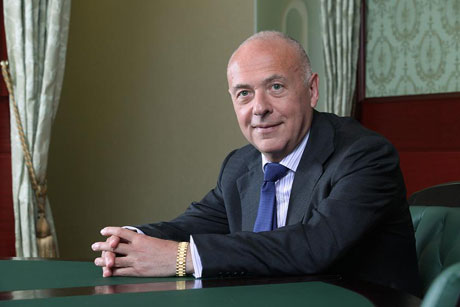
Consequently, the change-over necessitated the exit of Mikhail Gorbachev and the appearance of Boris Yeltsin as the first President of the Russian Federation. Under his administration during the formation of the new cabinet were industrious and hardworking professionals recruited into the government. Andrei Kozyrev was then appointed as the first Russian Minister for Foreign Affairs. He took harmonious and coordinated efforts towards sustaining the Soviet-era solidarity, internationalism and close operational expertise to work tirelessly with Africa. As the first Russian professional giant at the foreign ministry, he consistently attempted, within the emerging constraints at that unpredictable period, to support the economic cooperation and the political sovereignty of Africa, as it was previously before the Soviet collapse.
Who is Andrei Kozyrev
Andrei Kozyrev is a Russian politician who served as the first Minister of Foreign Affairs of the Russian Federation under President Boris Yeltsin from October 1990 and, after the dissolution of the Soviet Union, from 1992 until January 1996 for Russia. In his position, he was credited with developing Russia’s foreign policy immediately after the fall of the Soviet Union, although many in Russia criticized him for being weak and not assertive enough in defending Russian interests against the United States and Europe.
But besides those stack criticisms, Kozyrev most often spoke about anti-imperialist and pro-western positions. These two positions were positively viewed by the Russian nationalist politicians and party activists. Kozyrev had graduated from the Moscow State Institute of International Relations (MGIMO) with a PhD in history before joining the Soviet Ministry of Foreign Affairs in 1974, holding various positions in it before being appointed foreign minister.
This being the first foreign minister has the greatest significance in the history of post-Soviet Ministry of Foreign Affairs. At the age of 39, Kozyrev’s career as the head in the Foreign Ministry marked him as a promising Soviet diplomat. Without much doubts, Boris Yeltsin trusted and depended to a large extent as reformers, which included Yegor Gaidar and Anatoly Chubais, and shared their Western liberal-democratic ideals.
He emphasized cooperation over conflict with the United States while insisting that Russia be treated as a great power in international politics rather than as a fallen superpower. He was also viewed by many as one of the most important voices for liberalism and democracy in post-communist Russia
After the collapse of the Soviet era, those succeeding (successive) formative years required a tremendous level of political transformative ideas and new approach in dealing with so many pertinent issues, most importantly foreign policy with regions, particularly Africa where Soviet Union supported. The relations between the Soviet Union and African countries were quite extensive, forged international solidarity and friendship.
Andrei Kozyrev – A Giant in Russian-African Relations
Due to the geopolitical change, Russia was passing through multifaceted internal difficulties, including in politics, economy and social spheres. A sudden change of political regime brings its own peculiar challenges, that was the early stage of capitalism in post-socialism Russia, with an emboldened tasks and responsibilities, not only within but also maintaining external relations with the world.
There are still a gamut of roadblocks following the dissolution of the Soviet Union, the former Soviet republics are feverishly attempting to create a kind of Greater EurAsian Union, uncomparable to the European Union that promotes free movement of people and has a single currency. Despite Russia’s critical perceptions, European Union, has at least moved toward more democracy and openness. In practical terms, Russia had to deal with the neighbouring Soviet republics, that combined with its own internal problems and, at the same time, played dominating roles and continued anti-Western policies in the continent of Africa. According archival reports,
In his earlier memoirs, Kozyrev complained of United States aggressively pushed back into the African continent after Russia was contemplating of moving out of this geopolitical region and traditional market for Soviet products. In fact, Russia’s diplomatic office started cutting off staff, cultural mission trimmed down, projects were suspended. Kozyrev warned that empty promises were even worse than empty threats. And that Russia’s relations with African unification would achieve its full realization through a continuation of an element of socialist path of development.
Despite everything, developing solidarity and cooperation with African countries has been the cornerstone of Russia’s foreign policy, as well as a longstanding strategy since the Soviet times, and that has been carried over until now.
Historical documents further show that after the Soviet collapse there were approximately 380 projects throughout Africa. In the early 1990s, Russia swiftly exited, closed a number of diplomatic offices and abandoned all these, and hardly there have been dim-glowing memorable signs of Soviet-era infrastructure projects there.
Thereafter, policy statements have accentuated strong optimism for raising relations with Africa. Kremlin, as always, reiterates its own version. Nevertheless, it is so common reiterating that Russia has always been on Africa’s side in the fight against colonialism and now neo-colonialism. And further to that, the frequency of reminding again and again about Soviet assistance increasingly dominated conferences and summits. So also over creating a fairer and better living conditions for future generations of Africa and Russia. Such statements have featured in several speeches, these several years, from Foreign Minister Igor Ivanov and now Sergey Lavrov.
Digging further into the archives for his speeches in preparing this article, Kozyrev’s achievements included sustaining Russia-African policy ideals, share past experiences, enhancing cooperation and working together for common future perspectives. Kozyrev was painstakingly committed to boosting the well-established status of Russia-Africa ties. In addition, he constantly emphasized the importance of ensuring stability and sustainable development trends, developing and strengthening economic ties as the surest path to guarantee economic sovereignty for the continent.
In contrast from above-mentioned facts, the first Russian President Boris Yeltsin, the Kremlin’s policy advisors and and the Ministry of Finance showed absolute negative perceptions, without much vigour, in building up policy capacity and maintaining strategic relations with Africa. Records show finances were cut and Kremlin directives placed Africa’s policy in disacceleration.
Moscow frequently asked Africa to settle its Soviet-era $20 billion debts, reflected the complexity of its connection during the early post-Soviet times with Russia. Hence the first decade of Yeltsin was referred to as the “Lost Decade on Africa” as measures towards stimulating implementing policies broke down. During the first-second decades of post Soviet era, Russia abandoned Africa.
In the meanwhile, Russia look more like a ‘virtual great power’ than a genuine challenger to other key foreign players there. The desire to strengthen its geopolitical influence, shouted well-decorated speeches, practically reflects little sign of “Russia’s Return to Africa” as financial-economic levers are still not installed. Nonetheless, many experts say Russia has its own distinctive style and approach, but it relegates priorities to the background. Its explicit declaration of return to the continent grossly lacks reasonable level of investment in key-sectors to portray its current degree of influence within the context of current geopolitical changes.
In his address, Lavrov made reference to the updated Foreign Policy Concept, approved by President Vladimir Putin on 31st March 2023, in which one of the unquestionable priorities today is to forge lasting strategic partnerships with African countries. For the purpose of this article, it was necessary to dig out this document. The logic of the document reflects the current changing geopolitical realities. The new concept however says Russia stands in solidarity with the African states in their desire for a more equitable world and elimination of social and economic inequality, which is growing due to the sophisticated neo-colonial policies of some developed states towards Africa.
The 42-page document consists of six sections and a total of 76 paragraphs. The previous version of the new concept was adopted in November 2016. The Ministry of Foreign Affairs of the Russian Federation published on its website the text (in English, Spanish, and French) of the Concept of the Foreign Policy of the Russian Federation, approved by Presidential Executive Order No. 229 of March 31, 2023.
Gratitude and Recognition
During the later years from Igor Ivanov and Sergey Lavrov, aspects of post-Soviet foreign achievements particularly with Africa’s directions by first Foreign Minister Andrei Kozyrev were, unfortunately, buried under the snow in the Arctic. It was erased from the official files and little was known about this transitional period when Boris Yeltsin took over Russia.
Worth saying here that the Kremlin and the officialdom have to offer, at least, some gratitude however fascinating insights into Moscow’s foreign policy at that time (1991 until 2006) when everything seemed impossible, including, perhaps, Russia’s numerous conflicts anchored in by the West and Europe.
In a nutshell and whatever was the case, Andrei Kozyrev chased the tremendous goal like that firebird of the Russian fairy tales in Africa. At least, this article gives credit to the first Russian Foreign Minister Andrei Kozyrev after the collapse of the Soviet Union in 1991. He made the indelible mark during the first decade following the Soviet collapse, by actions and by deeds, to be recognized as one of the Great Reformers in the history of relations between Russia and Africa.