Africa
Globalization Without Protection Is Exploitation: The Legal Crisis Facing Migrant Workers -By Fransiscus Nanga Roka
The legal quandary faced by migrant workers is an outward expression of inner moral failure. In the name of sovereignty, states stand for strict border controls, but let capital and goods flow freely in the global market. Corporations move about the world with ease, yet people who cross borders lose the protection of law which can hardly be called freedom. It is this one sidedness that tells the real story of contemporary international priorities: mobility for gain, not for people.

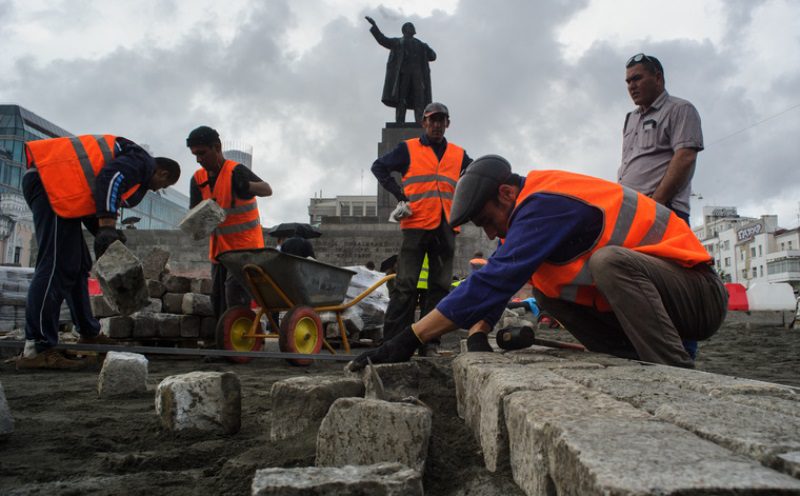
What globalization promised was opportunity, freedom and shared gains. Instead, for millions of migrant workers, it has brought something far worse: labor without security; mobility without dignity; and survival void of respect. Migrant workers crisscross continents, putting up buildings and harvesting food. They are also the caretakers to generations of residents in the rich enclaves. They do so much for prosperous nations but are seldom offered citizenship There is nothing inevitable about globalization without protection that’s exploitation with a ticket to ride.
There are now more than 280 million international migrants worldwide; many move in search of work. In the Gulf States they toil at construction; in Europe they work on agricultural farms; in Asia, factories and in the U.S. domestic care economy. Governments characterize migrant workers as “essential,” yet most of the legal frameworks concerning immigration treat them as temporary, replaceable and disposable. The paradox is clear: the global economy cannot operate without migrant labor, yet migrant workers are still not fully recognized as rights bearers by the law.
At the root of the problem lies an imbalance of power. Migrant workers frequently rely on employers for wages and living conditions as well as being able to remain lawfully in the country. Sponsorship systems, visas of limited duration and tied employment permits produce a situation where losing the job equals losing all rights to residence. If you can not leave an abusive employer without risking deportation or detention. If you can not leave an abusive employer without risking detention or deportation then what appeared to be free labor soon becomes worryingly close to forced labor.
That does not mean international law has nothing to say about how migrant workers live and work, though. In 1990 the International Convention on the Protection of the Rights of All Migrant Workers and Their Families was adopted by the United Nations. It is one of the most complete legal frameworks in existence today. Core human rights treaties also protect everyone, regardless of nationality. Yet the very countries who need migrant labor most are often least inclined toward accepting binding obligations. Many major receiving countries have not ratified the migrant workers convention, leaving a legal gap between global standards and what is actually happening on the ground. Rights do exist on paper, but not at borders, not in workplaces and the lives of those who need them most.
The COVID-19 pandemic laid this hypocrisy bare in graphically painful terms. Migrant workers were essential when the economy needed them; dispensable when crises occurred. Large numbers were left without any income or medical coverage as well as lacking the ability to return home. Some lived in densely crowded dormitories for which they were charged rent; others were evicted from their places of residence, but no alternative accommodation obtained; many continue working at dangerous workplaces long after they should be quite safe at home.
The message spelled out could not have been clearer: migrant labor is vitally important, but migrant workers are not. It’s not just one country, or one system of government, where there is this abuse. Reports of withheld wages, dangerous working conditions and debt-laden recruits are found in both democracies and autocracies alike. Domestic servants are left without legal protection. Farm hands work under dangerous conditions with almost no redress. Construction workers build showpieces of national achievement that are really just an elaborate denial of human lives at their cost.
The legal quandary faced by migrant workers is an outward expression of inner moral failure. In the name of sovereignty, states stand for strict border controls, but let capital and goods flow freely in the global market. Corporations move about the world with ease, yet people who cross borders lose the protection of law which can hardly be called freedom. It is this one sidedness that tells the real story of contemporary international priorities: mobility for gain, not for people. Building a shield strong enough to keep migration under control and then saying pretty words about human rights will not make migrant workers secure. Genuine protection must have binding international commitments, stronger labour inspection mechanisms, fair recruitment systems which give everyone, no matter where they come from or what their legal status is, a chance to compete for jobs on equal terms and access to justice irrespective of immigrant. Migrant workers should be able to report abuses without being afraid that this action could lead to their deportation. Work permits should not be tied to one employer only. Labour law must cover all types of domestic service and care work, as well as informal labor done on another person’s premises. Without these improvements exploitation will remain not something that happens accidentally but rather an integral part of the world economy. The real glabalization test is not how much wealth it produces but what it makes of those who contribute their labour to create that wealth. A world built on the backs of migrant workers yet unwilling to protect them cannot claim it respects human rights. When international commercial patterns depend upon labour that cannot expect protection from the law law, exploitation no longer goes on behind locked doors it is built into institutions themselves. Globalization without protection is not progress. It is a system which profits from the vulnerability of some people at the expense others, justifies inequality as being natural and normal, and turns injustice into efficiency. And until the law catches up with what is really happening in global labour, migrant workers will continue to be the indispensable foundation of prosperity that they are not allowed to share.
Fransiscus Nanga Roka
Faculty of Law University17 August 1945 Surabaya Indonesia