
Economy
Governance In Nigeria: Will It Ever Get Better?, by Isaac Asabor

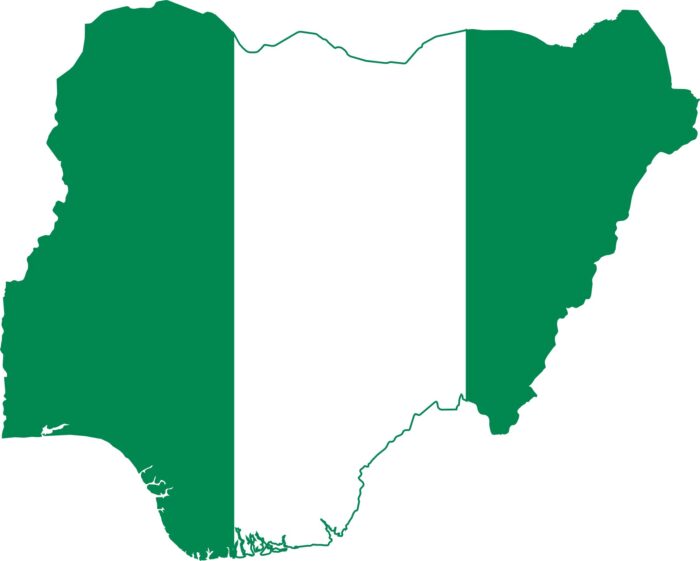
Nigeria, a nation blessed with abundant resources and a vibrant population, remains mired in a cycle of poor governance that has persisted for decades. The question on the lips of many Nigerians is, “Will it ever get better?” The struggle to break free from the chains of corruption, mismanagement, and ineffective leadership is a journey that seems to have no end in sight.
Since Nigeria’s independence in 1960, successive governments have come to power with promises of change and development. Yet, these promises have often turned into mere rhetoric, leaving the masses disillusioned and frustrated. From military regimes to democratic administrations, the narrative has been alarmingly consistent: leaders who ascend to power with grand visions often lose their way, entangled in the web of corruption and personal gain.
The military era, marked by coups and counter-coups, was a time of instability and repression. While some may argue that there were brief moments of progress, the overall impact was one of stagnation and decline. The return to democracy in 1999 was heralded as a new dawn for Nigeria, but the years since have shown that the challenges of governance are deeply rooted in the fabric of the nation’s political system.
Corruption remains one of the biggest impediments to good governance in Nigeria. It is a cancer that has eaten deep into the country’s institutions, from the highest levels of government to the grassroots. Despite the establishment of various anti-corruption agencies, such as the Economic and Financial Crimes Commission (EFCC) and the Independent Corrupt Practices Commission (ICPC), the scourge persists. The lack of accountability and transparency in public office has made it nearly impossible for the government to function effectively.
The alleged financial misappropriation in several government agencies has further eroded public trust. The siphoning of public funds meant for development projects into private accounts has left critical infrastructure in a state of disrepair. Roads, schools, hospitals, and other essential services are grossly underfunded, leaving millions of Nigerians without access to basic amenities.
At the heart of Nigeria’s governance crisis is a deficit of visionary leadership. The nation’s political landscape is dominated by individuals who prioritize personal interests over the common good. The concept of public service, which should be the cornerstone of governance, has been relegated to the background. Instead, politics has become a means to wealth accumulation, with little regard for the welfare of the people.
This leadership vacuum is evident in the way policies are formulated and implemented. In many cases, government initiatives are poorly conceived and hastily executed, leading to minimal impact on the ground. The disconnect between the government and the people is palpable, with many citizens feeling that their voices are not heard or valued.
Despite the bleak picture, there are glimmers of hope. Civil society organizations and a growing number of young, politically conscious Nigerians are beginning to demand more from their leaders. The rise of social media has also provided a platform for citizens to hold their government accountable. However, these efforts are often met with resistance from entrenched political elite that is unwilling to relinquish power.
The recent #EndSARS, and #EndBadGovernance protests which called for an end to police brutality and bad governance, respectively, were a testament to the potential for change. Although the movements were brutally suppressed, but despite that, they collectively sent a strong message that Nigerians are no longer willing to accept the status quo. The question now is whether this momentum can be sustained and translated into tangible change at the ballot box.
In fact, for Nigeria to achieve good governance, a fundamental shift in the political culture is required. This involves not only holding leaders accountable but also fostering a culture of integrity and public service. It requires a judiciary that is independent and fearless, a legislature that is truly representative of the people, and an executive that is committed to the rule of law.
Against the foregoing backdrop, it is germane to opine in this context that education and civic engagement are crucial, and that citizens must be informed and empowered to make choices that reflect their interests, even as voter apathy, driven by years of disenchantment with the political process, must be addressed if true democracy is to take root in Nigeria.
Be that as it may, it is expedient to state the fact that the road to good governance in Nigeria is long and fraught with challenges, but it is not an impossible journey. While the past and present may paint a grim picture, the future holds the possibility of change. It will require collective effort, determination, and a willingness to confront the issues that have held the country back for so long. The question remains: will Nigeria rise to the occasion, or will the cycle of poor governance continue? Only time will tell.




















You must be logged in to post a comment Login