Africa
Growing Up Without a Safety Net: Examining the Impact of Single Motherhood on Child Upbringing in Nigeria -By Abdulazeez Toheeb Olawale
Single motherhood in Nigeria is shaped by diverse realities, ranging from personal choice to economic hardship and social disruption. While many women manage these challenges with resilience, data suggests that children in single-parent households face measurable risks related to education, stability, and development.
Addressing these outcomes requires policy attention focused not on family structure alone, but on child welfare systems, economic support, and institutional responsibility.

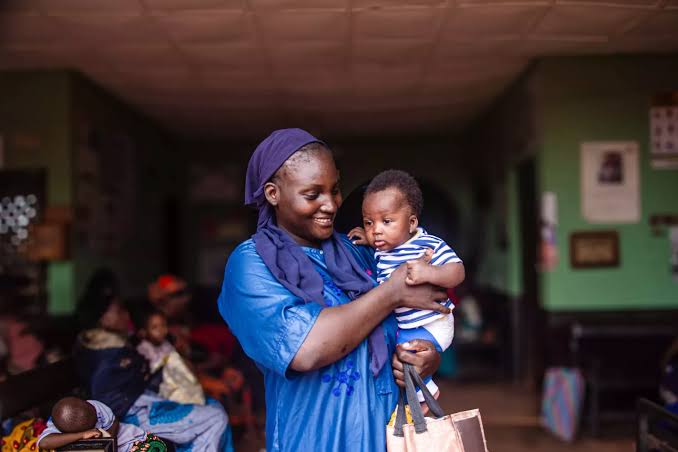
Single motherhood is becoming an increasingly visible household structure in Nigeria, particularly in major urban centres such as Lagos, Port Harcourt, and Abuja. While family composition in the country has traditionally revolved around two-parent households supported by extended family networks, economic pressure, relationship breakdowns, migration, and social change have altered this structure over time.
According to data from the Nigeria Multiple Indicator Cluster Survey (MICS) and the National Bureau of Statistics (NBS), between 19% and 21% of Nigerian households are headed by women, many of whom are raising children without a partner. Urban states, especially Lagos, record higher figures due to population density, cost of living, and migration-related family separation.
Pathways Into Single Motherhood
Single motherhood in Nigeria occurs through multiple pathways, including divorce, separation, death of a partner, abandonment, and personal choice.
During an interview in Mushin, Lagos, a woman who chose to remain anonymous explained that her decision was intentional.
“I just feel like being a single mother. It has always been my dream, and I worked towards it,” she said.
Her account reflects a growing but still limited group of women who deliberately pursue motherhood outside marriage, particularly in urban environments. However, experts note that choice-based single motherhood represents only a fraction of cases, with most resulting from economic or social disruption.
Economic Constraints and Child Welfare
For many single mothers, economic pressure directly affects child welfare outcomes. UNICEF reports that over 54% of Nigerian children experience multidimensional poverty, lacking access to adequate education, healthcare, nutrition, or housing. In female-headed households, these challenges are often more pronounced due to reliance on a single income.
In an in-depth interview conducted for this report, another single mother described the financial strain of raising a child alone.
“I didn’t choose this life, and it has been a very tough journey raising a child alone. I had to withdraw my son from school when I couldn’t afford the school bills, house rent, and other basic expenses,” she said.
Her experience aligns with findings from the World Bank, which indicate that children from single-parent households in low-income settings face higher risks of school dropout, child labour, and long-term educational disadvantage.
Child Development and Social Outcomes
Beyond financial challenges, child development specialists point to structural gaps in supervision, discipline, and socialisation.
In Ajegunle, Lagos, a teenage boy interviewed for this report described growing up without a father.
“I was raised by my mother. I don’t know what a father’s love is,” he said.
While such experiences are not universal, social workers note that children in unstable family settings may be more exposed to street influence, substance abuse, and behavioural challenges, particularly in densely populated, low-income communities.
Expert Assessment
Dr. Kingsley, a child development and public health expert, explained that parental balance plays a role in upbringing, though outcomes depend heavily on environment and support systems.
“Parenting requires both emotional care and structured guidance. When households lack balance, the impact on children depends on economic stability, supervision, and access to social support,” he said.
He emphasized that single motherhood is not inherently harmful, but that the absence of institutional support systems increases risk, particularly in a country with limited child welfare infrastructure.
Religious and Social Context
Religious leaders interviewed stressed responsibility rather than moral judgment.
According to Ustaz Ibrahim Ridwanullahi, Islam places clear responsibility on fathers for child welfare, even in cases of separation.
Similarly, Christian family counsellor Hephzibah Grace Aduragbemi noted that while compassion is necessary, society must also address accountability and preventive structures.
Policy Gaps and Institutional Response
Despite the scale of single-parent households, Nigeria lacks a coordinated national framework addressing the developmental needs of children in such families. Unlike countries with social protection schemes, Nigeria offers limited child-focused welfare interventions beyond basic education and health programmes.
Experts argue that without targeted support — such as subsidised education, counselling services, and income support — children from vulnerable households remain exposed to long-term social and economic disadvantages.
Conclusion
Single motherhood in Nigeria is shaped by diverse realities, ranging from personal choice to economic hardship and social disruption. While many women manage these challenges with resilience, data suggests that children in single-parent households face measurable risks related to education, stability, and development.
Addressing these outcomes requires policy attention focused not on family structure alone, but on child welfare systems, economic support, and institutional responsibility.
Abdulazeez Toheeb Olawale is a Nigerian writer and social affairs reporter with a focus on governance, social policy, and human-interest investigations.

Continue Reading