Africa
How Lavrov’s Philosophy of “Ubuntu” Reflects on the Level of Africa’s Media Presence in Russia -By Kestér Kenn Klomegâh
This information-hungry population, roughly twice the size of Russia’s population, has limited access to high-quality reporting on Russia’s economic achievements, strategic outlook, and investment initiatives. The lack of direct Russian or African-based reporting contributes to distorted perceptions and weakens economic and entrepreneurial ties.

Russian Foreign Minister Sergey Lavrov has sharply criticised the near absence of African media presence in the Russian Federation, arguing that this gap undermines the development of a positive and balanced Russia–Africa relationship.
Speaking at the plenary session of the Ministerial Conference held in Cairo, Egypt, Lavrov noted the lack of African journalists accredited in Russia and stressed that the media can play a vital role in shaping mutual understanding and cooperation.
“Objective media coverage in both regions, strengthening ties between Russian and African journalists, opening new Russian media outlets in African countries and African media outlets in Russia, and implementing joint educational programmes are making a significant contribution to the formation of a positive Russian-African agenda,” Lavrov emphasized.
Lagging Behind Global Competitors
Lavrov acknowledged that Russia’s media footprint in Africa remains limited and does not reflect the growing political and economic ties between the two sides. In comparison for instance, Russian media networks remain weaker than major global players such as Bloomberg, the BBC, CNN, Reuters, Associated Press, Agence France-Presse, Al Jazeera, Quartz, and China’s CCTV and Xinhua News Agency—all of which have significantly expanded their African operations.
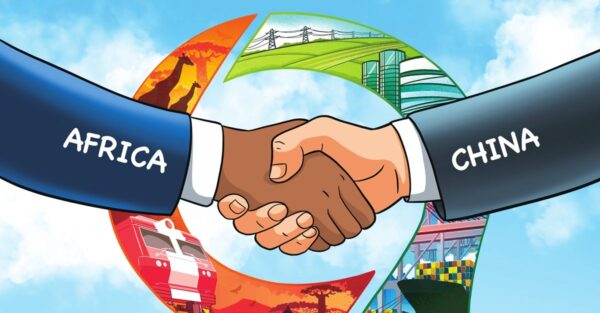
By contrast, China has pursued a deliberate, long-term media engagement strategy in Africa. As early as 2006, at the first Forum on China–Africa Cooperation (FOCAC) Summit in Beijing, Chinese authorities articulated a vision for media exchange to enhance mutual understanding and promote objective coverage.
This strategy led to the establishment of China Radio International in Nairobi, the launch of CGTN Africa, and the 2012 launch of the African edition of China Daily. China has also invested heavily in digital infrastructure and provided training programmes, workshops, and exchanges for African journalists, as well as financial and technical support to expand communications capacity across the continent.
The Information Gap
While Russia’s Ministry of Foreign Affairs continues to deliberate over accrediting African journalists, Western media outlets continue to dominate Africa’s information space—particularly among the continent’s estimated 280 million middle-class consumers.
This information-hungry population, roughly twice the size of Russia’s population, has limited access to high-quality reporting on Russia’s economic achievements, strategic outlook, and investment initiatives. The lack of direct Russian or African-based reporting contributes to distorted perceptions and weakens economic and entrepreneurial ties.
Despite renewed political engagement between Russia and Africa in recent years, mutual unfamiliarity persists. Russian businesses often lack insight into African market structures and consumer behaviour, while African audiences remain insufficiently informed about Russian capabilities and opportunities—creating significant obstacles to deeper cooperation.
Call for Media Engagement
In late November, Andrey Kondrashov, Director-General of Russia’s state-owned news agency TASS, announced plans to open new bureaus in Angola, Cameroon, Nigeria, and Madagascar as part of what he described as a “strategic media development” initiative. TASS currently operates offices in Egypt, Tunisia, Kenya, Morocco, Zimbabwe, and South Africa.
Professor Irina Abramova, Director of the Africa Studies Institute, noted that Russian officials frequently complain about anti-Russian narratives in Western media, yet simultaneously restrict African media accreditation in Russia. She stressed that information has become a powerful force shaping reality and that journalists play a decisive role in determining whether Russia–Africa relations are built on truth or misinformation.
Abramova also highlighted that, despite Africa’s historical memory of the Soviet Union’s support for decolonisation, new forms of colonialism—particularly informational—continue to emerge. She called on African media organisations to establish a stronger presence in Russia, noting that no African news agency currently holds permanent accreditation there.
Similarly, Professor Alexey Vasiliev, former Special Representative of the Russian President for Relations with Africa, argued that Africa remains largely unaware of Russia because African media primarily relies on Western sources. As a result, he said, Russophobia and misinformation originating in Western media are often replicated across African outlets.
On May 16, Lavrov chaired a Foreign Ministry collegium meeting focused on cooperation with African media, underscoring the need to align media engagement with broader partnerships in education, culture, and strategic cooperation.
From Rhetoric to Action
During the Russia–Africa Summit, Russian Ambassador Artem Kozhin revealed that more than 300 foreign news bureaus from 60 countries operate in Russia, employing hundreds of correspondents and technical staff—yet African representation remains strikingly low.
Despite repeated discussions on media cooperation at the Russia–Africa Summits in Sochi (2019) and St. Petersburg (2023), no African media organisation has been accredited by the Russian Foreign Ministry. This gap persists even as Russia prepares for the third Russia–Africa Summit scheduled for 2026 in Equatorial Guinea.
In this era of rapidly changing geopolitical situation and emerging multipolar architecture, Africa’s partners are strategically softening terms of bilateral collaboration over strict administrative bureaucracy—serving as the bedrock of for removing policy obstacles—this in contrast to Russian officials questioning the financial credibility of African media, its combined strength and capability to operate effectively in the Russian Federation.
Lavrov’s article, for African media dedicated to the Cairo conference, stressed “Russia as an old and trusted friend of Africa” and quoted the African philosophy of “Ubuntu” which, in practical terms, hardly reflects on the two-way media cooperation. Is Africa media operating, in the Russian Federation, incapable of exploring and showing mutual support for deepening multidimensional cooperation? Seemingly the African philosophy of “Ubuntu” has not reflected on the level of Africa’s media presence in the Russian Federation.
The December 19–20 Ministerial Conference reaffirmed commitments to fully implement the Russia–Africa Partnership Forum Action Plan (2023–2026), adopted at the second summit in St. Petersburg. That Cairo conference was held, for the first time, on African soil, the conference was attended by representatives from 52 African states and multiple regional organisations.
Yet, as this article makes clear, genuine progress will depend on moving beyond rhetoric toward concrete policy reforms and sustained support for a truly collaborative Russia–Africa media landscape.