Opinion
Humanising Tax Reform: A Plea for Fiscally Responsible and Caring Policies -By Johnson Ateghie
Taxes need to be a weapon for growth rather than poverty. The current tax reforms seem more punitive than progressive in their current form. The government must enact laws that prioritise justice and consider economic realities if it is genuinely interested in enhancing the economy and the well-being of its people.

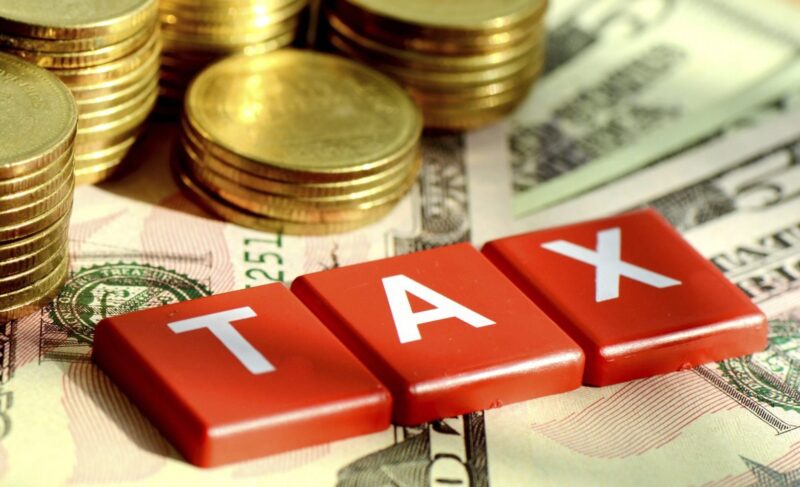
The Presidential Fiscal Policy and Tax Reform Team’s recent proposal for tax reform has sparked widespread apprehension, and for good reason. Nigeria is on the verge of a severe economic squeeze if the tax burden reflected in the personal income tax calculator is any indication. A reform that adds to the hardship of an already overburdened populace is not a reform at all; it is an economic guillotine. (https://fiscalreforms.ng/index.php/pit-calculator/
The proposed tax structure does not appear to provide respite during a period in which inflation has severely impacted household incomes, and the prices of essential commodities have skyrocketed. Rather, it poses a threat to the financial security of millions. We should consider the price of a single sack of cement, which is currently priced between N9,000 and N10,000. However, the rent allowance that has been suggested is a pitiful N200,000 per year.
The Unrealistic Rent Allowance Deduction
The proposed rent allowance deduction of ₦200,000 per annum is a prime example of the disconnect between real-world conditions and tax reforms. The inquiry for policymakers is straightforward: Where can one obtain adequate housing for ₦200,000 annually in Nigeria? Even the most rudimentary “face-me-I-face-you” rooms in most remote settlements cost more than that. The annual cost of self-contained apartments and one-bedroom flats varies from ₦400,000 to ₦1,000,000, depending on the location. It is both insensitive and impractical to anticipate that Nigerians will be able to subsist on this unrealistic allowance. Housing is an essential requirement, and any tax policy that fails to consider the reality of rent prices will inevitably result in an increase in the number of individuals who are either destitute or living in substandard conditions.
The utter elimination of the education allowance is even more worrisome. Countries that are committed to economic growth continue to provide financial support for education, acknowledging its importance as a fundamental component of national development. The citizens of the United States, the United Kingdom, and even developing economies in Asia receive substantial educational assistance. How does Nigeria anticipate that impoverished families will be able to pay for the exorbitant school expenses when even the most fundamental educational resources have been eliminated? This is not merely a case of inept policymaking; it is a deliberate act of economic exclusion.
The broader issue is Nigeria’s oppressive tax burden, which extends beyond these concerns. Regarding public services and infrastructure, citizens are already subjected to exorbitant taxation with little to show for it. Implementing this new tax framework without a corresponding increase in social benefits constitutes legalised economic strangulation. Fairness should be the fundamental principle of taxation, ensuring that the system promotes productivity rather than penalises it.
The issue of double taxation is even more vexing. Nigerians are subject to taxation based on their income (PAYE), expenditures (VAT), savings (bank deposit levies), and even transfers of their hard-earned money. Imagine receiving a salary only to be subjected to deductions at the source and then being required to pay taxes on fundamental necessities such as food, electricity, and telecommunications. Under these circumstances, what type of financial future can the average Nigerian establish? This is not fiscal responsibility; it is economic repression.
In order for tax reform to be significant, it must recognise the realities of the people. A responsible government does not impose fiscal policies in isolation; rather, it guarantees that these policies are consistent with the economic circumstances of its citizens. This tax policy will not promote growth or development in its present state; rather, it will exacerbate poverty and perpetuate hardship. The government must take a step back and ask itself: Are we creating policies promoting national progress, or are we merely creating a framework that will perpetuate suffering?
The era of rhetoric should be consigned to history. Nigerians demand a tax system that fosters economic resilience rather than stifling the ambitions and aspirations of the populace. If the objective of taxation is to promote development, it should be used to elevate rather than to suppress. A government that disregards the needs of its citizens is at risk of losing its trust, and once trust has been lost, it is exceedingly challenging to regain. Let this serve as a wake-up call to policymakers: tax reforms must benefit the populace, not engulf them in financial despair.
The avenue for progress is evident. The government must revisit the drawing board and reevaluate this tax policy in accordance with economic reality and equity. Nigerians are not requesting tax exemptions; they are advocating for a system that does not penalise productivity and hard work. Tax reform that includes a human aspect will restore trust in governance and establish an environment that fosters the growth of businesses, prepares families for the future, and advances the nation toward genuine prosperity. Anything less is considered intolerable.
The Need for a More Humane Tax Reform
A just tax system should balance revenue generation with economic sustainability. The government must recognise that excessive taxation does not necessarily translate to increased revenue. When people are overtaxed, their disposable income shrinks, leading to lower consumer spending, reduced economic activity, and, ultimately, slower growth.
To create a fairer tax system, policymakers should consider the following:
- Realistic Allowances: Rent and transport allowances must be reviewed in line with prevailing market conditions. The government should conduct an economic assessment to determine reasonable figures that reflect current realities.
- PAYE Rate Adjustments: Given the multiple layers of taxation, PAYE rates should be reduced, particularly for low—and middle-income earners, to prevent overtaxation.
- VAT Reduction on Essential Goods: The government should exempt or significantly reduce VAT on basic food items, educational materials, and utilities to ease the cost-of-living crisis.
- Restoration of Education Allowances: Instead of scrapping tax relief for education, the government should expand it to cover more educational expenses, ensuring that families are not priced out of learning opportunities.
- Harmonization of Taxes: To eliminate multiple taxation, better coordination between federal, state, and local government tax agencies should ensure that citizens are not unfairly charged at different levels.
Taxes need to be a weapon for growth rather than poverty. The current tax reforms seem more punitive than progressive in their current form. The government must enact laws that prioritise justice and consider economic realities if it is genuinely interested in enhancing the economy and the well-being of its people.
If immediate reforms are not implemented, Nigeria risks increasing its citizens’ financial hardship, decreasing consumer spending, and slowing economic growth. The government must pay attention to the populace’s concerns to implement a humane tax policy that fosters rather than stifles economic growth.
Johnson Ateghie
University of Benin
Benin City, Edo State