
Forgotten Dairies
Justice Cannot Be Delayed Forever: Inside Nigeria’s ₦15.6 Trillion Coastal Highway, Confidential Contract Terms, and Global Loans -By Daniel Nduka Okonkwo
Nigeria does not merely need roads; it needs public institutions capable of demonstrating that public resources are managed honestly, lawfully, and in the public interest. The central question is not simply whether the highway should exist, but whether the decisions made in its name can withstand examination. Public money demands public accountability. Transparency is not a favour the government grants its citizens; it is a responsibility it owes them.

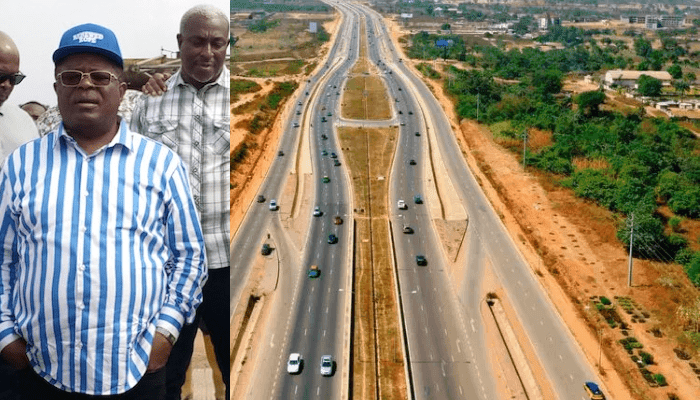
Nigeria’s public infrastructure projects are often presented as symbols of national progress, economic transformation, and political ambition. Yet, when projects involve trillions of naira in public commitments, complex financing arrangements, and powerful private interests, the public deserves more than promises of development. It deserves verifiable records, transparent procurement, defensible costs, and clear evidence that public money is being spent in the public interest. The Lagos–Calabar Coastal Highway, one of the flagship infrastructure projects of the Tinubu administration, is intended to connect Lagos with Cross River State through Nigeria’s southern coastal corridor, potentially improving transportation, trade, tourism, and access to ports and industrial centres. However, its reported cost, procurement process, financing structure, environmental implications, route alignment, and relationships with private interests raise questions that warrant rigorous investigation without presuming that wrongdoing has already been established.
The highway has been described in public accounts as approximately 700 to 750 kilometres long, with some estimates placing the overall project cost at about ₦15.6 trillion. A particularly important issue concerns Phase I, Section I, covering 47.474 kilometres from Ahmadu Bello Way to the Eleko Village area of the Lekki Peninsula. The section was awarded to Hitech Construction Company Nigeria Limited for ₦1,067,887,381,148.61. According to Works Minister David Umahi, the Federal Executive Council approved the Engineering, Procurement, Construction, and Financing (EPC+F) procurement route on 30 October 2023 and approved the Section I contract on 26 February 2024. These figures establish the scale of the initial contract, but the relationship between its price, the wider project estimate, and the scope of the approved works requires further documentary clarification.
The cost figures are particularly significant because publicly reported per-kilometre estimates differ sharply from the arithmetic derived from the contract sum. During proceedings on 9 May 2024, the House of Representatives discussed a reported construction rate of approximately ₦4.329 billion per kilometre, while News Central TV reported Umahi as saying that the cost would be about ₦4 billion per kilometre. Yet dividing the ₦1.067 trillion contract sum by 47.474 kilometres produces approximately ₦22.5 billion per kilometre. Similarly, dividing a reported overall estimate of ₦15.6 trillion by 750 kilometres gives approximately ₦20.8 billion per kilometre. These calculations do not, by themselves, prove overpricing, because the figures may reflect different scopes, cost components, or stages of project development. Nevertheless, the substantial differences demand an explanation supported by the contract, engineering specifications, and approved cost schedules.
A review of Section 2.5 of the Supplementary Environmental and Social Impact Assessment Final Report for Section 1, Version 04, dated April 2025, has identified two cost figures that require public clarification.
The report, prepared by Natural Eco Capital for the Federal Ministry of Works and published on Hitech Construction Company’s website, states an estimated cost of ₦1,067,887,381,148.61, inclusive of value-added tax, for Section 1 of the Lagos–Calabar Coastal Highway. The report describes the project as a reinforced-concrete roadway with a 59.7-metre carriageway, ten lanes, shoulders, rail infrastructure, service ducts, streetlights, drainage, and shore-protection works.
The same section of the report also contains an estimate of approximately ₦189.88 billion for the approximately 47.47-kilometre Section 1. That figure equates to about ₦4 billion per kilometre.
The two figures differ substantially. The report does not, on the information publicly available, explain the basis for the difference. It may reflect a drafting error, a different scope of work, a different cost basis, an earlier estimate, or another project component. No such explanation has been publicly confirmed.
The ESIA is a consultant’s environmental and social assessment. It is not the executed contract, approved bill of quantities, cost schedule, or final project account. Accordingly, no adverse inference should be drawn from the figures alone.
Nevertheless, because the figures relate to a major publicly funded infrastructure project, Natural Eco Capital and the Federal Ministry of Works should clarify, in writing and publicly, the exact wording and page reference for each figure; whether each relates to the full Section 1 scope or a narrower component; the date, currency and VAT treatment of each estimate; and the relationship, if any, between the estimates and the executed contract or approved cost schedule.
A fair assessment must also recognise that coastal highways can require expensive foundations, bridges, interchanges, drainage systems, shoreline protection, utility relocation, railway infrastructure, and other specialised engineering works. Differences in lane numbers, pavement specifications, terrain, and construction methods can make simple comparisons with conventional highways misleading. Even so, these complexities do not remove the need to demonstrate value for money. The government should publish the detailed bills of quantities, engineering designs, cost schedules, contingencies, financing charges, and approved contract variations. It should clarify which components are included in the Section I contract, which are funded separately, and whether subsequent changes have increased or reduced the approved cost. If the contract price is justified by the scope and technical requirements, the documentary evidence should demonstrate that; if errors or unjustified expenditure are identified, they should be established precisely.
Financing is another central issue. On 9 July 2025, the Federal Ministry of Finance announced a $747 million syndicated loan for Phase I, Section I. Deutsche Bank acted as global coordinator, initial mandated lead arranger and bookrunner, with participation reported from First Abu Dhabi Bank, the African Export-Import Bank, the Abu Dhabi Exports Office, the ECOWAS Bank for Investment and Development, Nexent Bank N.V. and Zenith Bank through its UK, Paris and Nigerian offices. The Islamic Corporation for the Insurance of Investment and Export Credit provided partial political and commercial risk insurance. Reuters separately reported that the wider highway project was expected to cost approximately $11 billion over about eight years. These figures describe different aspects of the project and should not be treated as interchangeable. The government should disclose how the $747 million facility relates to the contract sum, which expenses it covers, what conditions govern disbursement, and what repayment obligations it creates.
The financing model also requires clarification. EPC+F means Engineering, Procurement, Construction, and Financing, under which a contractor undertakes engineering, procurement, and construction while arranging financing in accordance with the applicable agreements. During the House proceedings of 9 May 2024, Umahi reportedly said the Federal Government would provide between 15 and 30 per cent in co-financing, with the private partner supplying the balance and tolling the road for at least 15 years. In October 2026, he reportedly quoted him as saying that foreign financial institutions would finance 70 per cent of the project, with the Federal Government contributing the remaining 30 per cent. These statements may relate to different stages or financing arrangements and must be reconciled against the executed agreements. The public needs the loan terms, interest rates, fees, guarantees, repayment schedules, counterpart-funding commitments, and tolling arrangements. It is also essential to distinguish budgetary allocations from funds released, lender commitments, and actual payments. International financing does not, by itself, establish that a project was competitively procured or that its price represents value for money.
Procurement has attracted scrutiny from members of the House of Representatives and political figures who have questioned how HITECH was selected and how the financing arrangements were structured. The House proceedings of 9 May 2024 raised concerns about procurement, government guarantees, and the role of the National Assembly, and reportedly mandated its Committees on Public Procurement and Works to investigate the project and report within four weeks. The proceedings referred to the Public Procurement Act 2007 and the Infrastructure Concession Regulatory Commission Act 2005. Umahi has defended the award, citing the Bureau of Public Procurement’s involvement, a certificate of no objection, Federal Executive Council approval, and a contract price he said was below the ministry’s estimate. He has also cited Hitech’s experience in concrete-road construction, reportedly explaining in March 2025 that restrictive procurement was used for Section I while selective bidding was employed for Section II, which Hitech ultimately won. These statements should be tested against the procurement justification, applicable approvals, evaluation records, competing bids where relevant, and executed contracts. Neither technical experience nor the use of a restricted procurement method automatically establishes compliance or illegality; the applicable statutory conditions and supporting records determine the answer.
Environmental compliance and public consultation are equally important. The Federal Ministry of Environment announced a 21-working-day public display of the draft Environmental and Social Impact Assessment (ESIA) for Section I on 27 August 2024 and published a corresponding notice for Section II on 13 October 2024. Umahi has referred to preliminary environmental approval in December 2023 and a renewal in January 2024, while construction was reported to have begun in March 2024. The Supplementary ESIA Final Report is dated April 2025 and states that it was revised to align with international lenders’ standards. Nairametrics reported that a lawsuit filed in August 2024 against the Federal Government, the Bureau of Public Procurement, and Hitech alleged procurement and environmental violations. The existence of litigation does not prove the allegations, and the dates of public display alone do not establish when all required approvals were issued. The government should publish the complete assessment and approval chronology, final environmental documents, consultation records, environmental management plans, and monitoring reports so that compliance can be assessed against the legislation applicable at the relevant times.
Private interests have also become part of the controversy. Former Vice-President Atiku Abubakar has alleged potential conflicts involving the Chagoury Group, Hitech, Seyi Tinubu, and CDK Integrated Industries. Reports have referred to Seyi Tinubu’s association with CDK’s board since 2018, while the Presidency has defended his right to pursue legitimate business interests.
A separate controversy concerns the relationship between the highway’s route and valuable private property. In May 2024, The Guardian reported that South Energyx Nigeria Limited, the company associated with Eko Atlantic City, said a route realignment would affect reclaimed land it valued at approximately ₦87 billion. That figure should be treated as the company’s reported valuation, not an independently verified loss. The relevant questions include the legal status of the land, the rights attached to it, how the valuation was calculated, the engineering reasons for the alignment, and whether compensation or other arrangements were considered. The relationship between Hitech, South Energyx, and relevant private interests warrants examination where documentary evidence indicates a direct connection to the project’s decisions. However, proximity to a private development or corporate association is not proof of collusion. The government should publish the relevant route assessments, land records, and agreements, while the companies should be invited to clarify any directly affected commercial or property interests.
The route alignment became a further point of controversy in October 2026. It was reported on 12 October that Umahi said President Bola Tinubu had directed parts of the proposed corridor to follow the existing East-West Road from Ondo into Edo because of difficult terrain and the cost of constructing a new alignment. The same day, it was reported a Ministry of Works statement insisting that the coastal highway had not been discontinued and that reconstruction of approximately 400 kilometres of the East-West Road was an additional project rather than a replacement for the coastal highway. Umahi also referred to difficult subsoil conditions, deep pits, and the need to redesign portions of Sections 4A and 4B, reportedly covering approximately 67 kilometres, as well as an Ondo–Edo corridor of about 104 kilometres that includes a 45-kilometre Benin bypass. These figures relate to different portions of the broader road network and should not be combined without clear scope definitions. The approved original and revised route maps, geotechnical surveys, marine studies, alternative-route assessments, and revised cost schedules are necessary to establish precisely what has changed and why.
The reported realignment has also raised concerns among coastal communities. On 11 October 2026, it was reported that Ilaje Omuro Community Connect, through its lawyer, Babatunde Omobone, called for an investigation into the alleged diversion of the route and its implications for communities in Ilaje Local Government Area. The group sought an independent engineering assessment, an audit of the financial implications, and publication of relevant project documents. Its claims about the effects of the changes remain allegations requiring verification, but affected communities have a legitimate interest in decisions that may influence access, livelihoods, land use, and economic opportunities. Atiku also called for the publication of contracts, payment records, feasibility studies, route maps, bills of quantities, variations, procurement approvals, and payment certificates. The Cable reported on 12 October that he raised concerns about possible additional borrowing following the route changes. That suggestion should remain attributed to him unless independently confirmed by official financial records. Publishing the relevant documents would allow the public to evaluate the claims on evidence rather than political alignment.
The Federal Government’s reported progress on the Lagos–Calabar Coastal Highway must be assessed against documented expenditure, contractual obligations and published completion deadlines. In December 2025, the government reportedly announced that a completed stretch of Section I had been temporarily opened to traffic, while the entire section, measuring approximately 47.47 kilometres, was expected to be completed before the end of the second quarter of 2026. On 12 October 2026, reports attributed further progress claims to the Minister of Works, David Umahi, who reportedly stated that Section I was complete and ready for commissioning, that Section II, covering approximately 55 kilometres, was expected to be completed in November 2026, and that Sections 3A and 3B, covering approximately 65 kilometres around the Calabar end of the corridor, were more than 30 per cent complete. These statements provide benchmarks for assessing the project’s reported progress, but they do not independently establish the extent or quality of work delivered. Verification requires access to dated engineering inspection reports, certified measurements, interim payment certificates, contract variations and relevant completion records, alongside evidence of expenditure and compliance with approved specifications. Separately, Blueprint reported statements from the Federal Government’s legal team that 27 cases had been filed against the government, seven major cases had been won and most of the remaining cases had been settled. Those figures should be checked against court filings, judgments, orders and settlement records before being presented as an independently established account of the litigation. Neither the number of cases filed nor the reported outcomes, without examination of the underlying proceedings, establishes the overall legality or illegality of the project. A conclusive assessment must rest on verifiable construction and financial records, the applicable contractual terms, and the actual legal decisions affecting the highway, rather than official progress announcements or unverified litigation figures alone.
For a project of this scale, the Federal Government should publish the executed contracts, approved cost schedules, detailed bills of quantities, financing agreements, payment records, contract variations, and independent technical or financial audits. It should also disclose the original and revised route maps, the engineering evidence supporting major changes, environmental approvals, consultation records, and documentation concerning land acquisition and compensation. The Federal Ministry of Works should explain the current approved cost and financial status of each section; the Bureau of Public Procurement should clarify the scope of its review and approvals; and the Ministry of Environment should provide the relevant assessment and approval chronology. Hitech should be invited to explain the contractual scope and cost components, while the relevant private companies should respond to specific questions about directly affected property, corporate relationships, or commercial interests. Confidentiality restrictions, where legally justified, should be narrowly applied and explained. Each party should have a meaningful opportunity to respond, and failure to respond should not be treated as an admission of wrongdoing.
The potential benefits of the Lagos–Calabar Coastal Highway should not be dismissed. A properly designed and maintained transport corridor could improve connections between coastal states, ports, industrial centres, and communities, support logistics and tourism, reduce travel times, and create economic opportunities. Nevertheless, public expenditure must be assessed against competing national priorities, long-term maintenance costs, environmental consequences, and alternative uses of public resources. The project’s importance does not exempt it from scrutiny, just as controversy does not automatically invalidate its objectives. A contractor can be technically capable and still be subject to procurement oversight; international lenders can support infrastructure while creating financial obligations that require public accountability; and an engineering decision can be reasonable while still needing documentary justification. Nigerians are entitled to know whether the costs are defensible, whether public and private financial responsibilities are clearly defined, and whether affected communities have been treated fairly.
The available information raises substantial questions about the consistency of published cost figures, the scope of the Section I contract, financing arrangements, procurement decisions,p environmental approvals, private-sector relationships, and reported route changes. These issues justify independent scrutiny, but they do not, on their own, prove corruption or establish a specific breach of Nigerian law. The immediate priority is to reconcile the conflicting cost figures, establish the government’s actual financial exposure, examine procurement and environmental records, verify the reasons for route changes, and obtain responses from the relevant parties. If the documents demonstrate that the contract was lawfully awarded, appropriately priced, and responsibly financed, transparent disclosure should help establish that. If they reveal irregularities, conflicts of interest, unjustified expenditure, or violations of law, the findings should be documented precisely and referred to the appropriate oversight authorities. Nigeria does not merely need roads; it needs public institutions capable of demonstrating that public resources are managed honestly, lawfully, and in the public interest. The central question is not simply whether the highway should exist, but whether the decisions made in its name can withstand examination. Public money demands public accountability. Transparency is not a favour the government grants its citizens; it is a responsibility it owes them.
Daniel Nduka Okonkwo is an investigative journalist, human rights advocate, and policy analyst based in Nigeria. He is the founder and publisher of Profiles International Human Rights Advocate (PIHRA), a platform documenting the courage of human rights defenders and examining issues of governance, accountability, security, and fundamental rights.
His reporting on Nigerian governance, security-sector accountability, public finance, and human rights has appeared in Sahara Reporters, Vanguard, Daily Trust, African Defence Forum, Opinion Nigeria, and Daily Intel.
Read more of his work on the PIHRA website:
https://www.profilesinternationalhumanrightsadvocate.com.ng/
For tips, feedback, or collaboration, contact him at dan.okonkwo.73@gmail.com.














You must be logged in to post a comment Login