
Global Issues
Lavrov Assesses Media Contributions Toward Developing Russia-Africa Relations During Cairo Ministerial Conference -By Kestér Kenn Klomegâh
During the previous two summits: in Sochi (2019) and in St Petersburg (2023), the theme on media was reviewed and extensively discussed at the thematic sessions, recommendations were put forward for implementation. In any case, between the first Russia-Africa Summit held in 2019 and now— setting forth for the third (in 2026), not a single African media practitioner, not a single African media has been accredited by the Russian Foreign Ministry.

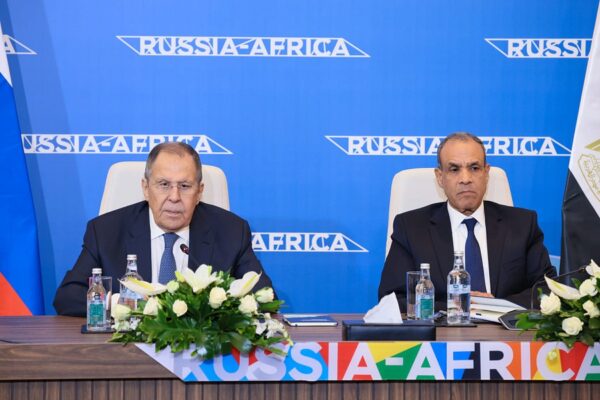
In a critical assessment, Russian Foreign Minister, Sergey Lavrov, at the plenary session of the Ministerial Conference held in Cairo, Egypt, noted completely the absence of African media and accredited African journalists in the Russian Federation, explaining that both Russia and Africa media can contribute immensely to the development of positive agenda in Russia’s relations with African countries.
“Objective media coverage in both regions, strengthening ties between Russian and African journalists, opening new Russian media outlets in African countries and African media outlets in Russia, and implementing joint educational programs are making a significant contribution to the formation of a positive Russian-African agenda,” emphasized Lavrov during the session.
With regards to Russian media, Lavrov pointed to support measures for opening Russian media across Africa. For Lavrov, the current low representation does not reflect the growing political relations and economic ties between Russia and Africa. That however, Russia is still struggling to build its media network, weaker in comparison to New York Mayor’s Bloomberg, BBC, Reuters, Associated Press, Agence France Press, Al-Jazeera, China’s CCTV and Xinhua News Agency, and many others—that have greatly expanded their international coverage and operations, particularly, in Africa.
For instance, as far back in 2006, during the first FOCAC Summit in Beijing, the Chinese government presented its vision on media cooperation with Africa. Media exchange should “enhance mutual understanding and enable objective and balanced media coverage of each other” and through the Forum on China–Africa Cooperation, the Chinese influence on the African media sphere has increased. In 2006, China Radio International (CRI) was established in Nairobi followed by the launch of the Chinese state-run CGTN Africa and the establishment of an African edition of China Daily in 2012.
Additionally, China offers workshops and exchange programs to African journalists to introduce them to Chinese politics, culture, and economy as well as the Chinese media system. China does not only invest in African media outlets and journalists but also their digital infrastructure. The Chinese government grants financial and technical aid to African countries to expand their communications structure.
While Russian Ministry of Foreign Affairs, the Department of Information and Press, is still contemplating whether to grant African reporters an accreditation (working document), western media operators continues largely to control the estimated 280 million of Africa’s population that constitutes the middle-class, the information-consuming market, and have no other alternative but to depend on western media reports. The estimated 280 million (twice Russia’s population), is most likely interested in reading Russia’s economic achievements, proposed conference and summit’s investment initiatives for African countries.
In late November, Andrey Kondrashov, director general of Russia’s state-owned news agency TASS, announced the opening of Russian media representations in Africa, emphasizing the plan as “strategic media development” within the current geopolitical context. “In the near future, we are planning to open news bureaus in Angola, Cameroon, Nigeria, and Madagascar,” Kondrashov said at a news conference. The Russia state news agency, currently, has offices in Egypt, Tunisia, Kenya, Morocco, Zimbabwe and South Africa.
Professor Irina Abramova, director of Africa Studies Institute, noted in her contribution during the November media conference, that Russian officials have consistently complained of anti-Russian propaganda perpetuated by western media. And even in changing geopolitical conditions, particularly with emerging multipolar environment, the Russian Ministry of Foreign Affairs has highly discriminated against accrediting African media and African journalists to work in the Russian Federation.
“Information today has become a powerful productive force, capable of shaping objective reality. In these conditions, the role of journalists is extremely important, because the nature of Russian-African relations—whether they will be built on truth or lies—depends on how a given fact is presented,” said Professor Abramova. Stressing for media establishing its presence in Russia, she sadly informed that there is absolutely no African news agency and no African reporters with permanent accreditation in the Russian Federation.
She noted that African countries remember the USSR’s contribution to the collapse of the colonial system, yet new forms of colonialism, including informational ones, continue to emerge to this day. Under these circumstances, it is especially important for African states to strengthen their sovereignty. Concluding her speech, Professor Abramova called on African media to more actively establish their presence in Russia, recalling that currently not a single agency has permanent accreditation in the country.
Professor Alexey Vasiliev, the first Special Representative of Russian President for Relations with Africa (2006-2011) and currently the Head of the Center for African and Arab Studies at the Peoples’ Friendship University of Russia, told the audience in Sochi: “Africa is largely unaware of Russia, since African media mainly consumes information the Western media sources and then replicates them. And all the fake news, the Rusophobia and anti-Russian propaganda, spread by the western media, are repeated in the African media.”
“Measures are needed to enable us to better understand each other,” suggested Professor Vasiliev, who regularly advises the Presidential Administration, the Government of the Russian Federation, both chambers of the Federal Assembly, and the Russian Foreign Ministry.
Artem Kozhin, now Russian Ambassador to the Island of Seychelles. During the Russia-Africa Summit, Artem Kozhin, who represented the Foreign Ministry’s Information and Press Department, at the panel discussion on media, explained in an indepth report that some 300 news bureaus from 60 countries were operating in Russia, including 800 foreign correspondents and 400 technical personnel in the Russian Federation. According to his interpretation, the extremely low representation of African media hardly meets the level of current developing relations between Russia and Africa. “We invite all interested parties to open news bureaus and expand media cooperation with Russia,” Kozhin said at the gathering, inviting Africa media to Moscow.
As indicated from above, African media has not attracted any importance. Rather, Russian officials have questioned the credibility of African media, its combined strength and capability to operate effectively in the Russian Federation. Notwithstanding the geopolitical obstacles, Russia has instruments for media cooperation. Yet, officials desperately complain over anti-Russian media campaign perpetuated by the western media in Africa. Further, appropriately to say that Russia has a distinctive feature in comparison with other countries: inability to move away from intentions to taking concrete steps, especially this time, amending policy approach and administrative rules in the context of changing geopolitical situation.
During the previous two summits: in Sochi (2019) and in St Petersburg (2023), the theme on media was reviewed and extensively discussed at the thematic sessions, recommendations were put forward for implementation. In any case, between the first Russia-Africa Summit held in 2019 and now— setting forth for the third (in 2026), not a single African media practitioner, not a single African media has been accredited by the Russian Foreign Ministry.
On May 16, Sergey Lavrov chaired the Foreign Ministry Collegium meeting on the theme titled “Concept of the Russian Federation on Cooperation with African Media” which stresses the need to cooperate with African media as Russia looks forward to strengthening relations and intends to share its strategic interests with Africa. According to the MFA report: “the Russian Federation is implementing programmes of cooperation with various African countries which include the media, education, culture, art, and sport.” In order to overcome these challenges mentioned above in this article, both Russia and Africa have to take concrete steps toward building a more collaborative media landscape.
On December 19-20, in Cairo, Egypt, the Ministerial Conference has finally agreed, to focus on the full implementation of the Russia-Africa Partnership Forum Action Plan for 2023-2026, approved at the second Russia-Africa Summit in St. Petersburg in 2023. It was held for the first time on the African continent, attended by heads and representatives of the foreign policy ministries of 52 African states and the executive bodies of eight regional integration associations. In the mean while, Russia is simultaneously planning for the third Russia-Africa Summit scheduled for 2026 in the Republic of Equatorial Guinea.
















You must be logged in to post a comment Login