
Africa
Let’s Eschew Primordial Sentiment, And Ask, “Is Mr. President Doing Well?, by Isaac Asabor

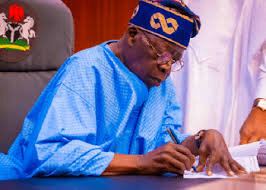
In the dynamic landscape of Nigerian politics, discussions about the performance of any sitting president often become entangled in a web of primordial sentiments in the form of tribalism, politics, and religious bias. These sentiments, deeply rooted in our society, cloud our judgment and prevent us from evaluating leadership on its merits. Thus, the current administration under President Bola Ahmed Tinubu is no exception. As citizens of a nation striving for progress, it is imperative that we eschew these sentiments and ask ourselves a fundamental question: “Is Mr. President doing well?”
In fact, Nigeria’s diversity is both its strength and its Achilles’ heel. With over 250 ethnic groups and numerous religious affiliations, the tendency to view leadership through the narrow lens of tribal allegiance is high. This has led to the dangerous narrative where a leader’s performance is judged not by the impact of policies initiated under his or her administration but by ethnic or religious background. For the sake of clarity, it is expedient to opine that when President Tinubu assumed office; opinions were sharply divided, not based on his policies or vision but on where he hails from, particularly as his emergence as a presidential candidate of the All Progressive Congress (APC) resonated in the refrain, “Awalokan”. This division does nothing to serve the nation’s best interests.
To answer the question of whether Mr. President is doing well, we must first strip away these layers of bias. This is as there is no denying the fact that the true measure of any leader lies in his or her ability to govern effectively, implement policies that foster growth, and address the pressing needs of the citizenry.
Thus, one of the most significant yardsticks for assessing a president’s performance is the state of the economy. Since President Tinubu took office, the economy has been under intense scrutiny. With rising inflation, a weakening naira, and the removal of fuel subsidies, even as the economic terrain has become increasingly challenging for the average Nigerian. These measures, though unpopular, are often defended by the government as necessary for long-term stability.
But the critical question remains: Are these policies yielding the intended results? Have they provided any relief or hope for the future? The removal of subsidies, for instance, was touted as a way to free up funds for critical infrastructure and social welfare programs. Yet, for many Nigerians, the immediate effect has been a sharp increase in the cost of living, without a corresponding improvement in their quality of life.
Without a doubt, a fair assessment of Mr. President’s economic policies requires us to look beyond the immediate hardships and consider the potential long-term benefits. Are we laying a foundation for sustainable growth, or are we merely prolonging the suffering of the masses?
Another crucial aspect of Mr. President’s performance is the security situation in the country. Under Tinubu’s leadership, Nigeria continues to grapple with issues of insurgency, banditry, and communal clashes. While no administration has found an easy solution to these complex problems, the approach and commitment to finding lasting peace are vital.
In fact, President Tinubu’s administration has made some strides in strengthening the military and enhancing security operations. However, the persistence of these challenges raises concerns about the effectiveness of these efforts. Is the government doing enough to protect lives and property? Are there new strategies being implemented to address the root causes of these conflicts, or are we merely treating the symptoms?
Furthermore, the question of national unity is paramount. Has President Tinubu been able to foster a sense of belonging among all Nigerians, regardless of their background? The deep-seated divisions that exist within our society require a leader who can rise above tribal and religious lines to unite the country. Has Mr. President succeeded in this regard?
The state of healthcare and education are also critical indicators of a government’s performance. Despite promises of reform and improvement, Nigeria’s healthcare system remains in dire straits, with many citizens unable to access basic medical services. The education sector, too, faces significant challenges, from underfunded schools to strikes by university staff.
These sectors are the bedrock of any society, and their neglect has long-term consequences for the nation’s development. Has President Tinubu’s administration taken concrete steps to address these issues, or are we witnessing more of the same rhetoric without action?
The question of whether Mr. President is doing well cannot be answered through the lens of primordial sentiment. It requires a critical, unbiased evaluation of his policies, actions, and their impact on the nation. As citizens, it is our responsibility to hold our leaders accountable, not based on where they come from or which religion or political party they belong to, but on their ability to deliver on their promises and improve the lives of the people.
Let us, therefore, rise above our biases and ask the tough questions. Is Mr. President doing well? The answer, stripped of sentiment, will ultimately shape the future of our nation.

























You must be logged in to post a comment Login