
Forgotten Dairies
Nigeria’s Predicament: Why The Gods Are Not to Blame -By Zekeri Idakwo Laruba
To change our national direction, we must start with the mirror, not the ballot box. Reforms must start in the marketplace and the family unit before they can translate to public office. Only then will the constitution come alive. Only then will good leadership be sustained. Only then will Nigeria’s story turn from tragedy to triumph.

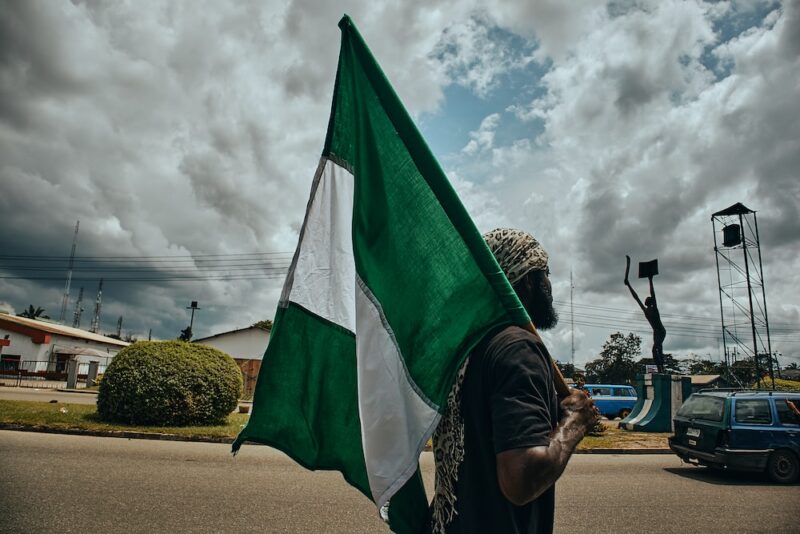
Many years ago, though I can’t quite recall what class I was in at the time. I read with deep suspense the secondary school play “The gods are not to blame,” a gripping adaptation of Sophocles’ Oedipus Rex by Ola Rotimi. The story left a lasting impression on me.
The play retells the classical Greek tragedy in a Yoruba setting, replacing Delphi with Ifa, but retained the central tragedy: a prophecy that Odewale would kill his father and marry his mother. The oracle had spoken. His parents, terrified and confused by the fate foretold, did everything to avoid it. They gave the boy away, hoping to cheat destiny. But in doing so, they unknowingly set in motion the very events they hoped to prevent.
Like a mirror held up to society, the play reminds us that fate, while powerful, is often enabled by human choices. And as I reflect on Nigeria’s present economic and political situation, I am compelled to draw a parallel. The gods, be they ancestral spirits, destiny, or structural circumstances, are not to blame for our predicament. The fault lies within us, among the citizens, and in our daily conduct. Nigeria’s crisis is not rooted in some divine curse, leadership, or preordained calamity. The tragedy is man-made, self-reinforced, and perpetuated by generations of unchecked habits.
The go-to culprit for our country’s dysfunction is always leadership, yes, he must be voted out. And in fact, we have had our share of weak, corrupt, selfish or visionless leaders. But to lay the entire burden of national failure on leaders alone is to ignore the broader ecosystem that produces and enables them. Leadership, in many ways, reflects the society from which it emerges.
As the former national secretary of the Congress for Progressive Change (CPC), Buba Galadima, recently argued on Arise TV, the problem isn’t merely the constitution or even the political structure. The constitution may have its flaws, yes, but no document, no matter how perfectly worded, can save a people who refuse to uphold its spirit. The rot goes deeper, into the very fiber of society.
The average Nigerian wants change, better roads, reliable electricity, transparent governance, reduction in cost of transportation, foodstuffs, but resists the personal sacrifice required to achieve that transformation. We want leaders who won’t embezzle funds, but we are ready to bribe our way out of traffic offences, rig student union elections, or inflate business invoices for profit. We demand accountability from the top while practicing impunity at the grassroots.
What we face is not a constitutional crisis, but a moral and cultural one. An attitudinal crisis. A society where dishonesty is normalized and rewarded cannot produce integrity at scale. A nation where people cheat customers, underpay staff, evade taxes, and applaud fraudsters as “smart” will always find itself circling the drain of underdevelopment.
You see it in business, in education, in religious institutions, even in our homes. The trader who mixes sand/stones in beans to increase weight; the employer who withholds salaries while funding a lavish lifestyle; the pastor or imam, even herbalist, who uses fear to manipulate followers; the teacher who extorts students for grades; the parent who teaches a child to lie to visitors, these are not the acts of the gods. They are human choices.
Much is said about fighting corruption in public office. But who will fight it in the private lives of citizens? In that small business of yours, are you sincere? Do you treat your staff the way you demand to be treated by your political leaders? Do you keep your promises? Are your scales balanced? Do you honour contracts? These questions are not rhetorical, they are foundational.
Corruption does not begin at the national budget office. It begins in the market stall, the classroom, the family dinner table. Before it is institutional, it is psychological. We must cleanse the mindset that normalizes dishonesty, excuses shortcuts, and praises the rich regardless of how their wealth was acquired.
What Nigeria urgently needs is a complete national reorientation campaign, not the kind that involves empty slogans or jingles on radio, but a sustained, grassroots movement to rebuild ethical standards. We need to teach honesty not just as virtue, but as power. We must reintroduce shame where wrong is done and rekindle collective pride in doing things right.
This means rethinking our educational curricula to emphasize civic duty and moral reasoning. It means reforming religious institutions to emphasize substance over spectacle. It means putting social pressure on influencers, celebrities, and community leaders to model ethical behaviour. It also means supporting the rare public officials who dare to lead by example.
If the gods are not to blame teaches us anything, it is that destiny is not an external enemy, it is a consequence of our own decisions. Nigeria is not doomed. It is not a failed state by fate. But we must be honest: we are dangerously close to reaping the full harvest of our collective neglect.
To change our national direction, we must start with the mirror, not the ballot box. Reforms must start in the marketplace and the family unit before they can translate to public office. Only then will the constitution come alive. Only then will good leadership be sustained. Only then will Nigeria’s story turn from tragedy to triumph.
The gods are watching, yes. But they are not to BLAME. WE ARE!
Zekeri Idakwo Laruba is the Assistant Editor PRNigeria and Economic confidential. idakwozekeri93@gmail.com
























You must be logged in to post a comment Login