Forgotten Dairies
No More Excuses: Any Party That Wants Nigerians Vote Must Put Insecurity and Unemployment First –By Muhammad Bashir Abdulhafiz
To the young people of Nigeria: our future is in our hands. The 2027 election is our opportunity to demand change. We must not waste it. We must ask tough questions. We must hold candidates accountable. We must refuse to be bought with small gifts or empty promises. And when we vote, we must vote for those who have delivered through their plans, their records, and their commitment that they will put insecurity and unemployment first. No more excuses. No more delays. No more empty promises. The time for action is now.

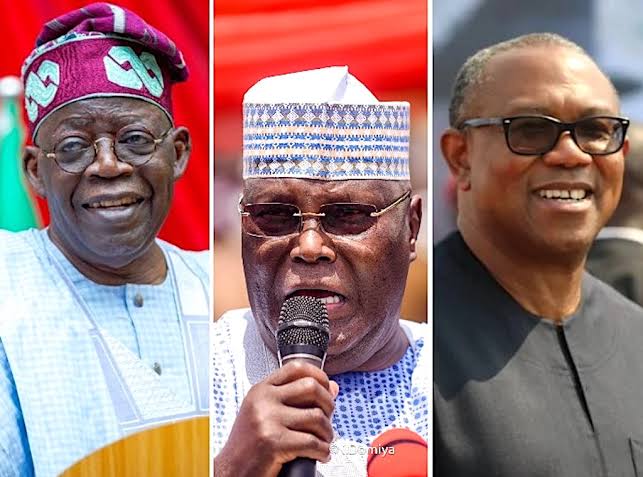
As we approach the 2027 general election, the air is once again thick with campaign promises. Politicians will crisscross the country, shake hands, pose for photographs, and recite well rehearsed speeches about a brighter future. They will speak of development, progress, and transformation. They will tell us they have the answers. But if history has taught us anything, it is that Nigerians have heard it all before.
In 2023, candidates lined up to promise us security and jobs. President Bola Tinubu pledged to make security his ‘absolute priority’. Peter Obi promised to invest heavily in education and make unemployment history. All the leading candidates vowed to tackle insecurity, whether through recruiting more security personnel or upgrading the military. Yet here we are in 2026, and what do we have to show for it? Insecurity is worse than ever. Unemployment remains a national emergency. And Nigerians are tired. This is the message every political party must hear loud and clear before 2027: No more excuses. Any party that wants our votes must put insecurity and unemployment first not second, not third, not somewhere in a manifesto after they have secured power. Just first.
Let us look at the facts. Between July 2024 and June 2025 alone, 2,938 people were kidnapped across Nigeria’s North-West, accounting for 62.2 per cent of the 4,722 kidnapping victims recorded nationwide. Zamfara State alone recorded 1,203 victims, that is 1,203 human beings, each with a name, a family, and a life. The National Human Rights Commission documented 651 kidnapping incidents and 492 killings between January and March 2026. But these are just numbers. Behind them are real stories. Amnesty International reported that 166 people were abducted from three churches in Kaduna State in January 2026. In early April, 150 people were kidnapped in Zamfara. Armed bandits attacked schools in Oyo State and kidnapped more than 40 students, staff, and pupils. The International Organisation for Migration has disclosed that 737,073 people are internally displaced across the North-West, with about 620,000 of them displaced by armed banditry and kidnapping.
Communities are under attack. Citizens are kidnapped from their homes and places of work. Travellers are abducted on highways. Farmers are driven from their lands. Innocent men, women and children are killed, wounded, displaced and, in some cases, brutally beheaded. These are not abstract statistics. These are the lived experiences of millions of Nigerians. And the government that has spent ₦5.41 trillion on security in the 2026 budget, the highest share of any sector still cannot protect us.
Now look at the other side of the coin. The National Population Commission has warned that youth unemployment remains at about 33 per cent, while underemployment exceeds 20 per cent. The State of the Nigerian Youth Report 2025 paints an even grimmer picture, putting youth unemployment at 53 per cent and describing close to 80 million young Nigerians as jobless. Roughly 1.7 million graduates leave universities and polytechnics every year into a market that cannot absorb them. Eighty million young people without jobs. Eighty million dreams deferred. Eighty million futures on hold.
The link between unemployment and insecurity is not a secret. Analysts have long pointed out that poverty and unemployment are the root causes driving banditry, kidnapping, and other criminal activities. The National President of PERESSA, Rufus Olusesan, has identified unemployment as the major cause of kidnapping, banditry and other social vices in the country. He warned that over 40 per cent of our youth are unemployed or underemployed, leaving thousands of graduates spending years searching for meaningful work. ‘Joblessness is fueling insecurity’, he said. ‘Banditry, kidnapping, and fraud are thriving because idle hands are the devil’s workshop. When a father cannot feed his family, society becomes unsafe for all of us’.
This is the uncomfortable truth that too many politicians refuse to acknowledge. A hungry young person with no hope is a recruitment opportunity for bandits and terrorists. A desperate graduate who has spent years searching for a job is vulnerable to criminal networks that promise quick money. We cannot fight insecurity without fighting unemployment. The two are not separate problems. They are two sides of the same crisis. Here is what has happened, election after election. Candidates promise the moon. They are elected. They form government. They appoint advisers, set up committees, and launch programmes. Some of these programmes even sound impressive. The 3 Million Technical Talent programme. The Nigerian Education Loan Fund. The Renewed Hope Employment Initiative. Each with its own budget, its own press conference, and its own photo opportunity.
But what actually changes for the ordinary Nigerian? The programmes are underfunded, poorly implemented, or simply abandoned. The beneficiaries are few, the impact minimal, and the promises are forgotten. Meanwhile, insecurity worsens. Kidnappings increase. More people are displaced. More young people remain jobless. And the politicians who promised to fix everything are already preparing their campaigns for the next election, hoping we have short memories. A recent survey by SBM Intelligence found that nearly 80 per cent of Nigerians believe the country is moving in the wrong direction ahead of the 2027 general election. Forty five per cent of respondents identified insecurity and terrorism as their most pressing concern. These are not the numbers of a satisfied electorate. These are the numbers of a people who have lost patience.
To every political party and every presidential candidate preparing for 2027, let me be clear: We are no longer interested in vague promises and empty rhetoric. We need concrete, actionable, and measurable plans.
First, a comprehensive and realistic security strategy. Not just more spending on weapons and equipment, but a fundamental overhaul of our security architecture. Better intelligence gathering. Stronger inter-agency cooperation. Community based security structures that involve local people in protecting their own communities. The establishment of state police and other decentralised security structures capable of improving intelligence gathering, rapid response and local accountability. And most importantly, addressing the root causes of insecurity, poverty, unemployment, and social exclusion.
Second, a genuine job creation agenda. Not token programmes that train a few thousand people and call it a success. Not handouts that create dependency instead of dignity. We need an industrial policy that creates millions of jobs. Investment in manufacturing, agriculture, technology, and the creative industries. Support for small and medium enterprises that are the backbone of our economy. An education system that actually prepares young people for the jobs that exist. Nigeria needs to create millions of jobs every year just to absorb its teeming unemployed population.
Third, accountability. We need to know exactly what each candidate has done, not what they promise to do, but what they have actually achieved. If you have been in government before, show us your record. If you are promising something new, tell us exactly how you will pay for it and how you will measure success. No more ‘trust me’. No more ‘it will take a little time’. No more excuses.
This is not about politics. This is not about party loyalty. This is about survival. Every day that insecurity continues unchecked, more Nigerians lose their lives, their loved ones, their homes, and their livelihoods. Every day that unemployment persists, more young people lose hope, and more families sink deeper into poverty. The future of our country, and the future of an entire generation is at stake. The Northern Economic League recently warned that Nigeria does not need another ceremonial president. Nigeria needs a problem solver. I agree completely. We need a leader who understands that insecurity and unemployment are not separate issues to be tackled in isolation, but a single crisis requiring urgent, and coordinated action. We need someone who will treat these issues not as campaign talking points, but as the emergencies they are.
To the young people of Nigeria: our future is in our hands. The 2027 election is our opportunity to demand change. We must not waste it. We must ask tough questions. We must hold candidates accountable. We must refuse to be bought with small gifts or empty promises. And when we vote, we must vote for those who have delivered through their plans, their records, and their commitment that they will put insecurity and unemployment first. No more excuses. No more delays. No more empty promises. The time for action is now.
Muhammad Bashir Abdulhafiz wrote from Jos, and can be reached via abdulhafizmuhammad81@gmail.com instantly.