
Forgotten Dairies
Positive Developments Under IGP Kayode Egbetokun -By Adewole Kehinde
If I may, Nigeria deserves that the promise of this reformist agenda be fulfilled, not just for the officers, but because the safety and trust that come with a well-functioning police force are foundational to democracy, economic development, and peace.

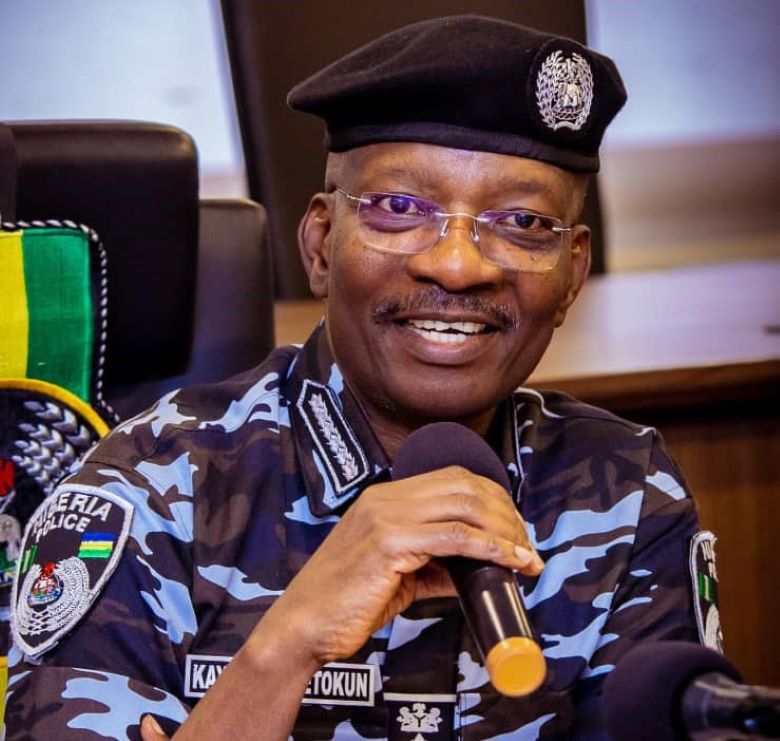
Since Dr Kayode Adeolu Egbetokun assumed office as Inspector General of Police in June 2023, the Nigeria Police Force has embarked on a course of reforms and welfare interventions that mark a significant departure from past inertia. While many challenges persist, there is ample reason to believe that his leadership is steering the force toward greater professionalism, better morale, and improved capacity.
Below, I present an assessment of the systematic reforms he has implemented, followed by a discussion of welfare initiatives, and reflections on what this means for policing in Nigeria.
Systematic Reforms
1. Vision for a Modern, People-Friendly Police Service
From his first public statements as acting IGP, Egbetokun laid out a vision of a police force that is “professionally competent and people-friendly, driven by the rule of law.” This signals a shift from a reactive, sometimes adversarial posture toward one based on service, community trust, and respect for rights.
2. Technology-Driven Policing
One of the centrepieces of his reform agenda is leveraging technology to enhance operations. He has emphasised intelligence-led policing; called for modern tools in surveillance, data gathering, cybercrime response etc.
This is critical, given the changing nature of crime in Nigeria — low-tech interventions are no longer sufficient.
3. Operational Strengthening & Infrastructure Renewal
Under his leadership, there has been increased attention to infrastructure: the rehabilitation and redevelopment of police barracks, the construction of modern command headquarters, and the upgrading of divisional facilities.
Also, the formation of special intervention units and improved deployment of resources have contributed to noticeable gains in crime control (e.g. arrests, rescue of kidnapping victims, recovery of firearms).
4. Systemic Advocacy and Budgetary Reform
Egbetokun has not only initiated internal reforms; he has also pushed externally: appealing to the National Assembly to alter the “envelope system” in budgeting for the police, advocating for special operations accounts, and insisting on more realistic and sufficient funding for overheads, capital expenditure, and welfare.
5. Human Resource Development and Ethical Reform
Efforts have been made to professionalise the force through training, promotions, recognition, and greater accountability. A culture of merit, ethical conduct, and integrity is being promoted. Officers are being held to higher standards, and there are mechanisms to reward excellence.
Welfare Programmes: What Egbetokun Has Done
A reform agenda that does not attend to welfare is likely to fail. Fortunately, IGP Egbetokun has made the welfare of the rank and file a central component of his leadership.
1. Housing and Accommodation
* He launched a Police Housing Scheme to provide affordable houses to officers of all ranks across Nigeria.
* He has initiated the redevelopment of deteriorated police barracks nationwide.
* The Police Housing Summit convened under his leadership to strategise how to address the long-standing accommodation challenges.
2. Insurance, Pension, and Financial Support
* Egbetokun has expanded and improved insurance schemes: Group Life Assurance, Personal Accident schemes, Family Welfare schemes, Nigeria Police Welfare Insurance Scheme, etc.
* Regular and large disbursements under the IGP Family Welfare Scheme: e.g. in January 2024, ₦2.86 billion to 785 beneficiaries; as at September 2025, over Twenty-Four Billion, Two Hundred Million Naira (N24.2B) has been disbursed, benefiting 9,735 families of fallen officers.
* Promises for improvement in pension earnings for retired officers: pushing for pension reforms.
3. Uniforms, Equipment, and Working Essentials
* New kits and uniforms have been approved for personnel of other ranks to bolster professionalism and morale.
* Improvement of operational logistics, vehicles, arms, etc., has also been part of the agenda, albeit with obstacles.
4. Health, Safety and Mental Wellness
* Mobile clinics have been donated and deployed in collaboration with international partners to extend healthcare access for officers (and shared with communities).
* There is growing recognition of mental health: Egbetokun has made statements about attending to psychological needs, supporting policies for mental well-being.
5. Recognition and Career Incentives
* Introduction of awards and commendations for officers and teams who perform meritoriously.
* More predictable/promised improvements in promotions, clearer expectations, and more engagement with personnel welfare beyond mere security operations.
Impact & Reflections
These reforms and welfare interventions have had several positive effects:
* Morale boost: Officers feel more valued when their welfare is taken seriously, better housing, uniforms, insurance payouts, etc., and reduce bitterness and neglect.
* Improved operational capacity: Better logistics, equipment, intelligence capacity and infrastructure translate into more effective crime response, as shown in the improved rescue of kidnapping victims, firearms recoveries, etc.
* Public perception: A more responsive police force, caring for its own people, adopting rights and a people-friendly stance, is likely to gain more public trust. Community policing efforts under Egbetokun help in that regard.
* Structural foundations for sustainability: The push for better budgeting, infrastructure, systems (including pensions, insurance, etc.) suggests that the reforms are not just cosmetic but intended to embed change.
Challenges & What Still Needs Strengthening
No reform path is without hurdles. From available reporting:
* The always looming problem is funding. Good plans need sustained financial commitment. Even when vision is bold, without budgetary backing, delays or under-delivery risk undermine confidence.
* Bureaucratic inertia and systemic corruption remain barriers: implementing new systems (insurance claims, pensions, housing) in a timely, transparent manner across all commands is a difficult task.
* Scaling up uniformly: Nigeria is large and diverse. What works in Abuja or in major states may lag far behind in remote or under-resourced commands.
* Ensuring that reforms are not just announcements but delivered: construction of barracks, housing, promises on pensions have to translate into lived improvements.
* Mental health and psychological welfare are still emerging fields; they need strong institutional frameworks, counselling, health services, etc., not just statements.
Conclusion
In sum, under IGP Kayode Egbetokun, the Nigeria Police Force has embarked on a credible reform and welfare drive, marked by:
* Thoughtful policy vision (people-centred, rights-oriented, technology-enabled policing),
* Tangible welfare improvements (housing, insurance, uniforms, health services),
* Operational gains (crime control, infrastructure),
* The beginnings of structural changes (budget advocacy, systems for accountability).
For those who believe that the police force is central to national stability and social justice, this is welcome progress. But to consolidate gains, consistent, transparent implementation is key, no shortcuts. The government, police leadership, rank and file, oversight bodies, and the public must all play their part.
If I may, Nigeria deserves that the promise of this reformist agenda be fulfilled, not just for the officers, but because the safety and trust that come with a well-functioning police force are foundational to democracy, economic development, and peace.
Adewole Kehinde is a public affairs analyst based in Abuja. 08166240846. kennyadewole@gmail.com @kennyadewole





















You must be logged in to post a comment Login