Forgotten Dairies
Regardless Of Politics, Tinubu Played A Pivotal Role In June 12 Struggle -By Isaac Asabor
The truth is stubborn. Regardless of politics, Tinubu played a pivotal role in the June 12 struggle. That fact is documented, verifiable, and cannot be erased by the bitterness of political rivalry or the convenience of television commentary.

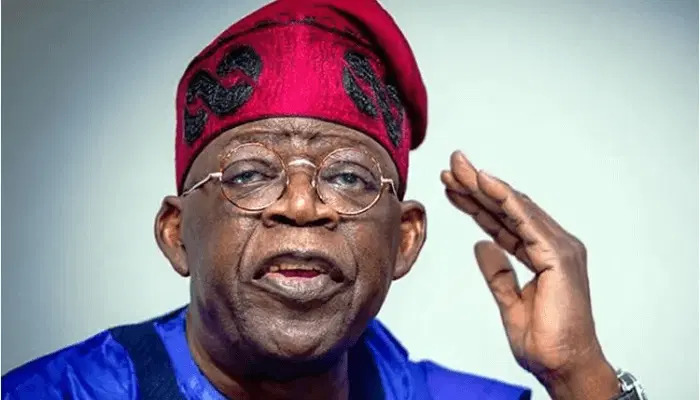
In a country where history is often twisted to fit political narratives, recent comments by former Governor Sule Lamido alleging that President Bola Ahmed Tinubu frustrated the struggle for June 12 must be boldly confronted, not out of blind loyalty, but in defense of historical accuracy. Lamido’s assertion, made on national television, is not only inaccurate but also a gross misrepresentation of a defining chapter in Nigeria’s democratic journey.
To set the record straight, the June 12 struggle is not just a date on the calendar, it is the symbol of Nigeria’s democratic resistance, the soul of our electoral awakening, and a painful reminder of what happens when a nation allows tyranny to eclipse the popular will. Moshood Kashimawo Olawale (MKO) Abiola’s presidential mandate, freely given by Nigerians on June 12, 1993, but wickedly annulled by the military junta under General Ibrahim Babangida, ignited a chain of events that shaped our democratic history.
While many journalists, civil society activists, labour unions, student leaders, and political actors fought for the realization of June 12, Bola Ahmed Tinubu’s role was neither peripheral nor cosmetic. It was central, courageous, and costly.
Sule Lamido’s attempt to recast Tinubu as a villain of June 12 smacks of revisionist politics. Coming from someone who was part of the political elite during Nigeria’s tumultuous military years, Lamido should know better than to throw baseless accusations into the public arena without reckoning with facts.
Tinubu, then a first-term Senator representing Lagos West under the Social Democratic Party (SDP), was among those who publicly and vehemently opposed the annulment of the June 12 elections. While some of his contemporaries took cover or even realigned with the military for political survival, Tinubu took the harder path. He joined forces with the National Democratic Coalition (NADECO), a pro-democracy group that put everything on the line to demand the restoration of Abiola’s mandate and a return to democratic governance.
To accuse Tinubu of frustrating the June 12 struggle is not only misleading, it is insulting to the memories of those dark days when standing up against the military often meant exile, imprisonment, or death. Tinubu was one of those forced into exile for opposing the junta. He did not flee out of fear; he left because his life was in imminent danger. The military regime, under General Sani Abacha, had zero tolerance for dissenters, especially those associated with NADECO.
While abroad, Tinubu continued to fund and participate in the resistance, organizing protests, lobbying international bodies, and supporting underground operations designed to keep the flame of June 12 alive. He used his personal resources to sustain the movement at a time when many were afraid to be associated with the cause. This is not the behavior of a man who “frustrated the struggle.” It is the mark of a committed democrat.
Without resorting to smear campaign in this context, it is not out of place to opine that Lamido publicly on a national television chose to apply selective amnesia and political Hypocrisy in making his comments.
His comments betray a dangerous selective amnesia. It is ironic that many of those now loudest in accusing Tinubu of betrayal were either silent during the June 12 crisis or were cozying up to the military cabal. History is littered with records of their political opportunism.
If I may ask, “Was Lamido himself part of NADECO?” “Did he ever go underground?” “Was he forced into exile?” “Did he openly challenge Abacha or IBB in the way Tinubu and others did?” There is no known evidence that Lamido risked his political career or personal safety for the June 12 cause. Yet, from his armchair of retrospective comfort, he now attempts to rewrite the contributions of those who paid the price.
Even Wole Soyinka, one of Nigeria’s most respected moral voices and a staunch pro-democracy icon, has openly acknowledged Tinubu’s role in the fight for June 12. So too have late Ayo Adebanjo, late Ndubuisi Kanu, and other NADECO veterans. These were or are people who were in the trenches, not on Twitter or TV studios decades later.
Without a doubt, the moral cost of resistance is irrefutable. It is important to understand that the struggle for June 12 was not about grandstanding or political branding. It was about placing democracy above personal interest. Tinubu had everything to lose and little to gain at the time, he was a rising political star, a successful professional, and had no certainty that democracy would return soon enough for him to benefit from his sacrifices. His eventual rise to become governor of Lagos in 1999 was not a premeditated reward; it was the fruit of a long and risky commitment to the ideals of a democratic Nigeria.
The moral cost of the June 12 resistance was high. Some, like Kudirat Abiola, paid with their lives. Others, like Beko Ransome-Kuti and Gani Fawehinmi, were serially detained. Tinubu took his place within that persecuted community of patriots. His house was raided. His friends were monitored. His voice was hunted. He did not sell out, he stood up.
Looking at the issue from the perspective of Tinubu’s ongoing democratic credo, say what you will about Tinubu’s politics today; that is a separate argument. But to distort his past is to wound the very soul of June 12. Tinubu’s contributions to democratic stability in Nigeria did not end with exile. As Lagos governor, he institutionalized reforms that strengthened the judiciary and local governance, often at great personal and political cost, remember the prolonged battle with President Olusegun Obasanjo over local government allocations. He did not buckle under federal pressure, much like how he stood up to the military years earlier.
In recent years, whether you agree with his methods or not, Tinubu has remained a critical player in sustaining Nigeria’s democratic framework. That cannot and should not be casually erased to serve temporary political talking points.
Without a doubt, we must guard against historical revisionism. What Lamido and others like him are doing is dangerous. Historical revisionism is not just a matter of opinion, it becomes propaganda when it ignores evidence and contradicts lived reality. If we allow falsehoods to become dominant narratives, the next generation will grow up believing that democracy came cheap, that June 12 was won by committee meetings and tweets rather than blood, exile, and defiance.
We must honour all who fought for democracy, not desecrate their names because of today’s political alignments. It is morally indefensible to weaponize the June 12 legacy against one of its architects for the sake of a soundbite or a cheap dig.
Sule Lamido’s claim that Tinubu frustrated the June 12 struggle is not only historically hollow, it is morally bankrupt. While Tinubu is not above criticism, especially in his current role as President, dragging his legacy through the mud to score political points only cheapens the real sacrifices that were made to secure Nigeria’s democracy.
The truth is stubborn. Regardless of politics, Tinubu played a pivotal role in the June 12 struggle. That fact is documented, verifiable, and cannot be erased by the bitterness of political rivalry or the convenience of television commentary.
Let us preserve the truth for posterity. Nigeria owes it to itself.