
Africa
How NUJ Messed Up Journalism By honoring Yahaya Bello With Lifetime Achievement Award -By Isaac Asabor
By honouring Yahaya Bello with a Lifetime Achievement Award while he stands trial for one of the most shocking corruption cases in Nigerian history, the NUJ has done more than just mess up, it has broken faith with the public and betrayed its core mission.

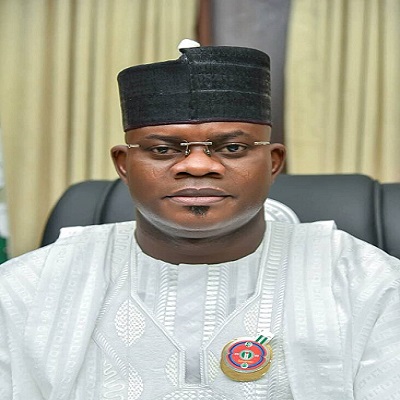
In a nation where credibility is scarce and moral courage even scarcer, the recent decision by the Nigeria Union of Journalists (NUJ) to honor former Kogi State Governor Yahaya Bello with a Lifetime Achievement Award on Media Empowerment is nothing short of a national disgrace. It is a textbook example of how an institution can betray its core values, undermine public trust, and mock the very profession it claims to defend.
At a time when Bello is facing serious corruption charges, including allegations of misappropriating and laundering more than ₦190 billion in public funds, the NUJ chose to elevate him with an award that suggests excellence, integrity, and lasting impact. The contradiction is not only shameful; it is dangerous.
The ceremony, held in Abuja to mark the NUJ’s 70th anniversary, was supposed to be a celebration of journalistic achievement and institutional legacy. Instead, it became a symbol of complicity, confusion, and cowardice.
According to the NUJ’s leadership, the award was based on Bello’s “contributions to media development,” including his so-called GYB Annual Workshops, which allegedly trained hundreds of journalists during his tenure. But the timing of this award, at the peak of a major corruption trial, raises serious questions about NUJ’s judgment, motivation, and moral compass.
This is not about denying that Bello may have funded some media programmes. The question is: At what cost? And with whose money?
Bello is currently answering to multiple charges filed by the Economic and Financial Crimes Commission (EFCC), which accuse him of looting public funds, laundering billions through shell companies, bureau de change operations, and fraudulent contracts. Witnesses have testified to how over ₦3 billion was hidden, how a ₦950 million Abuja mansion was bought in cash, and how foreign tuition and personal luxury expenses were covered with allegedly stolen money.
This is the man the NUJ deemed worthy of a lifetime honour? Can NUJ Justify This Award? Absolutely not. And certainly not without insulting the intelligence of the public and its own members.
If the NUJ believes Bello deserves this recognition, then it is either willfully blind to the gravity of his legal troubles or recklessly indifferent to how such decisions affect journalism’s image in Nigeria. In either case, the union has failed in its role as a moral and professional compass.
Public justification for this award is impossible without sounding hollow. Honoring a man under active investigation, one who even dodged court appearances until a bench warrant forced his hand, sends a signal that credibility in Nigeria is for sale, and the price is not even that high.
Worse still, it shows that the NUJ is willing to turn a blind eye to corruption if a politician tosses some breadcrumbs toward the media, in the form of workshops, handouts, or sponsorships.
This incident has shredded the NUJ’s credibility in the eyes of journalists, civil society, and the general public. What should have been a noble moment of reflection and pride at 70 years became a circus of contradictions.
How do we tell the public to trust journalists when the umbrella union of the profession celebrates the same man its members have been covering in court reports for corruption and abuse of power? How do editors tell reporters to pursue tough stories when their union rolls out the red carpet for the very people they are investigating?
This is not just hypocrisy. It is betrayal. It tells young journalists that truth-telling is less valuable than proximity to power. It tells the public that journalists can be bought. And it tells corrupt politicians that all they need to do to clean their public image is host a few press briefings, fund a media dinner, or run a training program.
Could This Award Influence Court Proceedings? While the award may not directly affect legal outcomes, it absolutely affects public perception, and by extension, judicial atmosphere, especially in a country like Nigeria where institutions are already compromised by political interference.
By honoring Bello, the NUJ has effectively handed his legal team a public relations victory. They can now argue that even media professionals recognize and support his legacy, despite his active prosecution. It undermines the seriousness of the trial, adds a layer of social endorsement, and muddies the waters of justice.
In an ideal democracy, institutions know when to be neutral, when to be vigilant, and when to distance themselves from individuals with pending criminal matters. The NUJ, in this case, crossed every ethical boundary.
This award is a warning sign that journalism in Nigeria is teetering on the edge of irrelevance. When a media union begins to prioritize patronage over principle, it ceases to be a defender of democracy and becomes an agent of propaganda.
Let us be clear, journalism is not a favor granted by politicians. It is a duty, to investigate, to report, to expose. The NUJ’s decision to honor Yahaya Bello, especially now, is an open admission that the union has lost its direction.
This is not just a problem of optics. It is a crisis of integrity.On the way forward, it is germane to opine that there is still one honorable thing the NUJ can do: retract the award and apologize. It will not erase the damage, but it will show that the union still has the capacity for self-correction. Doing nothing will only confirm what many already suspect, that the union is no longer interested in protecting journalists, but only in protecting its relationship with political benefactors.
The NUJ must also revisit its award protocols. Are there no ethical guidelines? Are there no vetting mechanisms? Was this award approved by consensus or handed out unilaterally by a few politically connected individuals?
If Yahaya Bello can be honored while still facing massive allegations of financial crime, who else is on the waiting list?
In fact, as a message to young Journalists, who are aspiring to become reporters, editors, and photojournalists who still believe in the power of the pen: do not let this moment discourage you. This award does not represent you. It represents the failure of a few at the top who have traded their responsibility for relevance.
Journalism is still noble. Truth still matters. And the fight for accountability must continue, even if it means challenging your own union.
By honouring Yahaya Bello with a Lifetime Achievement Award while he stands trial for one of the most shocking corruption cases in Nigerian history, the NUJ has done more than just mess up, it has broken faith with the public and betrayed its core mission.
It now stands at a moral crossroads: Retract and repent, or continue down this path of disgrace and irrelevance.
The choice is theirs. But the verdict, in the court of public opinion, is already clear: NUJ messed up journalism and the public.


























You must be logged in to post a comment Login