Opinion
Reno Omokri Vs. Davido: A Tale Of Patriotism, Criticism, And Nigeria’s Economy, by Isaac Asabor


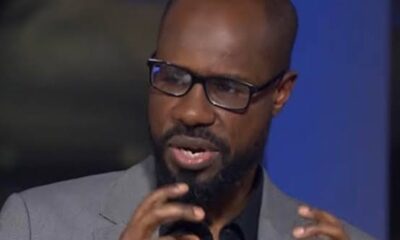
Reno Omokri, a social commentator known for his incisive takes on politics and society, recently found himself at odds with Afrobeat superstar David Adeleke, popularly known as Davido, over comments the latter made about Nigeria’s economy. In an explosive post on LinkedIn, Reno took a firm stance against Davido’s assertion that “Nigeria’s economy is in shambles,” made during a podcast appearance. While Davido’s statement resonated with many Nigerians facing daily economic challenges, Reno’s counterargument sheds light on a broader discussion about patriotism, celebrity responsibility, and the true state of Nigeria’s economy.
During his appearance on “The Big Homies House” podcast, Davido lamented Nigeria’s leadership and economic state, labeling the economy as being in “shambles” and criticizing the country’s governance. He also openly acknowledged Nigeria’s lack of strong leadership. This candid criticism did not sit well with Reno, who, in his response, accused Davido of ignorance, unpatriotism, and poor judgment, especially when speaking to a global audience.
Reno Omokri took issue with Davido’s grim characterization of Nigeria’s economy, presenting data to argue otherwise. He pointed to Wizkid’s recent record-breaking album launch, where the album “Morayo” amassed an unprecedented 12.12 million streams on Spotify Nigeria within 24 hours. For Reno, this accomplishment underscores a critical economic principle: people can only spend on entertainment if they have disposable income.
“Streaming music is purchased with disposable income,” Reno argued. “People do not have disposable income in an economy in shambles, not to mention breaking streaming records, especially on Spotify, where the average streaming cost is $10.99 monthly.”
Reno contrasted this with countries like Venezuela and Argentina, where economic collapse has eroded citizens’ spending power, resulting in diminished cultural exports. In his view, the ability of Nigerians to contribute to a vibrant entertainment economy undermines the claim that the country is in economic disarray.
Reno went further to present hard data to bolster his stance. He highlighted that Nigeria had achieved a ₦14.07 trillion trade surplus in the first half of 2024, a historic high, and noted the Nigerian Stock Exchange’s remarkable performance, with a 39.84% year-to-date increase. According to Reno, these milestones are proof that recent economic reforms, while painful, are bearing fruit.
These reforms, he argued, were essential to halt wastage, including the $1.5 billion spent monthly defending the naira and $15 billion annually on fuel subsidies. He acknowledged the short-term challenges brought about by these reforms but maintained that measures such as the increase in the minimum wage from ₦30,000 to ₦70,000 were designed to cushion the impact and enhance purchasing power.
A major thrust of Reno’s critique was aimed at Davido’s perceived lack of patriotism. Drawing a parallel with Barbadian pop icon Rihanna, who has consistently used her celebrity status to elevate her home country’s image, Reno chastised Davido for “talking down” Nigeria on a global platform.
“Rihanna never talks down on her country and instead uses her celebrity to promote Barbados,” Reno noted. “Which is why Rihanna was named a national hero and cultural ambassador for Barbados in 2018.”
Reno implied that Davido, with his dual citizenship and familial ties to Nigerian politics, ought to emulate Rihanna by speaking positively about Nigeria and contributing to its global image.
While Reno’s arguments may resonate with those who see potential in Nigeria’s economic reforms, many Nigerians might relate more to Davido’s bleak assessment. Rising inflation, unemployment, and the high cost of living paint a stark picture for the average citizen. The recent removal of fuel subsidies, though economically justified, has resulted in skyrocketing transportation and energy costs, pushing many Nigerians further into poverty.
Davido’s comments, therefore, can be seen as a reflection of this lived reality, a reality where millions struggle to afford basic necessities, let alone Spotify subscriptions.
Reno’s post raises an important question: what role should celebrities play in shaping the narrative about their countries? Should they, as Reno suggests, prioritize patriotism and highlight progress, or should they, like Davido, amplify the challenges to demand accountability?
In the age of social media, celebrities wield significant influence. For many, Davido’s criticisms may serve as a wake-up call for leaders to address the plight of ordinary Nigerians. However, Reno’s counterpoint is also valid: public figures have a responsibility to project their country in a positive light, particularly on international platforms.
The debate between Reno Omokri and Davido underscores the tension between expressing genuine concern for a nation’s challenges and maintaining a sense of national pride. While Reno’s data-driven optimism provides a counter-narrative to the prevailing pessimism, it’s crucial to acknowledge that statistics alone cannot capture the full scope of an economy’s impact on its citizens.
For Nigeria to truly move forward, both perspectives must coexist. Leaders and policymakers must take constructive criticism, like Davido’s, seriously, while influencers like Reno encourage citizens to appreciate progress and remain hopeful.
Nigeria stands at a critical juncture, where economic reforms and challenges coexist. While Reno Omokri’s optimism highlights the strides being made, Davido’s critique serves as a reminder of the work still to be done. Both voices, in their unique ways, contribute to a larger conversation about Nigeria’s future, one that requires collaboration, resilience, and a shared commitment to progress.
In the end, whether through data or song, it is clear that the dialogue about Nigeria’s economy is far from over. As citizens, we must engage with both the triumphs and the trials, finding ways to build a nation that works for everyone.