Opinion
Russia-Africa Summit, BRICS+ and Global South’s Geopolitical Developments, by Kestér Kenn Klomegâh

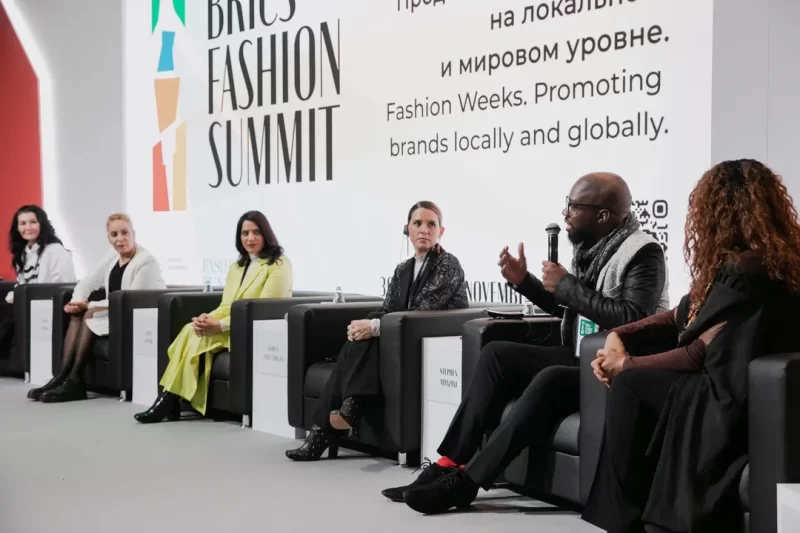
In this interview, Stephen Manzini, Chief Executive Officer and Founder of Soweto Fashion Week, and Member of the International Committee of BRICS Fashion Summit, discusses some steps that would strengthen cultural and business ties, and to a large extent, address pressing issues like geopolitics, innovation and sustainable development. For the emerging geopolitical situation to take an invaluable shape, platforms such as Russia-Africa Summit and BRICS+ Summits have to identify the existing challenges, design pathways and perhaps to take vigorous actions very important for emerging economies and in the Global South. Here are the interview excerpts:
How is Africa taking advantage of cultural doors opened by Russia in the context of building a multipolar world? By the way, how would you explain this emerging multipolar world?
Stephen Manzini: In my capacity as a member of the International Committee of the BRICS+ Fashion Summit in Moscow, I view Africa as a very unique continent with different economic, diplomatic and security exigencies, therefore Russia’s actions cannot be uniform as most countries have accepted Russia’s open doors which includes education opportunities mostly in West Africa. Even though, the ratios around education are extremely low I do believe the former USSR offered a lot more, cultural exchanges in the different spheres of influence that largely bring socio-economic transformation because of the anti-colonial deportment of the Russian Federation. In fact, its cultural doors have been acceptable in namely Angola, Senegal and South Africa to name a few in music, fashion, artisan although we have seen minimal infrastructure transpire.
This emerging multipolar world has still a long way to go, largely because of the exigencies of the African continent. Although it is possible to achieve, the African approach would have to be a meticulous regions selection because I really don’t foresee Africa with all 54 states moving coercively in the same direction, at the same pace, with one agenda of a multipolar world. Noticeably, Africa still has wars that are being aided by the Russian Federation, and such factors set Africa on the back foot.
Could you give an assessment of the public outreach diplomacy (people-at-large oriented activities) between Russia and Africa these past few years?
SM: The Russia House idea/cultural centres, an initiative sought by the Russian Federation from 2018 between Russia and Africa – this initiative has already fledged in Central African Republic (CAR), however its larger expansion has remained oratory by Russia. It is also important to note that it is impractical to do business in Russia without learning Russian, therefore I do see the importance of such centres. Moscow has, in turn, invited African nations to open the same in Russia as however the language barrier also exist in most African states. There is over 3000 languages in Africa and only one language in Russia this then imposes a serious challenge in seeing these centres flourish. Only less than half of African countries use the English language as an official language simultaneously and English is not an official language in Russia. Therefore, there has been slow progress and hesitancy in the spread of these centres, which are meant to share scientific, socio-cultural and political coalition.
Do you think African media can be an instrument for building effective bilateral cultural ties with Russia?
SM: Of course, I believe African and Russian media are instruments and have big roles to play in building effective bilateral ties only if African media can establish its own independent views on Russia without influence from the Global North. In my personal experience, I have seen how influential the media in the west can be and have continued propaganda against Russia, discouraging any form of tourism towards Russia. Perhaps, in the case of Africa this is brought about by financial backing from Global North institutions. Most people in Africa generally have a blemished view of Russia, and Russians have a prevalent view of poverty and Africa being nothing more than a basket case of the Global South. Africa is a safe investment for Russia and I strongly believe it should take bold steps and actions towards the continent. When Russia offers assistance to African countries, it’s considered a soft power move by the former Soviet Union as the media reports.
In order for effective bilateral cultural ties to take place, the African media will need to take an independent view of Russia and see it as a possible partner the same way they have given to the (PRC) People’s Republic of China.
In your opinion, to what extent is Africa currently benefiting from Russian education?
SM: There are states on the African continent that do not have well balanced access to education more importantly tertiary education, in particular, West Africa. Major courses in business and sciences can come at unobtainable fees, therefore the Russian Ministry of Science and Higher Education has certain business and science programs available for Nigeria, Ghana, Mali and South Africa, to name a few, although the margins are low, however the key to accessing these programs is learning Russian language. In my opinion, more African countries can benefit from these initiatives and should not be viewed as a soft power move the same way we wouldn’t view them if these programs were offered by the UK, United States or any of the western countries.
Can you also give a comprehensive picture of tourism, as one aspect of socio-cultural interaction between people of Africa and Russia?
SM: In order to achieve tourism between people of Africa and Russia, a change of stereotyping would have to be purposefully engineered. Africa would need positive drivers in the media space as well as Russia. As Africans, we would have to cease our westernized POV that Russia is a vicious and bullying region so overran by corruption that it is a high risk environment. Perhaps, social media and new media between Africa and Russia would have to be invented. Sites and search engines that cannot be manipulated and influenced by western tools. That would preside over advertising and marketing the attractions of these continents. Russia needs to be more aggressive in building cultural centres in order to educate and share information that would convey tourism.
From the discussions above, what could be the best way to pursue these cultural initiatives as a prelude to building a stronger relationship between Russia and Africa?
SM: At the moment, there is a BRICS+ bloc vehicle that has received and reinvested in itself. It has the financial and architecture in place to bring plenty of cultural initiatives from and not only limited to the New Development Bank (NDB) in as much as most African countries are not formally a part of the structure, the vision around BRICS association is about bringing about emerging economies of the Global South and we have seen that in the addition of countries like Ethiopia and Egypt. We can already foresee inclusion of more African countries in the near future. According to the Russian constitution, BRICS+ countries form part of the constitution and therefore are beneficiaries of the Russian Federation.
There is also the Russia-Africa summit, however, that is all economic oratory in my point of view. Results of this summit have been limited to arms deals and nothing constructive except the promise of grain trains.