Africa
Stripped Female Corper: Why Did Soludo And Anambra State Government Keep Quiet Until Now? -By Isaac Asabor
If the governor wishes to rebuild public confidence, he must ensure that the perpetrators are swiftly prosecuted, that the victim receives justice, and that his administration commits to timely disclosure of such incidents in the future. Anything less will confirm that his silence was not an accident, but a deliberate strategy of concealment.

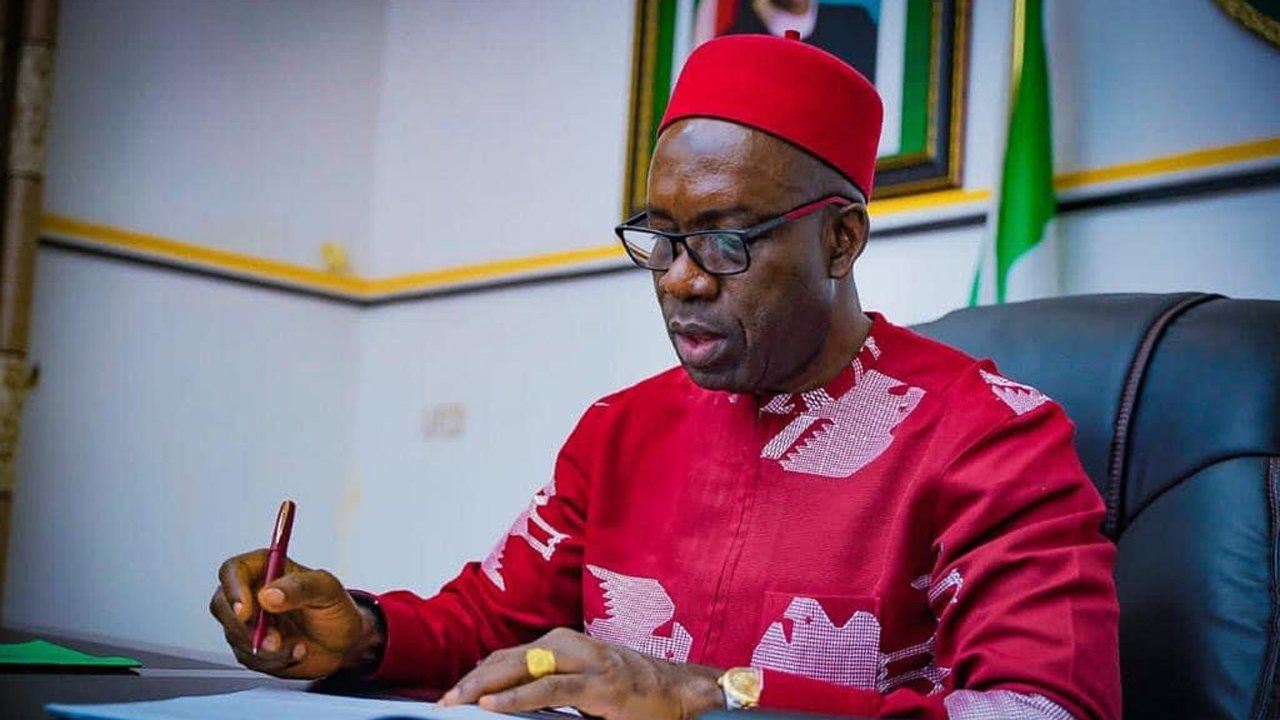
One of the core principles of governance is transparency. Leaders owe the people the truth, whether it is pleasant or painful, whether it glorifies the government or exposes its flaws. This is the very foundation of public relations in government: to keep the people informed about everything happening around them. Sadly, Anambra State Governor, Charles Chukwuma Soludo, has fallen short of this duty in his handling of the disturbing incident where a female youth corper was stripped and brutalized by vigilante operatives in the state.
During an appearance on Arise TV programme, Soludo confirmed that the shameful episode, which has recently gone viral after the video surfaced, actually occurred in July. This revelation has left Nigerians stunned, not only because of the brutality itself but because of the government’s silence for weeks. Why did Soludo and his administration wait until now before acknowledging such a serious violation of human dignity?
To buttress the view that the ugly incident happened in July, permit this writer to rehearse part of the interview which the governor granted Arise TV few days ago.
“Glad to have you too. Well, let’s start with a burning issue in your state, a disgraceful, degrading, inhumane maltreatment by the Anambra security outfit. Now you have Udo Gachi and Agone Chemba on the NYSC lady.
“That’s unacceptable in this age. Have those responsible been apprehended? Thank you very much indeed and thanks for this opportunity to clarify this. You are quite right”.
The foregoing was the question the Arise TV anchorman posed the question to the governor. And the governor replied thus: “It happened on July the 23rd, and I want to emphasize this, that this incident happened on July 23rd, almost a month ago. Coincidentally, it’s coming out on social media a month after. It was, my friend, get away.
“You’re distracting me. I know my people. They’re just all over the place, you know, they are distracting us, as it were.
“This event happened on the 23rd of July, and this is where very law-abiding people, rule of law, security of life and property, happen to be our number one agenda. That’s the number one in our five-pillar agenda. Our people swung into action immediately”.
“Immediately, this was brought to the attention of our homeland security team, and those guys were arrested instantly. Then the victim was approached, and some restitution instantly met. I understand that would be briefing I got, was that her phone was damaged, and some others’ phones were damaged in the process, and they were all made well.
“I mean, there was some restitution to that effect. It was taken care of medically. Then those guys were apprehended, first suspended, and the investigation ongoing.
“But I understand initially that the family of the parents, or the family of the victim, was quite reluctant to go for any prosecution or for them taking the matter because, well, for whatever private considerations, they didn’t want that to go forward. But finally, this has now come on. We’ve seen how to do the needful”.
Given the backdrop of the foregoing interview, the question is “Had it been Haven 360 Foundation (a non-profit organization committed to providing free legal representation to innocent, indigent persons …) did not release the footage on Monday via Facebook, where it showed one of the victims, Jennifer Edema Elohor, being physically attacked and stripped naked by the armed vigilantes, Soludo and Anambra state government would not have made the footage a public considering the fact that the incident occurred in July?
In fact, when a young woman serving her country was subjected to public humiliation by state-backed vigilantes, the least her government owed her was a swift public condemnation and a guarantee that justice would be done. Instead, there was silence. No press statement, no decisive action, and no attempt to inform the public.
This silence becomes more striking when contrasted with the government’s eagerness to publicize its achievements. Every road project, market rehabilitation, and infrastructural intervention is quickly packaged and pushed into the media space. The administration has been tireless in advertising its successes, particularly as elections draw closer.
So why the sudden muteness in the case of the stripped corper? The answer is simple: the government chose propaganda over truth. It chose image management over accountability.
The key question lingers: what explains the silence? Was it an attempt to shield Agunechemba, the controversial vigilante group whose excesses have long been criticized? Was it a calculated move to protect the governor’s public image in an election season? Or was it a simple failure of communication within the state government?
Whatever the explanation, the decision to remain silent is indefensible. By failing to speak up in July, the government denied the victim the immediate solidarity of public outrage, delayed justice, and weakened public trust. In governance, keeping quiet in the face of injustice is as bad as condoning it.
Sadly, this is not an isolated occurrence. The Nigerian political class has a long history of burying bad news until it becomes impossible to ignore. In fact, Nigerian political history is replete with the government initially downplaying any given incident that may smear its image by squandering precious time before acting. For instance, during the #EndSARS protests of 2020, official denials about what happened at Lekki Toll Gate only deepened anger and mistrust once video evidence emerged.
In fact, Soludo’s silence over the stripped corper fits into this same depressing pattern. It is the old playbook of governance in Nigeria: trumpet achievements, bury failures, and hope the people forget. But in today’s digital age, that playbook no longer works. Citizen journalism, viral videos, and social media mean that bad news cannot be controlled forever. When leaders try to suppress the truth, it only makes their eventual admission more damaging.
The silence must also be viewed through the lens of politics. With the governorship election around the corner, Soludo’s team has been desperate to maintain a spotless image. Any admission of abuse by state-backed security might have been seen as a stain on that record. And so the incident was swept aside until the leaked video forced it into the open.
But this strategy has backfired. Instead of praising the governor for decisive leadership, Nigerians are now asking why he kept quiet for so long. By waiting, Soludo has turned a test of leadership into a question of credibility.
Silence in the face of abuse is never neutral, it has consequences. It emboldens perpetrators by suggesting their actions will not attract scrutiny unless caught on camera. It fosters a culture of impunity among security operatives and vigilantes, who now see themselves as untouchable. And it breeds cynicism among citizens, who begin to wonder what other incidents are being hidden from them.
If the government could keep quiet about the humiliation of a youth corper in July, what other abuses might it be hiding today?
Ultimately, the stripped corper saga is about more than one young woman’s ordeal. It is about the trust between a government and its people. Citizens may forgive mistakes, but they rarely forgive cover-ups. Soludo’s decision to remain silent until the video surfaced is a betrayal of that trust. It sends the message that the government values its image more than the truth, more than justice, and more than the dignity of its citizens.
The Anambra government’s handling of this shameful incident has been a failure of transparency, accountability, and leadership. Soludo must understand that governance is not about silencing failures while celebrating successes. It is about confronting both with honesty.
If the governor wishes to rebuild public confidence, he must ensure that the perpetrators are swiftly prosecuted, that the victim receives justice, and that his administration commits to timely disclosure of such incidents in the future. Anything less will confirm that his silence was not an accident, but a deliberate strategy of concealment.
Until then, Nigerians will keep asking the uncomfortable but necessary question: “why did Soludo keep quiet until now?”