Global Issues
The U.S. Didn’t Merely Exit WHO—It Triggered a Global Health Power Shift from Multilateral Legitimacy to Bilateral Coercion -By Fransiscus Nanga Roka
What is happening now goes beyond one organization. It’s a fight between whether global health will be kept as a common legal-moral responsibility or descend into an auction house. The first model streams legitimacy from the exercise of multilateral rules, substantive and public accountability as well as common vulnerability. In the last one you replace legitimacy with capacity Monies, of pressure and to bypass. The first views health as a global public good. One views it as a domain of controlled dependency, the other treats it like an arena.

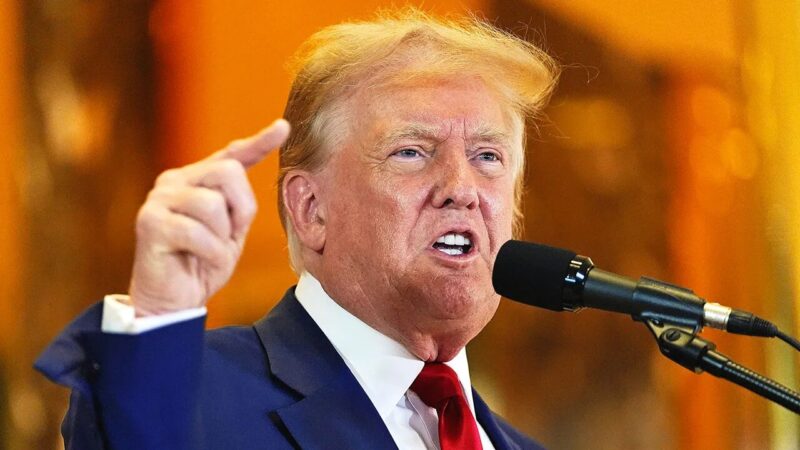
The United States didn’t just withdraw from the World Health Organization. Its political explosion sent shockwaves across Geneva and around the world: global health, it said, could no longer reflect universal standards and shared responsibilities institutionalised under legitimate frameworks of governance rather power would now be raw; benefits selective; politics transactional. It was not merely an administrative correction. It was a ultimatum that once the great powers cease to favour the referee, they will no longer participate in the match and impose on others conditions of negotiation.
Which is why the true menace lies not just with the gap left in WHO financing that shortfall is serious too. But the over-all deeper crisis is a constitutional one: of multilateral legitimacy its very self. The WHO, vast and flawed as it is, remains a rare place where states big and small can confront an essentially equal playing field. The largest power, finding even this purely limited equality intolerable and out of keeping with its pre-eminence is not sending a subtle message to the rest: “the rules can be ignored; dependency replaces diplomacy”.
Washington’s exits defenders will argue that multilateral institutions are inefficient, overrun by special interests, endlessly slow and prone to political capture. That criticism is not wrong. But ultimately it is also a monumental dishonesty. The way is yanking the funding of bad multilateral order, making it to work and reigning over it not starving this system so that we could use its vulnerability as evidence for a failed process. That is not reform. That is treachery posing as realism.
And sabotage has consequences. The coordination weakens with a weaker WHO and relies on funding to finance this action. Disease surveillance becomes more fragile. Emergency response becomes more uneven. Technical assistance is even more beholden to donor preferences. In that vacuum, bilateralism does not present itself as the noble alternative; rather it becomes a pecking order. Wealthy states choose who they want to fund, when and how much funding is needed for the needs that they define. Aid becomes conditional alignment. Health cooperation turns into bargaining chip. Vaccines, diagnostics, preparedness finance and support for outbreak will be used as geopolitical carrots and sticks instead of a global public good.
This is the hard truth that polite diplomacy refuses to acknowledge: bilateralism in global health has a strong tendency not to be neutral. It is coercive by structure. One is wealthy with capital, technology, logistics and strategic leverage; the other has needs that are pressing. Most of the time, it is a matter when you talk about giving “help” to that country does not get empowered. It is being cast within an emergent map of fealty, gratitude and compliance.
What makes it particularly corrosive is the precedent of the American withdrawal. When the most powerful state walks out on a multilateral health body and openly favors direct government-to-government engagement, others quickly get the message. If real choices are moving toward private negotiations, tailor-made assistance packages and donor-dominated corridors of influence in the undesired direction (i.e., longer delays), then why spend political capital on universal institutions? If power based bargaining is faster for the strong, why defend norm-based governance? The cognitive dissonance is even greater given that the effect is not sequential what we face today is a funding crisis, but also more than this: it represents redesign of global health architecture around fragmentation, patronage and fear.
Others will say that WHO effectively invited the outcome by not demonstrating independence, urgency or institutional backbone. This would be an indictment that has bitter truth to it. Too accommodating of strong states, too subservient to the donors, but above all beached on a sandbank of diplomatic nicety at times when moral clarity was essential these are words often applied to WHO. Weakness, that is to say instability and susceptibility to illegitimacy of many states around the world in regions today undermined by radical Islamism this fact does not make a convincing argument for institutional abandonment. This is an argument for greater democratization, much more predictable assessed funding and immunity from geopolitical leverage. You don’t burn down an underperforming fire station in the middle of wildfire season.
What is happening now goes beyond one organization. It’s a fight between whether global health will be kept as a common legal-moral responsibility or descend into an auction house. The first model streams legitimacy from the exercise of multilateral rules, substantive and public accountability as well as common vulnerability. In the last one you replace legitimacy with capacity Monies, of pressure and to bypass. The first views health as a global public good. One views it as a domain of controlled dependency, the other treats it like an arena.
You are warned not to sanitize the world for this transition. It is not pragmatic adaptation. It is regression. Hollowing out multilateralism does not liberate the weak, it makes them more vulnerable. But when the global health system gets reshaped around bilateral coercion, pandemics will not be any less political. They will become more unequal.
For an example, Washington did not simply pull out of the WHO. But it helped make acceptable a much more pernicious doctrine: that, when the risk to the whole planet rises and common approach falters, power trumps principle; leverage is meaningfully preferable to legitimacy. That is not merely a funding crisis. It is a crisis of civilization.
Fransiscus Nanga Roka
Faculty of Law University 17 August 1945 Surabaya Indonesia