
Africa
Tinubu’s Rivers State Emergency: A Dictatorial Blueprint And The Death Of Nigeria’s 2027 Election -By Abbas Haruna Idris
Finally, President Tinubu’s emergency declaration in Rivers State is not just a political maneuver—it is a blueprint for dictatorship. As Nigeria approaches the 2027 elections, the stakes could not be higher. Without urgent action, Tinubu risks being remembered as the worst president in Nigeria’s history—a leader who sacrificed the nation’s democratic future at the altar of personal ambition. The silence of the political class and the resilience of ordinary citizens underscore the stakes. The world watches, but the power to change course lies with Nigerians themselves. May God bless Nigeria.

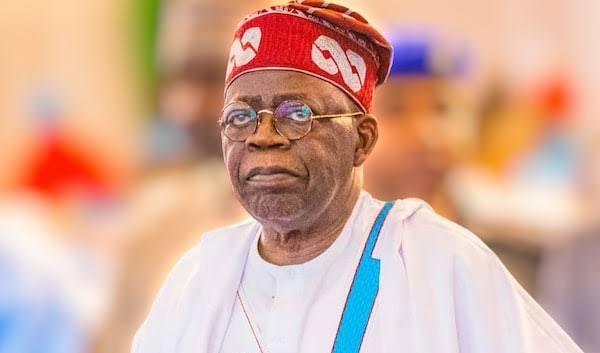
Nigeria’s democracy is under siege. President Bola Tinubu’s recent declaration of a state of emergency in Rivers State is not merely a response to political unrest—it is a calculated move to consolidate power, suppress dissent, and undermine the very foundations of Nigeria’s democratic institutions.
This decision, cloaked in the language of crisis management, reveals a troubling pattern of authoritarianism that threatens to derail the nation’s progress. As we look ahead to the 2027 general elections, the implications are dire: free and fair elections may become a relic of the past.
What is even more disheartening is the deafening silence from within the government, leaving ordinary citizens to wage the battle for democracy on social media. If this trajectory continues, Tinubu risks being remembered as the worst president in Nigeria’s history—a leader who sacrificed the nation’s democratic future at the altar of personal ambition.
THE ANATOMY OF A DICTATORSHIP MOVE:TINUBU’S EMERGENCY DECLARATION
Nigeria’s history with emergency rule is a cautionary tale of power abused. During military dictatorships (1966–1999), generals like Ibrahim Babangida and Sani Abacha weaponized emergency declarations to suppress opposition, suspend constitutions, and entrench tyranny. Post-1999, civilian leaders like Olusegun Obasanjo and Goodluck Jonathan invoked emergency powers sparingly, often in response to insurgencies like Boko Haram. However, Tinubu’s Rivers State emergency diverges sharply: it targets political adversaries, not terrorists, and dissolves elected bodies to install federal proxies.
On the surface, President Tinubu’s decision to declare a state of emergency in Rivers State appears to be a response to escalating political violence. Rivers State, a critical economic hub due to its oil wealth, has been embroiled in a power struggle between Governor Fubara and Wike, the former governor and current Minister of the Federal Capital Territory. The feud, which has included allegations of arson and political intimidation, provided Tinubu with the perfect pretext to intervene.
By invoking Section 305 of Nigeria’s Constitution, Tinubu dissolved elected local councils, suspended key democratic processes, and installed a federal administrator. This move bypassed the National Assembly, a constitutional requirement for prolonged emergencies, and effectively centralized power in the hands of the federal government. Legal scholars and human rights activists have condemned the decision as unconstitutional, arguing that it sets a dangerous precedent for executive overreach.
The timing of the declaration is also suspect. With the 2027 elections on the horizon, Tinubu’s actions suggest a broader strategy to weaken opposition strongholds and consolidate power. Rivers State, a stronghold of the Peoples Democratic Party (PDP), is now under federal control, raising concerns about the impartiality of future elections.
A PATTERN OF AUTHORITARIANISM: TINUBU’S GROWING DICTATORSHIP
The Rivers State emergency is not an isolated incident but part of a broader pattern of authoritarianism under Tinubu’s leadership. Since assuming office, Tinubu has demonstrated a willingness to undermine democratic norms in pursuit of political dominance.
Courts challenging Tinubu’s emergency declaration have faced unprecedented pressure. In June 2024, Justice Abdul Dattijo of the Federal High Court in Port Harcourt reported receiving “veiled threats” after ruling against the federal government’s dissolution of councils. Such intimidation echoes the Abacha era, when judges were coerced into legitimizing dictatorship.
Independent journalists covering the Rivers crisis have been harassed, detained, or labeled “enemies of the state.” In July 2024, security forces raided the offices of The Port Harcourt Gazette, seizing equipment and arresting three reporters. The Committee to Protect Journalists (CPJ) ranks Nigeria among the top 10 countries for press freedom violations in 2024, citing Tinubu’s “systematic silencing of critical voices.”
Activists and NGOs face escalating repression. The Economic and Financial Crimes Commission (EFCC) froze the bank accounts of the Centre for Democracy and Development (CDD) in June 2024, alleging “suspicious transactions.” Amnesty International linked the action to the CDD’s report criticizing Tinubu’s emergency rule.
These tactics are reminiscent of military-era dictatorships, where dissent was criminalized, and power was concentrated in the hands of a few. Tinubu’s actions suggest a deliberate effort to resurrect this model, eroding the checks and balances that are essential for a functioning democracy.
THE 2027 ELECTIONS: A DEMOCRACY ON THE BRINK
The implications of Tinubu’s authoritarianism for the 2027 elections are deeply troubling. If the Rivers State precedent is any indication, Nigeria’s democratic future hangs in the balance. Key risks include:
-Electoral Manipulation:The Independent National Electoral Commission (INEC), already accused of bias in the disputed 2023 polls, risks becoming an APC puppet. Tinubu’s recent appointment of partisan figures to INEC’s board—including a former APC campaign director—signals intent to manipulate outcomes.
-Voter Suppression: Emergency powers could justify militarizing opposition regions. In 2023, APC-aligned security forces blocked voters in Lagos from accessing polling units, a tactic likely to escalate in 2027. The proposed “National Identity Card Requirement Act,” mandating biometric verification, could disenfranchise millions in rural areas lacking infrastructure.
-Opposition Disqualification: Leaders like Peter Obi (Labour Party) and Atiku Abubakar (PDP) face existential threats. Atiku’s corruption trial, revived in 2024 after years of dormancy, is widely seen as politically motivated. Meanwhile, Obi’s rallies have been disrupted by “unknown gunmen,” a tactic reminiscent of Abacha’s reign.
A 2024 Afrobarometer survey found that 81% of Nigerians fear voting in 2027—a grim omen for the credibility of future elections. If Tinubu’s actions go unchecked, the 2027 elections may be reduced to a mere formality, with the outcome predetermined in favor of the ruling party.
A SILENCE OF THE POLITICAL CLASS: A BETRAYAL OF DEMOCRACY
Perhaps the most disheartening aspect of this crisis is the silence of the political class. While past leaders like Goodluck Jonathan faced internal dissent within their own parties, Tinubu’s APC allies have remained conspicuously silent. This complicity can be attributed to several factors:
-Patronage Networks: APC loyalists, including former governors and ministers, depend on Tinubu for appointments and contracts. Senator Orji Uzor Kalu admitted in a leaked audio, “We cannot bite the hand that feeds us.”
-Fear of Reprisals: Critics face brutal consequences. Former Kaduna Governor El-Rufai, once an APC stalwart, was placed under EFCC investigation days after questioning Tinubu’s economic policies.
-Ethnic Calculations: Tinubu’s Yoruba base and alliances with Northern elites shield him from regional backlash, creating a false sense of unity within the party.
This silence is a betrayal of the Nigerian people, who rely on their leaders to uphold democratic principles. By failing to hold Tinubu accountable, the political class has become complicit in the erosion of Nigeria’s democracy.
SOCIAL MEDIA: THE PEOPLE’S LAST STAND
In the absence of institutional resistance, ordinary Nigerians like me have turned to social media to voice their dissent. Platforms like X (Twitter), Facebook, Instagram, and TikTok have become arenas for political mobilization, allowing citizens to organize protests, share evidence of repression, and hold the government accountable.
In May 2024, a viral video of police brutality in Port Harcourt sparked global outrage, forcing the government to temporarily withdraw troops. Hashtags like #SaveRiversState and #TinubuMustGo have trended globally, uniting youth, activists, and diaspora voices in a shared struggle for democracy.
Nonetheless, this digital resistance is under threat. Tinubu’s proposed “Social Media Regulation Bill” seeks to criminalize dissent under the guise of curbing “fake news.” If passed, the bill would grant authorities sweeping powers to monitor online activity, silence critics, and suppress opposition. This move mirrors tactics used by authoritarian regimes in Uganda, Tanzania, and beyond, where social media crackdowns have stifled free expression and undermined democratic movements.
ECONOMIC AND SOCIAL FALLOUT: THE COST OF DICTATORSHIP
Tinubu’s authoritarianism is not just a political crisis—it is an economic and social disaster. Nigeria’s economy, already grappling with inflation, unemployment, and a weakening currency, cannot afford the instability that comes with dictatorial rule. Key consequences include:
-Investor Flight: Political instability has driven foreign investors away. In Q1 2024, foreign direct investment fell by 63%, worsening unemployment (37%) and inflation (33%). The naira’s freefall—exchanging at ₦1,700/$1 in July 2024—has crippled businesses.
-Resource Control: Federal takeover of Rivers’ oil revenues may reignite Niger Delta militancy, reminiscent of the 2000s.
-Social Fragmentation: Marginalized groups, from the Igbo in the Southeast to the Ogoni in Rivers, see their autonomy eroding, fueling separatist movements and ethnic tensions.
INTERNATIONAL COMPLICITY: A GREEN LIGHT FOR TYRANNY
The international community’s silence on Tinubu’s actions is equally troubling. Global actors, including the United States, the European Union, and regional bodies like ECOWAS, have prioritized strategic interests over human rights. For example;
The U.S. and EU, reliant on Nigerian oil and counterterrorism cooperation, avoid condemning Tinubu. A leaked 2024 U.S. State Department memo described Nigeria as “too big to fail,” prioritizing stability over democracy.
ECOWAS, which sanctioned military juntas in Niger and Mali, ignores Tinubu’s constitutional breaches. Critics argue ECOWAS fears antagonizing Africa’s largest economy.
Tech giants like Meta and Google comply with takedown requests targeting anti-Tinubu content. In June 2024, Facebook removed 200 posts critical of the Rivers emergency under “government pressure.”
Despite the grim outlook, there is still hope for Nigeria’s democracy. The resilience of its people, particularly the youth, offers a glimmer of optimism.
Finally, President Tinubu’s emergency declaration in Rivers State is not just a political maneuver—it is a blueprint for dictatorship. As Nigeria approaches the 2027 elections, the stakes could not be higher. Without urgent action, Tinubu risks being remembered as the worst president in Nigeria’s history—a leader who sacrificed the nation’s democratic future at the altar of personal ambition. The silence of the political class and the resilience of ordinary citizens underscore the stakes. The world watches, but the power to change course lies with Nigerians themselves. May God bless Nigeria.
Abbas Haruna Idris writes from Kwarbai, Zaria City, and can be reached at Abbasharun2020@gmail.com


























You must be logged in to post a comment Login