Economy
Urging FG To See World Bank’s Concerns About Nigeria’s Economy As A Wake-Up Call, by Isaac Asabor

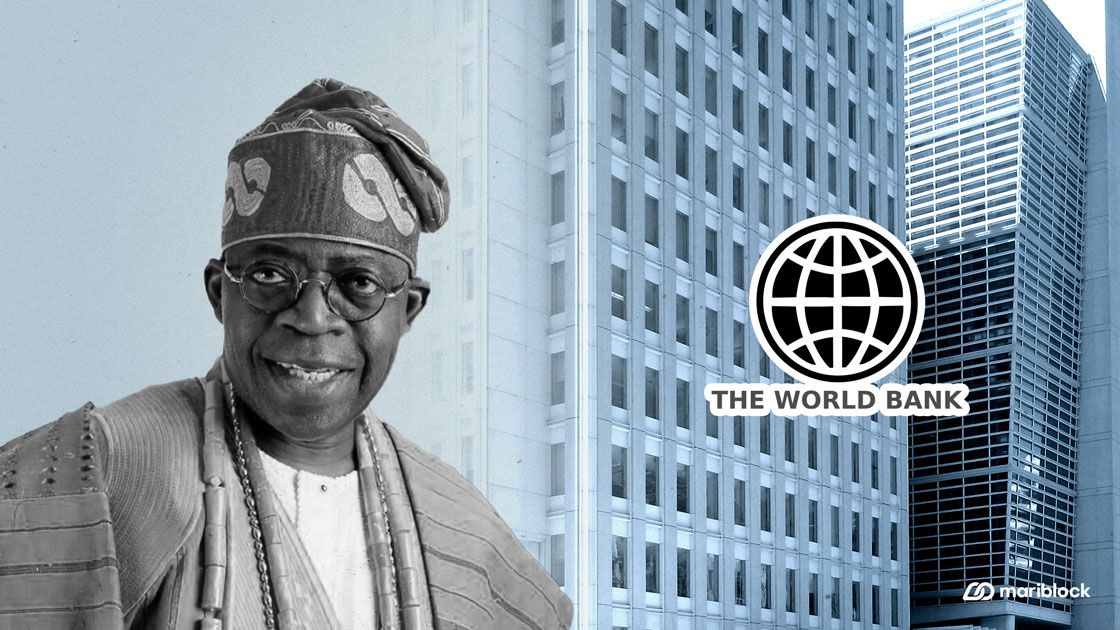
In a troubling development that should command the attention of every Nigerian, the World Bank recently raised concerns about the current state of Nigeria’s economy and the effectiveness of policies being implemented under the Tinubu administration. The global financial institution, a long-time partner in Nigeria’s development journey, has questioned whether the government’s economic strategies are delivering the desired results. Even more alarming is the suspicion that funds earmarked for vital projects, such as water infrastructure, may have been misappropriated.
For a nation that has weathered years of economic storms, the World Bank’s concerns are not merely another set of headlines; they echo the growing fears of ordinary Nigerians who are already feeling the harsh sting of inflation, unemployment, and a depreciating naira. If the World Bank is worried, then it is a clear sign that Nigerians have every reason to be worried too.
Nigeria is no stranger to receiving substantial financial assistance from international bodies, yet it often seems that these funds vanish into thin air. Over the years, various administrations have secured billions in loans and grants meant to alleviate the country’s infrastructure deficits and improve the standard of living for its citizens. However, rather than yielding visible improvements, these funds have often been marred by allegations of mismanagement and corruption.
Take, for instance, the $1 billion loan Nigeria secured from the World Bank in 2014 to support projects in the power sector. The funds were meant to revitalize the nation’s ailing electricity supply, yet, a decade later, Nigerians continue to endure chronic blackouts and exorbitant electricity tariffs. The question remains: where did the money go?
Similarly, in 2020, Nigeria received over $3.4 billion from the International Monetary Fund (IMF) to cushion the economic impact of the COVID-19 pandemic. These funds were intended to support healthcare systems, improve access to water, and provide social safety nets for the poor. However, reports soon surfaced that the COVID-19 relief funds were misappropriated, with officials accused of diverting resources meant for pandemic response into private pockets. The ensuing outcry over COVID-19 palliatives that were allegedly hoarded in warehouses, instead of being distributed to suffering citizens, still lingers in the memories of many Nigerians.
The World Bank’s recent concerns about potential fund diversion are centered on projects aimed at improving access to clean water. For a country like Nigeria, where millions still lack access to potable water, these projects are not just about infrastructure, they are about saving lives. Contaminated water sources are a leading cause of waterborne diseases, which claim countless lives, especially in rural communities. It is therefore a travesty that funds designated for such critical projects might be finding their way into the pockets of corrupt officials.
In the northern parts of Nigeria, where communities face chronic water shortages, these funds could have been a lifeline. Women and children often walk miles daily to fetch water from streams that are not safe for consumption. The promise of improved water infrastructure has been dangled before these communities for years, yet tangible progress remains elusive. The World Bank’s suspicion that funds for these projects may have been diverted is not just a financial issue, it is a moral crisis.
President Tinubu came into power with promises of reform and a vision to steer Nigeria towards economic stability. Among his administration’s key moves were the removal of fuel subsidies and the unification of the naira exchange rate, both intended to liberalize the economy and attract foreign investment. However, these measures have so far brought more pain than relief to Nigerians, with the cost of living skyrocketing and inflation hitting double digits.
The World Bank’s apprehensions suggest that these policy shifts are not achieving their intended outcomes. Instead, it appears that the gains are being siphoned off by vested interests while the masses bear the brunt of the economic fallout. The removal of fuel subsidies, for instance, has led to an unprecedented surge in the cost of transportation and food, pushing more Nigerians into poverty. The promised palliatives to cushion the impact are yet to materialize in any meaningful way, and citizens are left wondering if the government’s economic strategies are just another exercise in futility.
At the heart of Nigeria’s economic woes lies a problem that has plagued the country for decades, corruption. According to Transparency International, Nigeria consistently ranks among the most corrupt countries in the world, and successive administrations have struggled, or perhaps refused, to rein in the culture of graft. The diversion of public funds is not new, but what makes it particularly egregious now is the context of Nigeria’s current economic crisis.
The alleged misappropriation of funds for water projects is reminiscent of previous scandals where funds for crucial infrastructure were diverted. For example, the N2.1 billion arms procurement scandal under the Jonathan administration, where funds meant to purchase weapons to combat Boko Haram were allegedly funneled to political cronies, highlights a pattern that continues to this day. Each case further erodes public trust in the government’s ability to manage public resources responsibly.
The World Bank’s concerns should serve as a wake-up call for the Tinubu administration. If the government does not act swiftly to investigate and address these allegations, it risks losing not just international credibility but also the confidence of its own citizens.
The sentiment on the streets of Nigeria is one of frustration and disillusionment. As the World Bank raises its concerns, ordinary Nigerians are echoing their own fears. “If the World Bank is worried, wetin we go do?” lamented a market woman in Lagos, reflecting a widespread sentiment that the country is on a dangerous path. The frustration is palpable among young graduates who remain jobless despite possessing the requisite skills, and among pensioners whose life savings are being eroded by inflation.
The anger and despair are compounded by the glaring disconnect between the government’s optimistic rhetoric and the harsh realities on the ground. While officials tout economic reforms and international loans as signs of progress, the average Nigerian is left wondering why they can barely afford basic necessities.
It is not too late for the Tinubu administration to turn things around. But it must act decisively and transparently to investigate the alleged misappropriation of funds and bring those responsible to book. The government must demonstrate that it is serious about using international aid and loans for their intended purposes. This is not merely about placating the World Bank, it is about restoring the confidence of the Nigerian people.
There is also a need for stronger oversight mechanisms to ensure that funds meant for public projects do not disappear into private bank accounts. One way to achieve this is by involving civil society organizations and independent auditors to monitor the disbursement and utilization of funds. Only through transparency and accountability can the government begin to regain the trust of its citizens.
The concerns raised by the World Bank are a reflection of a deeper malaise affecting Nigeria’s governance and economic management. If international observers are ringing the alarm bells, then it is a sign that the situation is dire. But while the World Bank may have the luxury of issuing reports and advisories, Nigerians have no such comfort. They live with the consequences of failed policies every day.
The time for rhetoric is over. It is time for action. The Tinubu administration must recognize that when the World Bank is worried, so too are the estimated 200 million Nigerians who call this country home. The government must act swiftly to address these concerns, not just for the sake of international relations but for the future of the nation. The Nigerian people deserve nothing less.