
Africa
The Urgency Of Heeding Obasanjo’s Call For Leadership Change In INEC To Restore Public Trust, by Isaac Asabor

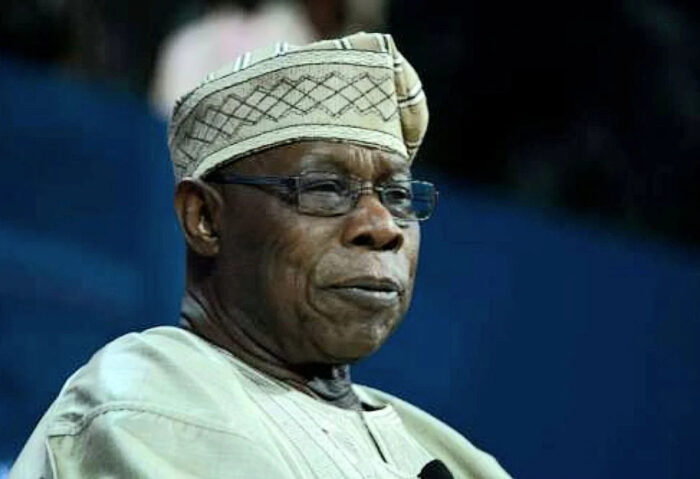
In a democracy, trust in the electoral process is the bedrock upon which all other elements of governance rest. Without a credible, independent, and transparent electoral system, the foundation of democracy crumbles, leaving citizens disillusioned and governance compromised. This is precisely the context in which Nigeria finds itself today, as calls for electoral reforms and leadership changes at the Independent National Electoral Commission (INEC) intensify. At the forefront of these calls is former President Olusegun Obasanjo, whose recent recommendations for a leadership overhaul of INEC have sparked widespread discussion.
Against the backdrop of the foregoing, it is expedient to recall that former President Olusegun Obasanjo, during the Chinua Achebe Leadership Forum at Yale University, called for urgent reforms in Nigeria’s electoral system. He emphasized the need to appoint new, credible leaders for the Independent National Electoral Commission (INEC) with shorter tenures to reduce corruption and rebuild public trust.
In his keynote address titled “Leadership Failure and State Capture in Nigeria,” Obasanjo criticized the 2023 general elections, labeling them a “travesty.” He advocated for rigorous vetting of INEC officials to ensure non-partisan appointments and stressed that the INEC chairperson must be independent, transparent, and above reproach.
Obasanjo also recommended implementing strict financial regulations for political campaigns to enhance transparency. He emphasized protecting the electoral process from both local and foreign interference and called for securing the technology infrastructure used in elections to prevent manipulation.
The former president accused INEC of intentionally failing to utilize the bimodal voter accreditation system (BVAS) and election viewing portal (IReV) during the 2023 elections, which he argued contributed to widespread irregularities. Obasanjo suggested that these technologies, which had previously been lauded for their potential to ensure transparency, were deliberately sidelined, undermining the credibility of the election.
Given the state of Nigeria’s current political landscape, it is essential to examine why Obasanjo’s call deserves serious consideration and how a change in the leadership of INEC could potentially re-establish public trust in the electoral system.
Former President Obasanjo, known for his outspokenness on matters of national interest, has consistently advocated for credible elections as the only route to sustainable democracy in Nigeria. In his recent remarks, he expressed deep concern over the performance of INEC under its current leadership, pointing to a series of lapses in the 2023 general elections. The discrepancies, delays, and widespread allegations of electoral malpractice have left many Nigerians questioning the integrity of the electoral body. Obasanjo’s call for a change in INEC’s leadership is not just a critique but a plea for urgent reforms to safeguard Nigeria’s fragile democracy.
Nigeria’s electoral body, like any institution, thrives on trust and competence. Unfortunately, recent elections have shown that INEC is struggling to maintain these virtues. The 2023 elections, which were supposed to be a showcase of improved technology and efficiency, were instead marred by controversies surrounding the use of the Bimodal Voter Accreditation System (BVAS) and the electronic transmission of results. Reports of technical glitches, coupled with allegations of voter suppression and ballot box snatching, further eroded confidence in the process.
In a country where elections have historically been contentious, the failure of INEC to ensure transparency and fairness only deepens the already pervasive distrust among citizens. When an institution as critical as INEC appears compromised or incompetent, it undermines the very essence of democracy, leaving citizens with little faith in the electoral outcomes.
A leadership change at INEC could serve as the first step toward rebuilding public trust. Obasanjo’s call for new leadership is not merely a demand for change for the sake of change but rather a call for a fresh approach to election management. The current leadership, under Professor Mahmood Yakubu, has faced numerous criticisms over its inability to deliver on its promises of free, fair, and credible elections. While there may have been significant improvements in voter registration and the deployment of technology, these efforts are meaningless if they do not translate into credible electoral outcomes.
Replacing the leadership with individuals who have proven integrity and competence could breathe new life into INEC, restoring public confidence and ensuring that future elections are not just a formality but a genuine expression of the people’s will.
In established democracies, the integrity of electoral bodies is non-negotiable. Nations like Ghana, South Africa, and India have managed to build electoral systems that inspire confidence by prioritizing competence and transparency. Leadership in these countries’ electoral commissions is not only about technical expertise but also about a commitment to fairness and accountability.
Nigeria can draw lessons from these examples. A change in INEC’s leadership, coupled with reforms to strengthen the institution’s independence and transparency, could set the stage for a more credible electoral process. The goal should be to establish an INEC that is insulated from political pressures, one that upholds the sanctity of the ballot box as sacrosanct.
While Obasanjo’s call is significant, it should not be seen as a partisan move but rather as a call to action for all stakeholders. The Nigerian government, civil society organizations, and international partners must work together to address the structural weaknesses within INEC. This should include a thorough review of the 2023 elections, with a focus on identifying what went wrong and implementing recommendations to prevent future failures.
Furthermore, Nigeria’s political class must recognize that democracy is not merely about winning elections but about ensuring that the process is free, fair, and credible. Until the leadership of INEC is strengthened, the country risks descending further into electoral chaos, with the potential for violence and civil unrest.
Obasanjo’s call for a leadership change at INEC is not a witch hunt but a necessary step toward restoring trust in Nigeria’s electoral process. The expediency of such a change cannot be overstated, as it is crucial for the survival of democracy in the country. Without an electoral system that citizens believe in, the legitimacy of any government that emerges will always be in question.
The time for rhetoric is over; what Nigeria needs now are decisive actions to strengthen its democracy. A change in INEC’s leadership, along with comprehensive reforms, is a step in the right direction. Only then can Nigeria hope to restore faith in its democratic institutions and ensure that the will of the people is genuinely reflected in the outcomes of its elections.


















You must be logged in to post a comment Login