National Issues
When Oil Prices Rise, the Niger Delta Pays: The Case for a Windfall Justice Fund -By Rick Steiner & Famous Obebi Famous
Oil prices will not stay high forever. They never do. This moment will pass. The windfall will disappear. The opportunity will close. What will remain is the record of what Nigeria did when it had the chance.

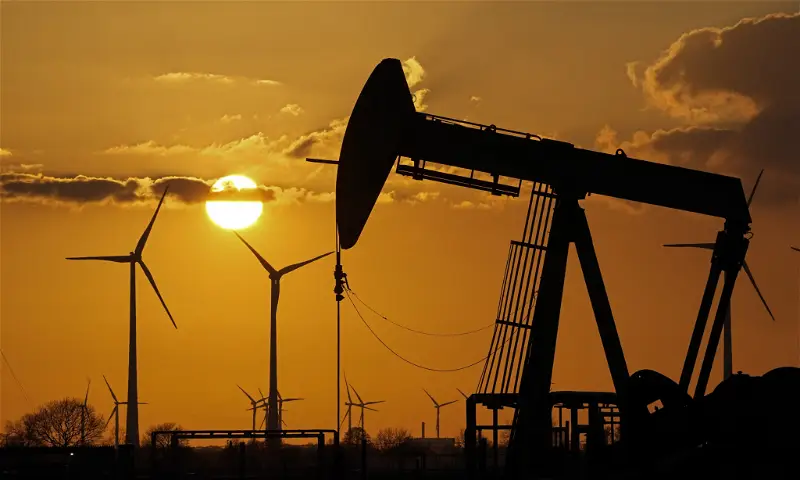
War raises the price of oil. It always has. It always will.
Today, tensions involving Iran, United States and Israel have pushed global oil prices sharply upward. In Nigeria, from a 2026 benchmark of about $60 per barrel, prices have spiked with Bonny Light reportedly selling for $113. For oil-producing nations, this is a windfall. For Nigeria, it is more than that. It is a test of leadership. The question is simple. Who benefits from this windfall?
For decades, Nigeria has lived off oil. Yet the region that produces this wealth, the Niger Delta, remains one of the most degraded environments in the world. Oil spills. Gas flaring. Dead rivers. Polluted farmlands. Broken livelihoods. This is not new. What is, perhaps, new is the opportunity now before the country.
Nigeria is earning more from oil today than it planned for in its 2026 budget. That excess revenue is not accidental. It is the direct result of global conflict. It is, in every sense, unearned profit. The economic term is clear: windfall.
The moral question is even clearer. Should this windfall be treated as routine income? Or should it be used to correct a historic injustice?
Understanding the Windfall
Nigeria operates a benchmark oil price in its budget. Any revenue earned above that benchmark is meant to be saved in the Excess Crude Account. This mechanism was designed to protect the economy from volatility and to build reserves in times of high prices. The logic is sound. But sadly, the execution has been weak.
At the same time, oil companies operating in Nigeria pay taxes, including Petroleum Profits Tax, which flows into the Federation Account through the Central Bank of Nigeria. When oil prices rise, company profits rise. Government revenue rises too. In moments like this, there are, therefore, two streams of gain: Increased government earnings from higher oil prices and Increased profits by oil companies operating in Nigeria. Both are tied directly to the same event: a global crisis.
Yet there is no clear policy directing how this extra money should be used. It simply dissolves into the general pool of public finance. Shared. Spent. Forgotten. That is the problem.
A Region That Pays the Price
The Niger Delta has carried the burden of Nigeria’s oil economy for close to seventy years. Since oil was first discovered in commercial quantities in 1956, the region has endured continuous environmental damage. The scale is staggering. The Seventh decade should be a time of freedom. Even the Holy Book says slaves should be set free by the seventh year.
The United Nations Environment Programme report on Ogoniland remains one of the most detailed environmental assessments ever conducted. It found widespread contamination of soil and groundwater. It estimated that full restoration could take up to 30 years.
That is one part of the Niger Delta.
The challenge across the wider region is far greater. Independent assessments and advocacy reports have suggested that restoring heavily impacted states like Bayelsa would require billions of dollars annually over many years. This is not just an environmental issue. It is economic. It is social. It is political.
Communities have lost their sources of income. Youth unemployment remains high. Trust in government is weak. Conflict has followed. The Niger Delta is not poor because it lacks resources. It is poor because its resources have been extracted without adequate reinvestment.
What Other Countries Do Differently
Nigeria is not the only country that depends on oil. But it is one of the few that has struggled to convert oil wealth into broad-based development.
Consider Norway. Norway saves a significant portion of its oil revenue in the Government Pension Fund Global. This sovereign wealth fund is now one of the largest in the world, valued at over a trillion dollars. It was built on a simple principle: temporary resource wealth must be converted into permanent financial assets for future generations.
Now consider, also Alaska. Alaska operates the Permanent Fund. A portion of oil revenue is saved and invested. The returns are paid directly to residents as annual dividends. This creates a visible link between resource wealth and citizen benefit.
Even in the current climate of rising oil prices, there is active debate in the United States about imposing a windfall profits tax on oil companies. Legislative proposals such as the “Big Oil Windfall Profits Tax Act” have been introduced in Congress to capture excess gains linked to global conflict. The logic is straightforward. Extraordinary profits should attract extraordinary responsibility.
In United Arab Emirates, oil revenues have been used to build infrastructure, diversify the economy, and create global cities like Dubai. Oil was not merely consumed. It was transformed.
These countries differ in size, politics, and history. But they share one habit: they plan.
Nigeria, once again, is at a familiar intersection. We have seen this movie before. During the Gulf War oil price surge of the early 1990s, crude oil earnings rose sharply. Estimates in public commentary placed Nigeria’s additional earnings in the billions of dollars. At the time, questions were raised about how transparently those windfall revenues were managed.
Some accounts and political commentary suggested that about $12billion was not clearly accounted for by then President Ibrahim Banangida in ways that translated into visible development outcomes. And now, the same moral challenge brazenly confronts President Bola Ahmed Tinubu. Will he balk under the weight of indifference and political defiance or will he topple the applecart of injustice and do what Napoleon could not do?
The controversy has remained part of Nigeria’s political memory. It is not simply about numbers. It is about trust. It is about how a country handles unexpected wealth. The lesson is simple. Windfalls without transparency disappear quickly. And when they disappear, so does public confidence.
The Weak Counterargument
There is a familiar argument in Nigeria. It goes like this: the country imports refined petroleum products at high cost. Therefore, any gains from higher crude oil prices are offset by the cost of imports. This argument is as incomplete as it is indefensibly preposterous.
First, Nigeria still earns significant revenue from crude oil exports. Higher global prices increase those earnings directly.
Second, oil company profits within Nigeria also rise with global prices. These profits are taxable.
Third, the importation challenge is itself a policy failure. It cannot be used as a justification for inaction in another area.
To say that windfall gains are neutralized by import costs is to accept a cycle of inefficiency. It is to concede that structural problems should cancel out opportunities for reform.
That is not leadership.
A Practical Policy Path
Nigeria does not need to invent a new system. It needs to apply existing tools with discipline and purpose. Too much talk with little action. Too many conferences. Motions without movement. Activities without commensurate productivity.
Yet, three steps are clear. First, calculate the windfall.
The government must publish transparent estimates of excess revenue arising from the current oil price spike. This includes both budgetary gains and increased tax receipts from oil companies.
Second, capture a fair share. A temporary windfall profits tax can be imposed on extraordinary oil company earnings linked to the price surge. This is not radical. It has historical precedent, including in the United States during the 1980 oil crisis. The United States responded to the oil shocks of the 1970s with a structured fiscal intervention known as the Crude Oil Windfall Profit Tax Act of 1980.
It was not a tax on normal corporate income. It was a tax on extraordinary gains arising from sudden global price spikes. The logic was simple and politically powerful: When consumers are suffering from higher energy prices, companies benefiting from those same price increases should contribute more back to the public treasury.
The law captured the difference between a government-defined base price and the higher market price triggered by global disruptions, including the OPEC oil shocks.
It was a response to crisis. But it was also a statement of principle: windfall gains created by global instability should not be fully retained as private profit when the public bears the cost.
Third, ring-fence the funds. A defined portion of this windfall, whether 30%, 50%, or more; should be allocated to a Niger Delta Restoration and Development Fund.
This fund must be legally protected, transparently managed and independently audited. Its mandate should include: Large-scale environmental clean-up, restoration of livelihoods, investment in sustainable infrastructure, community-driven development projects.
The model already exists. The Ogoni clean-up framework provides a starting point. It can be expanded into a region-wide programme with stronger governance.
The Cost of Delay
The simple truth is that every year of inaction increases the cost of remediation. Pollution spreads. Ecosystems degrade further. Social tensions deepen. The longer Nigeria waits, the more expensive the solution becomes.
But beyond cost, there is also the issue of credibility. A nation that cannot invest its windfall in its most affected region sends a message. It says that extraction matters more than restoration. It says that revenue matters more than its own people. That message has consequences.
A Moment That Will Pass
Oil prices will not stay high forever. They never do. This moment will pass. The windfall will disappear. The opportunity will close. What will remain is the record of what Nigeria did when it had the chance.
Did it spend as usual? Or did it act with foresight?
A Test of Political Will
This is not a technical problem. It is a political choice. Nigeria has the resources. It has the institutional framework. It has global examples to follow. What it requires now is the political will.
The Niger Delta has waited long enough; after the fashion of Lord Samuel Beckett’s Waiting for Godot.
If war has delivered an unexpected gain, then justice demands a deliberate response. The wealth drawn from damaged lands in the Niger Delta must return to repair those lands.
Anything less will be another missed opportunity in a long history of missed opportunities.
And history is watching.
*Professor Rick Steiner is a prominent environmental advocate and marine conservationist from Alaska. He has led global campaigns on oil spill accountability and the protection of vulnerable ecosystems.
*Famous Obebi Famous is a public affairs analyst from Nigeria’s oil-producing region. He actively engages in raising awareness on ecological damage; pushing for accountability.