Forgotten Dairies
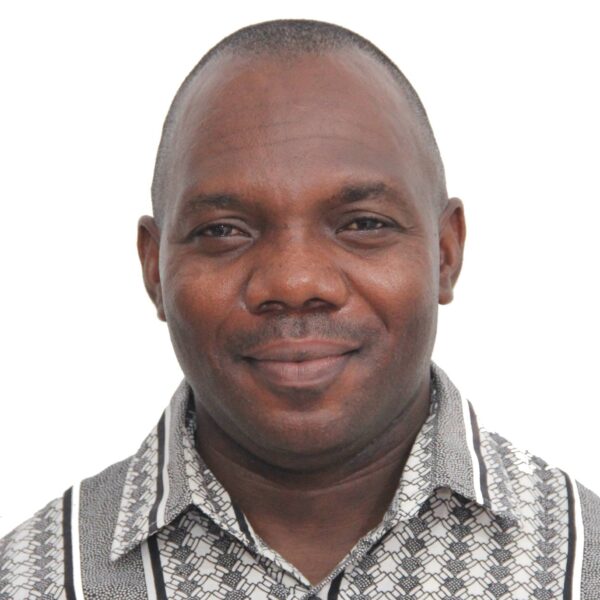
Who Broke The North? -By Sani Danaudi Mohammed
The broken North will take us all if we do not act. It will not ask whether you are PDP or APC, Christian or Muslim, Hausa or Tiv, when the bandits knock. It did not ask General Abubakar Rabe for his party card before he died in chains. It did not ask Emir Isa Muhammad Bawa for his political godfather before they shot him after taking our money. It does not ask the schoolgirl in Chibok her tribe before dragging her into the forest.


The North was not always broken ,Under colonial rule, the Native Authority system, though imperfect, leveraged existing structures of justice, taxation, and community discipline to maintain order across vast emirates. The Sardauna, Sir Ahmadu Bello, inherited that framework and expanded it into a vision of unity and progress. Schools were built, agriculture was mechanized, and a shared identity rooted in faith, honesty, and communal responsibility bound millions together.The region had size, population, resources, and a moral compass. It produced leaders, not looters. Communities policed themselves through a code that valued truth, shame, and collective welfare over individual greed. That was the Northern dream.
So when exactly did the cracks begin? The values started eroding the moment leadership became detached from the people it claimed to serve. Post-independence politics replaced service with extraction. Military coups normalized impunity. The oil boom taught elites that wealth flows from Abuja, not from farms or factories. Over decades, merit gave way to patronage. Qur’anic schools were abandoned without alternatives. Honesty became a liability in public office. The shame that once checked excess died quietly. Bandits now rule forests our grandfathers farmed, and drugs have replaced discipline in villages where elders once settled disputes before sunset. The colonial system did not break us. We broke ourselves when we traded the discipline of the past for the desperation of the present.
The betrayal of the North begins with education. The very generation now occupying Government Houses, National Assembly seats, and party secretariats were mentored through a system that worked for the poor. They attended Government Secondary Schools on full scholarship. They studied medicine, law, and engineering at ABU Zaria, Bayero, and Unimaid without paying a kobo in tuition. Textbooks were free. Hospital beds were available. Tap water ran in school hostels.
That infrastructure was not a gift from colonial masters. It was the deliberate policy of leaders who understood that a poor child from Toro or Daura could only compete if the state leveled the field. Today, those beneficiaries have pulled the ladder up behind them. Public schools are shells where teachers sit idle for months without pay. Public hospitals are referral points to private clinics owned by the same commissioners. The children of the poor now learn under trees, while the children of the leaders study in Dubai and London. Free education built this generation of leaders. Their refusal to sustain it is breaking the next generation.
Leadership failure is most visible in the weaponization of poverty and division. Where the Sardauna preached “One North, One People,” today’s politicians campaign by emirate, by tribe, by sect. They introduce divisions that never existed in our markets or on our farms. A farmer in Zuru and a herder in Gembu once shared water and resolved conflict through the Ardo and the Hakimi. Now, a senator funds youth with arms and tags them “our boys” to secure his ward.
Religion, which once gave meaning to sacrifice and charity, has become an opium to oppress the poor. It sedates the hungry with promises of paradise while excusing the thievery of those in power. Imams and pastors who should be the conscience of society now mount pulpits to campaign for corrupt politicians. They collect envelopes on Friday and Sunday, then tell the jobless graduate to “leave it to God.” The poor are left in the hands of their Creator, because their leaders have abandoned them to fate.
The North is now a familiar empire. Power rotates among the same surnames. Contracts are shared at dinner tables, not tendered in public. Commissioners are sons-in-law. Party chairmen are cousins. The state has become a family inheritance. In this empire, there are no opportunities for the children of the poor, no matter how brilliant. Recruitment into the civil service, police, and military is auctioned. Scholarship boards exist only on letterheads.
Meanwhile, the sons of the powerful are appointed SAs at 25, with no experience beyond their father’s name. This is not governance. It is monarchy without a crown. The genes of friendship and trust that once defined the North have been broken. A Hausa trader in Sabon Gari no longer trusts his Igbo neighbor. A Berom youth sees an enemy in a Fulani student. These suspicions were manufactured in Abuja and the state capitals, distributed through hate sermons and political thugs.
Where leadership is urgently needed, it is absent. Security is the first duty of any government, yet entire local governments in Zamfara, Niger, Katsina, and Sokoto pay taxes to bandits. Village heads negotiate levies before planting season. Girls are married off at 12 to avoid abduction. The response from those elected to protect lives is to blame “climate change” or “poverty” while moving in convoys of 30 vehicles. The economy is next.
The North holds over 70% of Nigeria’s land mass and the youngest population in Africa, yet we import tomatoes, milk, and even toothpicks. Our dams are silted. Our grazing routes are blocked. Our textile factories in Kaduna and Kano are dead. Leadership here means industrial policy, not Ramadan palliatives. It means rebuilding the Bank of the North mindset, not sharing 5,000 Naira to women who need capital, not crumbs. It means telling Saudi Arabia and Qatar: we will not export our daughters as maids when we have 19 million hectares of uncultivated land.
So who broke the North? We did. The leaders who ate free food in boarding school but now approve budgets without school feeding. The clerics who inherited mosques built by honest traders but now auction endorsements. The elite who fly over flooded villages to attend their children’s graduation abroad. The followers who clap for a bag of rice and forget that their grandfather’s village had a dispensary, a court, and a market run by the community.
The North was not broken by colonialism. It was broken by the children it educated for free. Redemption will not come from prayers alone. It will come when we remember that power is a trust, not an inheritance. When an Imam can tell a corrupt governor “fear God” without losing his mosque. When we rebuild schools, not just mansions. Until then, the question remains, and it indicts us all: Who broke the North?
We watched a General die in chains and called it fate. General Abubakar Rabe spent 35 years saluting the flag, commanding men, defending borders we now cannot patrol. Yet on May 30, 2026, bandits took him and his wife on a road in Katsina like he was nobody. He died in their camp, weakened by diabetes and hypertension, while we debated his ransom on social media. His wife stayed behind with the killers. We who once prided ourselves on honoring our warriors now let them perish in the bush. If a man who gave his youth to the Army cannot be ransomed by the region he protected, then we have all signed his death warrant. We broke the North the day we decided a General’s life was negotiable.
We watched an Emir beg for his life and did nothing. Alhaji Isa Muhammad Bawa, the Emir of Gobir, 73 years old, custodian of an ancient throne, was tied up like a goat in a viral video. He pleaded with us, with his people, with the leaders he served for 40 years. “Help me,” he said. The bandits demanded N500 million, then N60 million and six motorcycles. We paid, and they still shot him dead on a Tuesday after Asr prayer. They kept his body. His son came home with the story. We, the sons and daughters of Gobir, the elders of Sokoto, the traders in Sabon Birni, watched and waited. A Sarkin Gobir was murdered while we calculated political costs. We broke the North the day we decided a king could be disposable.
We watch children disappear from school and call it news. The same week we buried General Rabe, terrorists burned classrooms in Kautikari, Chibok. About 90 children and teachers taken from Oyo and Borno since May 15 are still in the forest. After the Emir of Gobir was killed, bandits returned to Gobir villages and took 150 more people, with 1,000 cattle. We share the videos, we type “sad,” and we move on. We have built a North where classrooms are empty, palaces are desecrated, and Generals die as hostages. Nobody pulls the trigger alone. We loaded the gun together with our silence, our divisions, our greed, our worship of big men who cannot save us. So we must ask ourselves, not the government, not Abuja, but ourselves.
The 19 Northern Governors must now confront an uncomfortable truth: flyovers do not stop bullets, and streetlights do not educate the child hiding from bandits. For too long, our budgets have celebrated concrete while the foundation of the region collapses. It is time to shift from political monuments to human capital. Every state must declare a security and education emergency. Convert 40% of security votes into community policing units trained, equipped, and recruited from the villages they protect. Pay them from the source, not through Abuja. Rebuild the primary school system ward by ward.
One functional primary school with water, fence, and teachers is worth more than ten kilometers of empty road leading to burnt villages. Revive the groundnut pyramids with modern agro-processing clusters in each senatorial district, not to feed stomachs for a day, but to employ thousands for life. The North’s land mass is not a curse. It is our leverage, but only if we irrigate it, secure it, and give the poor child a reason to stay on it.
Leadership and followership must rethink together, because this collapse is collective. Governors, stop awarding scholarships to cronies’ children to study abroad while local colleges have no chalk. Emirs and clerics, stop blessing every politician with an envelope and start asking them where the budget for Almajiri integration went. Parents, stop sending 10-year-olds to beg in the name of learning when you know there is no Mallam waiting with a lesson plan.
Youth, stop renting your voice to the highest bidder during elections and start demanding audit reports of constituency projects. The North was not built on federal allocation. It was built on trust, on the farmer who kept his neighbor’s harvest, on the teacher who taught without salary, on the Sarkin that slept hungry so his people could eat. Those genes of sacrifice are not dead. They are just buried under our selfishness. The time to dig them up is now, before the last school closes and the last elder is abducted.
The broken North will take us all if we do not act. It will not ask whether you are PDP or APC, Christian or Muslim, Hausa or Tiv, when the bandits knock. It did not ask General Abubakar Rabe for his party card before he died in chains. It did not ask Emir Isa Muhammad Bawa for his political godfather before they shot him after taking our money. It does not ask the schoolgirl in Chibok her tribe before dragging her into the forest.
We have watched kings fall, generals perish, and children vanish. We have traded the Sardauna’s dream for a familiar empire of greed, division, and silence. Yet the soil that buried our fathers still holds water. The same sun that scorches our farms can power our industries. The same youth we abandoned to drugs can still rebuild our walls. But only if we remember that we are our brother’s keeper. The North is bleeding, but it is not dead. The question is no longer “Who broke the North?” The question is “Who will heal it?” And the answer must be all of us, starting today.
Danaudi, Writes From Bauchi Via danaudicomrade@gmail.com