
Africa
A Psychologist Writes: She Spoke, They Panicked — The Ordeal of Senator Natasha Akpoti-Uduaghan -By John Egbeazien Oshodi
No one says you are perfect. Like anyone pushed to the edge, you may have shown some frustration, even a trace of irritability, when you first asked that simple question: “Why did you move my seat?” Perhaps your voice was firm. Perhaps it unsettled the room. But for that—to be met with this scale of retaliation, this machinery of punishment, this courtroom siege—it is too much. It is not discipline. It is not order. It is a war. A war against presence. Against voice. Against truth told by the wrong person in the wrong body at the wrong time.

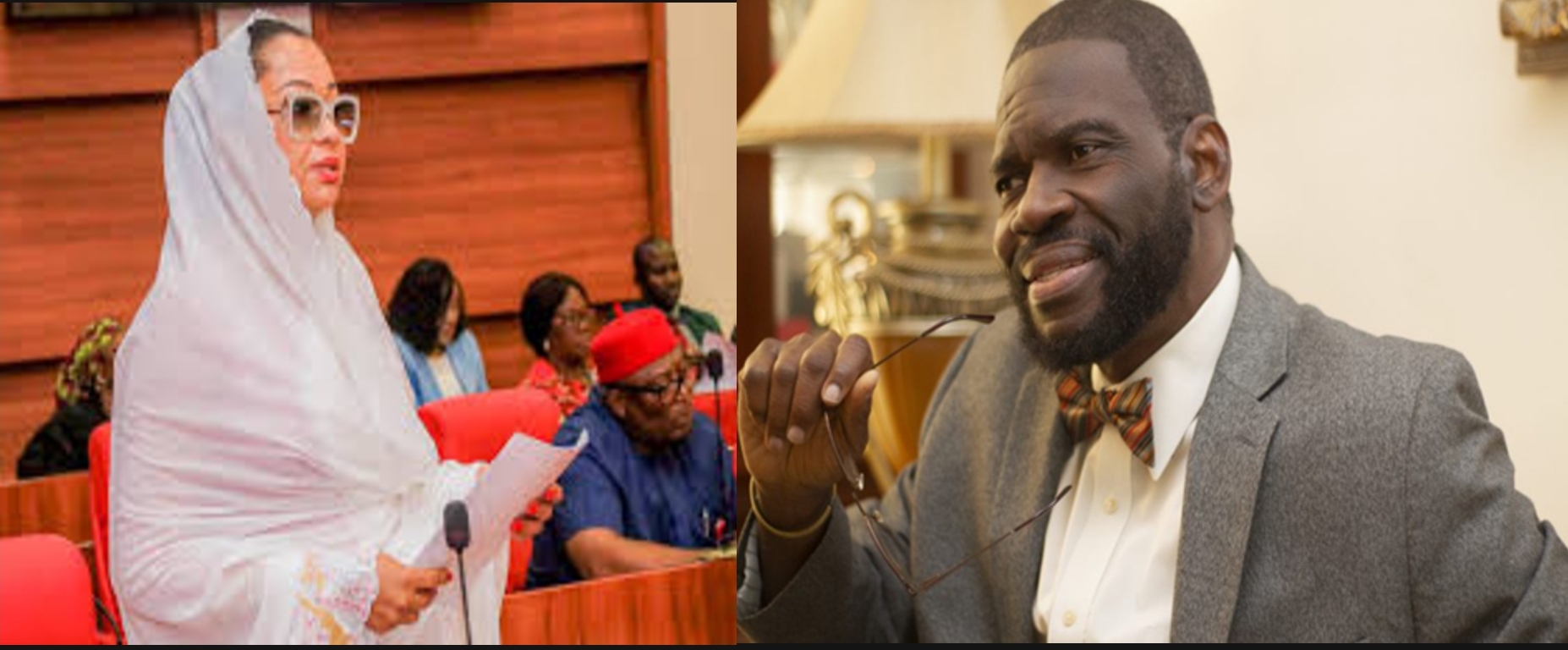
Dear Natasha,
Let me begin not with titles or ceremony, but with your name—Natasha. Because that is the name that now beats in the conscience of a nation. The name that trembles on the lips of mothers in mourning and daughters in search of courage. The name that has come to mean more than just a person. It now means resistance. It means memory. It means don’t look away.
You are not just fighting a political battle. You are standing at the center of something deeper—something dangerous, something sacred. You are carrying a truth they cannot contain, and so in fear, they try to crush the vessel. They fear what will happen if that truth enters a courtroom. If the lies are pierced by sworn testimony. If evidence is given room to breathe. So they run—yes, they run—from one courtroom to the next, swapping judges, flipping procedures, delaying justice not out of duty, but out of dread.
Because they know: once you speak on the record, they cannot unspeak it. Once you show the facts, they cannot unsee them. And once the courtroom hears it—under oath, under law—they can no longer pretend it never happened.
So what do they do? They whisper in corners and declare in chambers: “We must stop her at all costs.”
And they have tried.
They moved your seat. They suspended your voice. They stripped your security. They attacked your dignity. But they forgot something. Something small, but immovable. They forgot what lives inside you. They forgot that you were not standing in that chamber for yourself alone. You were standing for every girl who was ever told to sit down. For every woman who was made to believe that power could touch her, harm her, and walk away untouched.
They are afraid of you, Natasha. Not because of your voice—but because of your evidence. Not because of your protest—but because of your proof. They fear the truth you dared to name out loud: that a man at the summit of power, the Senate President himself, crossed a line that should never be crossed. You spoke of sexual harassment in the most sacred of spaces, and that alone—naming what many only whisper—is the offense they now seek to bury.
They fear your mind, your memory, and your decision to put this battle into writing, into petitions, into courts. Because deep down, they know: this is not just about a seat or a committee—it’s about a woman who exposed a hidden rot at the highest level, and who refused to back down when the cost of truth became unbearable.
So they throw you into legal storms—five judges, four courts, shadowy orders, conflicting rulings. But even in this maze they’ve built around you, one thing has not changed: your resolve. You still show up. You still file. You still speak.
And in doing so, you are reminding the world of something they would rather we forget:
A woman’s voice is not a threat—it is a testimony. And once it begins, it does not return to silence.
The name is Natasha Akpoti-Uduaghan.
And it is not going away.
I do not know you. We have never met. I have no personal or political connection to you. But I know injustice when I see it. And I know silence, when used by the powerful, is a form of violence. I write this not as an ally, but as a witness. A citizen. A psychologist who listens not just to words, but to what is being done to silence them. And from where I stand, this is not accountability. This is persecution dressed in law.
And even in your public pain, you have become something they never expected—a symbol they cannot suppress. A mirror they cannot shatter. You are bleeding, yes. But you are still walking. And in this brutal season of your life, where your dignity has been dragged through courtrooms and political games, something eternal is being carved.
No one says you are perfect. Like anyone pushed to the edge, you may have shown some frustration, even a trace of irritability, when you first asked that simple question: “Why did you move my seat?” Perhaps your voice was firm. Perhaps it unsettled the room. But for that—to be met with this scale of retaliation, this machinery of punishment, this courtroom siege—it is too much. It is not discipline. It is not order. It is a war. A war against presence. Against voice. Against truth told by the wrong person in the wrong body at the wrong time.
You may be exhausted. You may be unheard in the chambers of power. But in the hidden places—in hearts, in homes, in history—you are being heard loud and clear. You are not alone. You are not forgotten. You are not finished.
Because even as they surround you with silence, you continue to speak.
And that is how nations are awakened.
That is how legends begin.
And know this, Natasha:
As you carry that name—your name—up and down the stairs of Nigeria’s courtrooms,
As you stand before judges and tribunals with trembling truth in your hands,
You are not alone.
The world is watching.
The people are watching.
The spirits are watching.
The gods are watching.
And the Almighty God is watching.
And they are not watching silently.
They are shielding you.
They are lifting you.
They are surrounding you with a protection no law can revoke, no Senate can remove, no system can suppress.
Because what you carry is not just memory.
It is a mandate.
And no matter how long they try to delay it—
Truth always arrives on time.
Professor John Egbeazien Oshodi is an American-based psychologist, educator, and author specializing in forensic, legal, and clinical psychology, cross-cultural psychology, and police and prison science. Born in Uromi, Edo State, Nigeria, and the son of a 37-year veteran of the Nigeria Police Force, his early exposure to law enforcement shaped his lifelong dedication to justice and institutional transformation.
He introduced forensic psychology to Nigeria in 2011 through the National Universities Commission and Nasarawa State University, where he served as Associate Professor of Psychology. He has taught at Florida Memorial University, Florida International University, Broward College as Assistant Professor and Interim Associate Dean, Nova Southeastern University, and Lynn University. He currently teaches at Walden University and serves as a virtual professor with Weldios University and ISCOM University.
In the United States, he works as a government consultant in forensic-clinical psychology and leads initiatives through the Oshodi Foundation, the Center for Psychological and Forensic Services. He is also the founder of Psychoafricalysis, a model that integrates African sociocultural realities into modern psychology. A proud Black Republican, he advocates for ethical leadership, institutional accountability, and African development.























You must be logged in to post a comment Login