Africa
Afriland Fire Incident: A Cautionary Note To Architects And Builders -By Isaac Asabor
The Afriland fire incident is not just about one building; it is about all of us. It is about the urgent need to rethink how we design, construct, and regulate our spaces. It is a cautionary note to every professional in the built environment: cut corners, and you endanger lives; prioritize safety, and you save them.

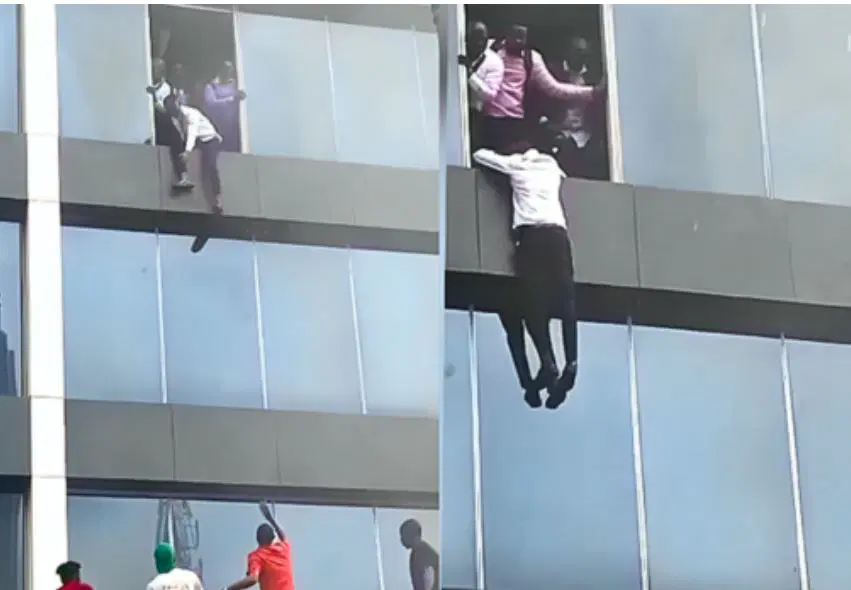
When a fire breaks out in a high-profile building such as the Afriland structure in Lagos, it is not just an unfortunate event; it is a wake-up call. Beyond the immediate damage, the incident underscores the critical responsibilities architects, builders, and regulators carry in safeguarding lives, assets, and the integrity of our urban environment.
The Afriland fire was not merely an isolated accident; it was a revelation. It reminded us that architecture is not just about grand facades or iconic skylines. It is not enough to design for beauty, prestige, or even functionality. Safety is non-negotiable. Any building that overlooks this fundamental principle is a disaster waiting to happen.
Analytically looking at the role of architects, one would be compelled to concur that expectations from their works are more than just design. This is as architects often see themselves as creators of aesthetic marvels. But the truth is, their role extends far beyond drawing impressive blueprints. Every line on a plan should consider fire safety, ventilation, emergency exits, and the choice of fire-resistant materials. It is the responsibility of the architect to imagine not just how a building will be used on its best days, but also how it will perform under crisis.
The Afriland fire should remind architects that cutting corners, or yielding to clients who prioritize luxury over safety, can have tragic consequences. A building’s beauty will mean nothing if it cannot protect its occupants when danger strikes.
As for builders and contractors, there is no denying the fact that the weight of execution rest on them. This is the most safety-conscious design can be compromised by poor execution. Builders and contractors are often tempted to reduce costs by substituting specified materials with cheaper alternatives. In a country where corruption, weak enforcement, and “man-know-man” practices thrive, it is common to find buildings constructed with substandard electrical fittings, insulation, or cladding materials that worsen fire hazards.
In fact, the Afriland fire should serve as a lesson: the integrity of a building lies not only in the brilliance of its design but in the discipline of its execution. Builders must remember they are accountable not only to their clients but also to the public whose safety depends on their craftsmanship.
Let us be honest! This incident also exposed systemic failures. Nigerian cities are dotted with structures that would not pass basic safety inspections in countries where regulations are enforced without compromise. Building approval processes are often riddled with shortcuts, bribery, and negligence. Fire safety drills, sprinkler systems, smoke detectors, and emergency exits are treated as afterthoughts, if they are considered at all.
The Afriland fire is a symptom of a wider problem, our lax attitude toward enforcement. Unless regulators rise above mediocrity and corruption, and unless penalties for safety violations become severe enough to deter negligence, we will keep experiencing preventable disasters.
On a cautionary note, it is germane to opine that the lesson from Afriland is clear as every architect, builder, and regulator must treat fire safety as a sacred obligation. Buildings are not monuments to wealth or power; they are living spaces where human lives must be protected at all costs.
For architects, this means prioritizing safety codes in every design. For builders, it means executing projects with integrity, never compromising on materials or processes. For regulators, it means enforcing standards ruthlessly and refusing to approve structures that fail safety benchmarks.
Nigeria’s urban landscape is growing at an unprecedented pace. Skyscrapers, malls, estates, and office towers are springing up almost daily. If this growth is not matched with a culture of safety consciousness, we are simply building firetraps, not progress.
The Afriland fire incident is not just about one building; it is about all of us. It is about the urgent need to rethink how we design, construct, and regulate our spaces. It is a cautionary note to every professional in the built environment: cut corners, and you endanger lives; prioritize safety, and you save them.
Architects and builders must never forget that their legacies will not be measured only in the skyline they create, but also in the lives preserved within those walls. Afriland’s flames have burned a stark reminder into our conscience: safety is not optional, it is essential.