
Politics
After Lafia and Abuja: Power, Performance, and the Politics of Alignment in Benue -By Leonard Karshima Shilgba
For over a decade, the APC structure in the state was significantly influenced by George Akume, whose role in shaping electoral outcomes is both evident and widely acknowledged. The present shift, therefore, is not simply administrative; it represents a reconfiguration of influence within the party.

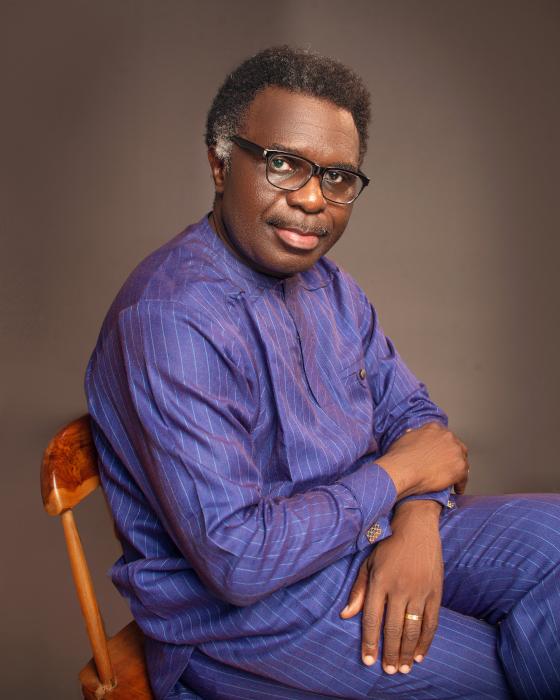
The recently concluded All Progressives Congress (APC) Zonal Congress in Lafia and the National Convention in Abuja have done more than settle procedural questions within the party—they have clarified the political landscape in Benue State with remarkable decisiveness.
At both gatherings, the Omale-led Benue APC executive, backed by Governor Hyacinth Alia, was recognized over the rival Agada faction. In practical terms, this signals what many observers had already inferred: the governor now effectively controls the party structure in the state.
But structure alone does not win elections. What gives this development deeper significance is its convergence with a factor that ultimately matters more to the electorate—performance.
Across Benue today, there is a growing perception—grounded in lived experience—that the current administration is delivering on core responsibilities of governance. The regular payment of salaries and pensions, for instance, is not merely a fiscal act; it is an economic stabilizer. When workers are paid on time, rents are paid, school fees are met, local businesses remain viable, and the cycle of economic life continues. When they are not, the consequences ripple destructively through every layer of society.
In addition, ongoing efforts in infrastructure renewal, revival of once moribund public enterprises, the restoration of the education and health sectors, and support for agriculture are gradually rebuilding public confidence in governance. These are not abstract achievements; they are tangible interventions with direct impact on the daily lives of citizens.
Taken together, party structure, perceived performance, and consequential grassroots support across Benue State place Governor Alia in a strong early position as conversations around the 2027 elections begin to take shape.
Yet, as with all political developments in Benue since 1999, this moment cannot be understood outside the broader context of elite dynamics and historical precedent.
For over a decade, the APC structure in the state was significantly influenced by George Akume, whose role in shaping electoral outcomes is both evident and widely acknowledged. The present shift, therefore, is not simply administrative; it represents a reconfiguration of influence within the party.
The critical question now is not whether this shift has occurred—it clearly has—but how it will be managed by both benefactors and beneficiaries, present and potential.
Some analysts have framed the situation in dramatic terms, suggesting an unfolding “battle for the soul of Benue.” While such language captures the intensity of political competition, it risks overstating division and understating opportunity.
Politics, at its highest level, is not a theatre of permanent conflict but a mechanism for negotiating interests toward collective stability. What lies before Benue is not an inevitable collision, but a strategic choice.
There are compelling reasons to believe that alignment, rather than fragmentation, offers the most beneficial path forward—not only for the principal actors involved, but for the state and the nation.
For Senator Akume, whose national profile has been significantly elevated in his current role, political relevance is best preserved not through proxy contests or political speculators, but through association with success. Supporting a performing incumbent governor provides both continuity and credibility. It also helps correct a recurring pattern in which established political figures are drawn into alliances that yield little long-term value.
For Governor Alia, the advantages of constructive engagement are equally clear. While he may now command the formal structure of the party, political stability requires more than formal control; it requires careful and strategic inclusion, reassurance, and the careful management of legacy networks.
An alignment between these two figures—one representing institutional authority at the state level, the other embodying deep political experience and national reach—would send a powerful signal. It would reassure party members, discourage opportunistic realignments, and present a united front to both internal dissenters and external opposition.
Such an outcome would also resonate beyond Benue. Observers, including neighboring leaders such as the governors of Niger and Nasarawa States, respectively, Umaru Bago and Abdullahi Sule, are watching closely, aware that stability in Benue contributes to broader regional balance.
None of this is to suggest that differences do not exist, or that they should be ignored. Rather, it is to argue that differences, when managed with maturity, can strengthen rather than weaken political systems.
The greater risk lies not in disagreement, but in fragmentation—particularly in a context where opposition forces are actively organizing. The Peoples Democratic Party, influenced by figures such as Samuel Ortom, and emerging platforms like that associated with David Mark, will undoubtedly seek to capitalize on any perceived divisions within the APC.
However, it is important to distinguish between theoretical vulnerability and practical viability. Political platforms, no matter how well intentioned, must ultimately present candidates who can command broad-based support across the electorate. In this regard, the advantage still appears to rest with a performing incumbent operating within a cohesive party structure.
The path to 2027, therefore, is not predetermined. It will be shaped by decisions taken now—decisions about inclusion, communication, and strategic alignment.
If there is a “battle” ahead, it need not be for the “soul” of Benue in the dramatic sense often suggested. Rather, it is a quieter but more consequential contest between two approaches to politics: one rooted in fragmentation and perpetual contestation, the other in consolidation, performance, and shared purpose.
Benue has experienced enough of the former. The moment calls for the latter.
In the final analysis, the real victory will not belong to any individual or faction, but to the people of Benue—if their leaders choose cooperation over conflict, substance over spectacle, and progress over perpetual political intrigue.




















You must be logged in to post a comment Login