
Africa
After Sleeping For More Than Four Decades In Power, Is Paul Biya Suddenly Awake To Revive Cameroon’s Economy? -By Isaac Asabor
Cameroonians are not fools. They have endured too much, seen too many empty promises, and watched too many opportunities wasted. What they need is not another hollow speech about “revival,” but a chance to rebuild their country under leadership that is “awake, accountable, and in touch with reality.”

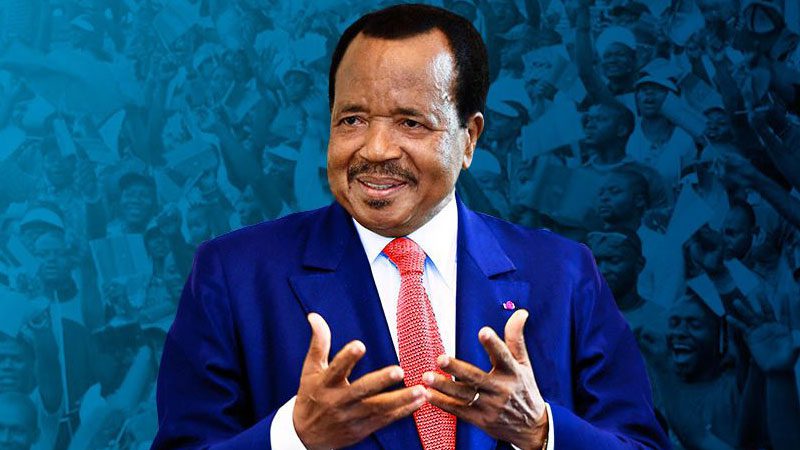
If there were ever a world record for political longevity, Paul Biya of Cameroon would be a prime contender. For over 42 years, the man has sat atop one of Africa’s most promising yet persistently underperforming nations, a country rich in natural resources but poor in leadership. Now, in the twilight of his reign, the same Biya who has presided over decades of economic inertia suddenly appears to be talking about revival, reforms, and reinvention.
But the question is unavoidable: “After sleeping through four decades of economic decay, is Paul Biya truly awake, or just pretending to be?”
When Paul Biya succeeded Ahmadou Ahidjo in 1982, Cameroon was viewed as one of the most stable and potentially prosperous nations in Central Africa. With fertile land, oil reserves, and a diverse economy, it had all the makings of a regional powerhouse. But four decades later, that promise has withered.
Today, Cameroon’s economy is a shadow of what it could have been. Youth unemployment hovers around 30%, poverty remains widespread, and the infrastructure that once symbolized growth is crumbling. The country’s once vibrant agricultural sector has been strangled by neglect, while industries suffer from erratic policies and corruption that runs from the grassroots to the presidency itself.
Biya’s rule has been characterized not by vision but by “vacancy”, a sort of political sleepwalking where governance functions on autopilot while the nation stagnates. His absences from public life have become legendary; months pass without him addressing his people, and decisions often appear to be made by faceless bureaucrats or powerful loyalists.The result? A country stuck in time, with its economy and politics caught in a permanent state of limbo.
Now, in 2025, Biya’s government is making noise about “reviving” the economy. Officials are touting new initiatives to attract foreign investment, boost industrialization, and modernize agriculture. State media, ever faithful, have swung into full propaganda mode, hailing the “Lion Man’s renewed vigor” and “visionary reforms.”
But scratch beneath the surface, and the supposed revival looks more like “a political mirage”.
Cameroon’s problems are structural, and they have Biya’s fingerprints all over them. For decades, he has cultivated a system that rewards loyalty over competence, centralizes power in the presidency, and smothers dissent. The private sector operates in an environment where access to opportunity depends on proximity to the regime, not innovation or merit.
Foreign investors are wary, not because Cameroon lacks potential, but because doing business in Cameroon means navigating corruption, bureaucracy, and political unpredictability. International financial institutions have repeatedly warned about the lack of transparency in public spending and the mismanagement of natural resource revenues.
If Biya were serious about economic revival, he would start by cleaning up the rot in his own house. Instead, the same old faces, many of whom have served in government since the 1980s, remain firmly in charge.
To understand why Biya’s sudden “awakening” rings hollow, one must look at the cost of his long slumber.
Cameroon’s economy is largely driven by oil, agriculture, and forestry. Yet despite these blessings, ordinary Cameroonians see little benefit. Rural poverty remains endemic. Roads are in disrepair. Power supply is erratic. Healthcare is in tatters. And education, once a source of pride, is underfunded and poorly managed.
Add to this the Anglophone crisis, which has not only torn the country apart socially and politically but also bled the economy dry. Businesses in the North West and South West regions, once vibrant centers of commerce, have collapsed. The ongoing conflict has displaced hundreds of thousands, disrupted trade routes, and scared off investors.
Through all this, Biya’s leadership has been defined by denial and delay. His administration has consistently treated the crisis as a security problem rather than a political one, responding with military force instead of meaningful dialogue. The result is an economic and humanitarian disaster that continues to fester.
Biya’s leadership style, if it can be called that, is one of detachment. He rules from afar, often from the comfort of luxury hotels in Geneva, while his country groans under the weight of unemployment, inflation, and insecurity. His few public appearances are carefully staged, his speeches vague and recycled.
This governance vacuum has fostered a political culture where mediocrity thrives and accountability is nonexistent. Corruption is not just tolerated; it is institutionalized. Ministers and civil servants treat public office as a means of personal enrichment. Development projects are inflated or abandoned. State-owned enterprises, instead of driving growth, have become black holes for public funds.
So when Biya now speaks of reform and revival, Cameroonians are right to roll their eyes. They have heard it all before.
Let Cameroonians not be fooled, Biya’s newfound talk of economic revival is not born of a sudden epiphany. It is “political theater”.
With growing domestic frustration and increasing international scrutiny, Biya and his inner circle know the regime is running on borrowed time. Cameroon’s demographics are against him; over 60% of the population is under 25, a generation that knows only one president but has little to show for it.
By floating economic reforms, Biya hopes to project relevance, calm the restless youth, and reassure international partners that Cameroon is still “stable.” It is a strategy to buy time, not to build the future.
The irony, of course, is that the same man who slept through the nation’s economic decline now claims he can lead its revival.
If Biya were serious about reviving Cameroon’s economy, he would start with a “reality check”. No economy can grow without trust in its leadership. No investor will commit to a country that cannot guarantee stability, transparency, or justice.
True revival would mean dismantling the patronage system that has strangled innovation. It would mean empowering younger leaders with new ideas. It would mean genuine decentralization, not the cosmetic kind that keeps power concentrated in Yaoundé.
It would also mean confronting corruption head-on, not through half-hearted anti-graft campaigns, but through independent institutions empowered to hold even the highest officials accountable. And it would mean ending the Anglophone conflict through negotiation, not bullets.
Above all, revival would require “political transition”, a clear, credible roadmap for leadership renewal. Because as long as one man holds a nation hostage to his endless rule, no meaningful economic reform can take root.
Cameroon’s tragedy is not just that it has been ruled by one man for so long. It is that its institutions have been hollowed out to sustain his rule. Every reform, every policy, every economic plan ultimately bends to the question of how it serves Biya’s grip on power.
This is why talk of revival under the same old regime feels absurd. It is like expecting a man who burned down his own house to suddenly rebuild it with sincerity.
Cameroonians are not fools. They have endured too much, seen too many empty promises, and watched too many opportunities wasted. What they need is not another hollow speech about “revival,” but a chance to rebuild their country under leadership that is “awake, accountable, and in touch with reality.”
So yes, after more than four decades of near-political slumber, Paul Biya appears to be stirring. He talks of revival, reforms, and a new dawn. But the question remains: “is this truly an awakening or just another act in Cameroon’s long political sleep?”
Because history tells us one thing, when a man sleeps through his nation’s most critical decades, the sound of his awakening may just be the echo of his own decline.
And if Paul Biya’s so-called revival turns out to be another mirage, then the real revival Cameroon needs is not economic, it is political.
Until then, Cameroonians will continue to dream of a future that their president seems too tired to imagine.






















You must be logged in to post a comment Login