Forgotten Dairies
Again, Angwan Rukuba; Who Did We Offend? -By Prince Charles Dickson, PhD
The bird survives because it has the humility to heed discomfort early. We, on the other hand, keep waiting for blood to become evidence. That is our shame. That is our pattern. That is why the graves keep teaching lessons the living refuse to learn. Realization that not all intelligence announces itself. Some simply know what to do. May Nigeria win.

Naturalists call it anting. A bird, troubled in its feathers, does not write a memo. It does not inaugurate a committee. It does not schedule a press conference. It goes to where relief may be found, settles itself, and submits to a process older than argument. Science says the behavior is real, even if its exact purpose is still debated. That is enough for me.
Because in Plateau state, our tragedy is not only that danger comes. It is that warning comes, and we still act like surprise is a virtue.
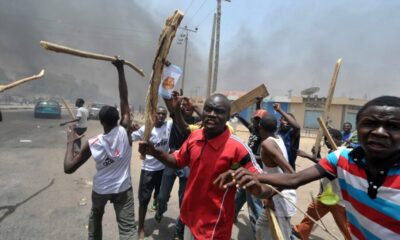
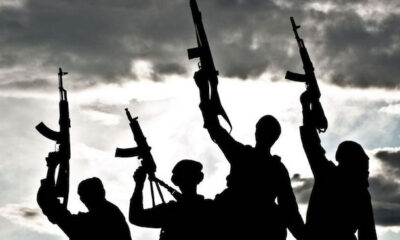
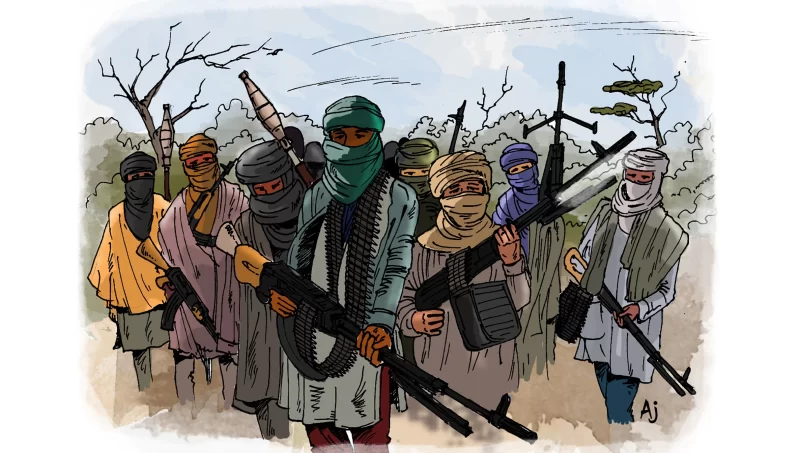
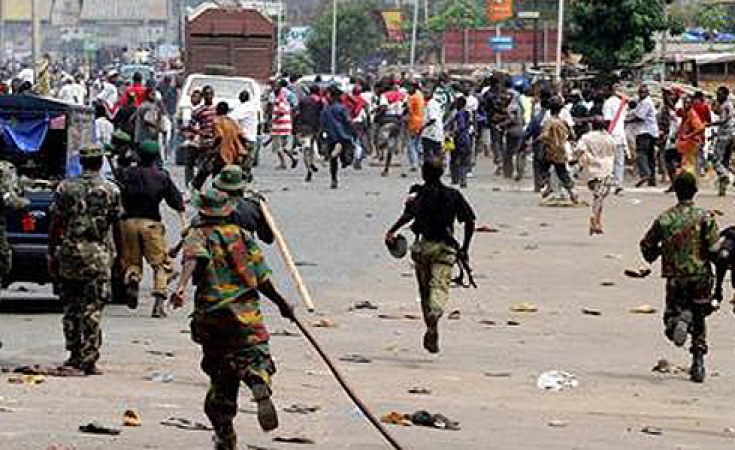
Again, Angwan Rukuba. Again, Jos. Again, the old Middle Belt script with fresh blood on it. On the night of March 29, 2026, gunmen attacked Gari Ya Waye and the Angwan Rukuba area of Jos North. Residents, officials, and rights groups gave varying casualty figures, but the converging picture is grim: more than twenty people were killed, many others injured, panic spread through the community, a curfew followed, and the University of Jos had to postpone examinations because violence had once again entered the civic bloodstream of the city.
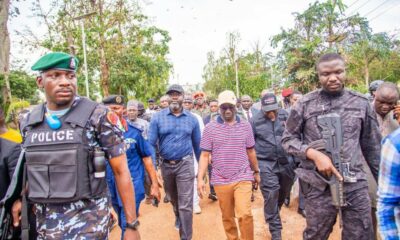
And that is the wound inside the wound. The killers often vanish into the dark, but the citizens inherit the punishment. Students lose exams and rhythm. Traders lose income. Roads empty. Checkpoints multiply. Rumour becomes currency. Press releases bloom like funeral flowers. Leaders arrive with condolences, outrage, and vows. President Bola Tinubu visited Jos this week, promised justice, and announced the deployment of more than 5,000 AI-enabled surveillance cameras. Yet within hours of the visit, fresh violence was already being reported elsewhere in Plateau. The choreography is familiar: visit, promise, deployment, lull, relapse. Same theatre, different costumes.
What worsens the bloodletting is the bureaucratic paralysis at the floor of government, where urgency goes to die in files, rival chains of command, delayed intelligence fusion, and the old addiction to reacting after the dead have already become statistics. After Angwan Rukuba, as in so many Plateau tragedies before it, the familiar machinery rolled out: curfews, checkpoints, statements, deployments. But these are often the grammar of aftermath, not the language of prevention. That is why community policing must sit at the centre of every serious conversation about solutions, not as a slogan, but as a structure that treats local knowledge, neighbourhood trust, and early signals as frontline security assets.
Nigeria’s Police Act 2020 provides for community policing committees, and the Nigeria Police has continued to frame community partnership and trust-building as central to effective policing. Yet until communities are not merely asked to report, but are woven into trusted, accountable, rapid-response security architecture, government will keep arriving like rain after harvest: visible, official, and painfully late
Who did we offend? That is the cry grief asks when language has run out of furniture. But maybe the harder answer is this: we have offended memory, accountability, and truth. Jos did not begin burning yesterday. Human Rights Watch documented in 2001 that the violence could have been foreseen but authorities failed to act. The city would convulse again in 2004, 2008, and 2010. In Yelwa and Shendam in 2004, hundreds were slaughtered in cycles of Muslim-on-Christian and Christian-on-Muslim revenge. Commissions of inquiry came. Reports came. Recommendations came. Plateau became a museum of unfinished warnings.
So, when people say this is simply religion, they are telling only the loudest part of the lie. Yes, Christians invoke mercy. Yes, Muslims invoke peace. Yet people who can quote holy books still hack at neighbours, torch homes, and baptize terror in the language of righteousness. The problem is not faith in the abstract. The problem is what happens when faith is conscripted by fear, land hunger, citizenship anxiety, electoral arithmetic, memory of previous slaughter, and the poisonous architecture of indigene versus settler.
The Jos crisis, as Crisis Group put it, sits in the failure to build a citizenship order where residency carries rights and belonging is not constantly litigated with blood.
That is why the argument over casualty figures in Plateau is never just arithmetic. It is identity politics with a body count. Everybody has an eyewitness. Everybody has a theory. Everybody has a dead person. Christians fear Islamization. Muslims fear exclusion and demonization.
Others whisper about militias, revenge squads, hidden sponsors, demographic wars, and conspiracies too organized to be accidental. In the marketplace of pain, every community clutches its own truth like a court judgment. And because each truth is tied to a grave, contradiction sounds like an insult. So, grief hardens into narrative, narrative hardens into vengeance, and vengeance goes shopping for theology.
But even here, Plateau refuses to be reduced entirely to its worst men. In the aftermath of Angwan Rukuba, there were reports of Muslims and Christians hiding one another, sheltering one another, saving one another from mobs and gunfire. One Muslim survivor recounted how a Christian man hid him in his wife’s room until danger passed. That detail matters. It matters because it ruins lazy civilizational narratives. It reminds us that when politicians, extremists, and ethnic entrepreneurs try to divide Jos into permanent camps, ordinary people sometimes disobey the script with courage. There are still citizens on this bloodied plateau who have not surrendered their humanity to the crowd.
Yet even that beauty should disturb us. Why must decency be heroic in a place that should have normalized coexistence by now? Why should the benchmark for hope in Jos be that a neighbour did not let another neighbour die? Peacebuilders know this ache. Years of dialogue can collapse in one night of gunfire. One funeral sermon can undo ten workshops. One retaliatory killing can cancel a season of painstaking trust-building.
And while practitioners scramble to calm the streets, the deeper machinery of resentment remains intact: segregated memory, selective justice, inherited suspicion, manipulated history, and a state that too often arrives strongest after the burial.
Again, Angwan Rukuba; who did we offend? Not God, who has been invoked too cheaply by killers on every side. Not history, because history has been warning us in capital letters. We have offended the discipline of prevention. We have offended the duty to believe local signals before gunfire authenticates them. We have offended the possibility of a civic identity larger than tribe and creed. And we have offended our children, who keep inheriting a city where every pause in violence is described as peace.
The bird in distress does not hold a summit with its parasites. It does not deny irritation because acknowledging it is politically inconvenient. It goes where the remedy may be, however humble, however instinctive. Plateau, by contrast, has become too educated in reaction and too illiterate in response. We know how to count the dead, deploy the troops, declare the curfew, write the communique, convene the panel, and announce the resolve. What we do not yet know, or refuse to know, is how to honor warning before mourning.
That is why Angwan Rukuba is not only a tragedy. It is an indictment. Of the government, yes. Of security architecture, certainly. But also, of all the habits that have made us fluent in lament and clumsy in prevention. Until we face the trust deficit, the weaponization of identity, the manipulation of fear, and the profitable politics of perpetual grievance, Jos will remain a city where every calm evening is only a rumor of peace.
The bird survives because it has the humility to heed discomfort early. We, on the other hand, keep waiting for blood to become evidence. That is our shame. That is our pattern. That is why the graves keep teaching lessons the living refuse to learn. Realization that not all intelligence announces itself. Some simply know what to do. May Nigeria win.