
Health and Lifestyle
America Can Leave WHO But Its Debts Cannot Disappear -By Fransiscus Nanga Roka
Congress has an opportunity to create a transparent, independent, and verified reconciliation of all assessments, payment authorities, and unpaid obligations. In doing so, Congress can resolve current legal obligations and clearly establish the legislative requirements for future withdrawals.

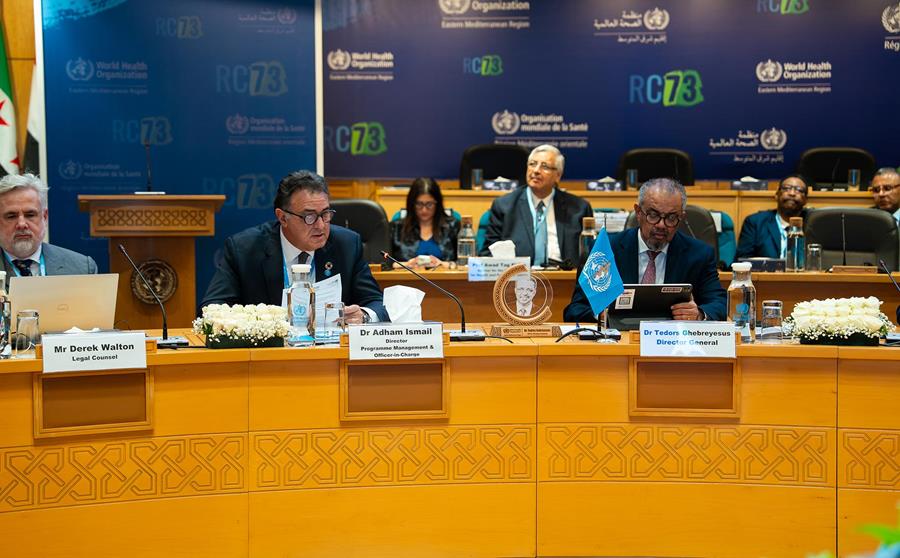
A government cannot cancel a bill for services rendered by stating that they do not recognize the organization which provided those services. The U.S. government’s decision to leave the World Health Organization is a clear example of how a government believes it has the right to use its power to violate the laws of other nations, and that leaving the collective protection of the international community will somehow increase their own national security.
The U.S. government announced on January 22, 2026, that it had completed its withdrawal from the World Health Organization (WHO), after providing a year’s notice. The U.S. stated that the reason for leaving was due to the WHO’s inadequate response to the COVID-19 pandemic, as well as being heavily influenced by politics and requesting too much money from member states. However, despite the announcement of completion, there were still unpaid assessments left behind. According to Reuters, the amount of money owed by the U.S. was estimated at about $260 million. Later reports from the Associated Press put the number of dollars owed at approximately $280 million using current exchange rates.
The legal problem begins in Washington, not Geneva.
Congress’s 1948 joint resolution provided a right of the United States to withdraw from the World Health Organization (WHO) with one year’s advance notification, if the financial commitments for the WHO’s fiscal year at the time of the proposed withdrawal are fulfilled. While the Congressional Research Service (CRS) study found ambiguity regarding whether the president would have the authority to make such a decision to withdraw, as well as what constitutes fulfilling the fiscal year condition, the CRS study also concluded that the U.S. will not be able to legally withdraw until its financial commitment to the WHO has been satisfied. Therefore, an announcement made by the executive branch does not provide a definitive answer to the legal issues surrounding the withdrawal.
The same is true internationally, there is a difference between operational departure, legal withdrawal and the remaining debt. There is no provision in the WHO Constitution that allows for a general withdrawal. Therefore, the special reservation that the United States has for withdrawing from the WHO is significant. In addition, even if a country were to effectively leave the organization, its financial obligations to the organization (or those that have been accrued prior to leaving) would still exist. A lack of enforcement does not turn what was once a binding obligation into a voluntary contribution.
The World Health Organization (WHO) stated on January 24th what areas were to be discussed at the next meetings of its governing bodies. This cautious approach taken by the WHO will help to control the rhetoric used in politics from each side. For example, stating that the separation is completely legal would be too early since there are still many questions about whether all the necessary criteria have been met. Likewise, saying that the separation was judicially illegal would be beyond what has been proven.
Another myth has been dispelled. Membership in the WHO, the International Health Regulations, and the Pandemic Agreement are three separate international legal structures. The United States rejected the 2024 IHR amendments in July 2025. This rejection does not automatically eliminate all of our current international health obligations. Adoption of the Pandemic Agreement will not automatically require all countries to participate; as with most treaties, there are specific conditions for each country to provide their consent and for the treaty to take effect.
The strategic error is larger than simply not paying our bill. Disease doesn’t stop because you’ve told it to. If we fracture our surveillance and scientific collaboration efforts, we will have less time to prepare for the threats that could harm American citizens. While bilateral agreements may complement a larger global effort, they cannot provide the same level of protection.
Four actions should follow.
Congress has an opportunity to create a transparent, independent, and verified reconciliation of all assessments, payment authorities, and unpaid obligations. In doing so, Congress can resolve current legal obligations and clearly establish the legislative requirements for future withdrawals.
Secondly, the governing bodies of WHO need to issue a formal statement of justification for the differences in membership status, accumulated debt, and right to participate. A final agreement on settlement must be accompanied by an explanation of its authority and terms.
Thirdly, where it is legally permissible to do so, all government entities must maintain communication channels regarding disease outbreaks, influenza tracking and cooperative lab activities. There is no reason why patient health should be used as a bargaining chip when two or more health organizations part ways.
Fourth, WHO’s remaining member states can provide more predictable funding, but also require transparent budgeting processes and demonstrable results. For the organization to be financially resilient, it must also undergo some level of institutional change.
The U.S. has every right to find fault with the World Health Organization (WHO), but it does not have the right to consider finding fault with WHO as a way of paying off what it owes. Sovereignty gives you the power to make choices; however, with making those choices comes an obligation to continue to fulfill your responsibilities even when you made those choices.
Fransiscus Nanga Roka
Faculty of Law University 17 August 1945 Surabaya and Managing Partner Law Firm Victorious Indonesia
















You must be logged in to post a comment Login