
Health and Lifestyle
Tsetse Fly: The Overlooked Threat to Animal Health, Human Survival, and Public Health -By Dr. Moris Umoru
As a veterinarian and public health practitioner, I believe that meaningful progress requires an integrated commitment to disease surveillance, early diagnosis, effective vector control, accessible healthcare, stronger veterinary services, and community participation. These efforts must be sustained and adapted to local conditions to achieve lasting results.

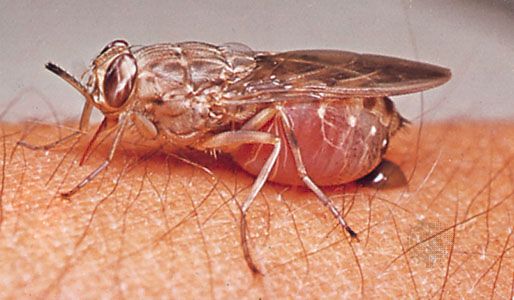
Hook/Lead: A Small Fly, a Significant Threat
Across many communities in sub-Saharan Africa, the bite of a tiny insect can have consequences far beyond temporary discomfort. Tsetse flies contribute to the transmission of parasitic diseases that threaten human health, reduce livestock productivity, undermine food security, and place additional pressure on already stretched healthcare systems. Although these insects receive less public attention than some other disease vectors, their impact on rural livelihoods and public health remains significant.
For veterinarians and public health practitioners, the tsetse fly represents a challenge that cannot be addressed through human medicine or animal healthcare alone. Its effects demonstrate the close relationship between people, livestock, wildlife, and the environment. Understanding this relationship is essential to developing sustainable strategies that protect communities and strengthen disease prevention.
Background: Why Tsetse Flies Matter
Tsetse flies belong to the genus Glossina and are found in sub-Saharan Africa. They feed on the blood of humans and animals and can transmit trypanosomes, the parasites responsible for human African trypanosomiasis (HAT), commonly known as sleeping sickness, and animal African trypanosomiasis (AAT), often called nagana.
Human African trypanosomiasis is caused primarily by Trypanosoma brucei gambiense and Trypanosoma brucei rhodesiense. The former is mainly associated with western and central Africa and typically progresses slowly, while the latter occurs predominantly in eastern and southern Africa and may progress rapidly. Animal trypanosomiasis is associated with several parasite species, including Trypanosoma congolense, Trypanosoma vivax, and Trypanosoma brucei.
These diseases affect different hosts and require distinct approaches to diagnosis and treatment. However, they share an important epidemiological connection: tsetse flies play a central role in their transmission. Consequently, controlling the vector and managing infections in humans and animals are important components of disease prevention.
Main Discussion: How Tsetse Flies Spread Disease
Tsetse flies acquire trypanosomes when they feed on an infected host. The parasites undergo development within the fly before reaching a stage at which they can be transmitted to another susceptible host. During a subsequent blood meal, an infected fly can introduce the parasites into that host.
The risk of transmission varies according to the tsetse species, parasite involved, ecological conditions, and exposure of people and animals. Tsetse flies occur in a range of habitats, including riverine vegetation, woodland, and savannah environments. People who farm, fish, hunt, or keep livestock near these habitats may face greater exposure.
The consequences of infection can be severe. In humans, sleeping sickness may initially present with fever, headache, joint pain, itching, and weakness. If the disease progresses, neurological involvement can lead to disturbances in sleep patterns, behavioural changes, confusion, and other serious complications. Without appropriate diagnosis and treatment, infection may become fatal.
In livestock, trypanosomiasis can cause fever, anaemia, weight loss, reduced fertility, decreased milk production, and poor growth. Severely affected animals may die. These outcomes make tsetse-associated diseases a concern not only for clinical veterinary practice but also for agricultural development, household income, and public health.
Causes and Contributing Factors
The persistence of tsetse-associated diseases reflects a combination of environmental, biological, and socioeconomic factors.
Environmental conditions: Vegetation, temperature, humidity, and the availability of suitable animal hosts influence tsetse distribution. Changes in land use can alter the habitats of both flies and their hosts, changing patterns of exposure.
Human occupational activities: Farmers, fishers, hunters, livestock keepers, and other people working in affected areas may encounter tsetse flies more frequently. Limited awareness of disease risks can further increase vulnerability.
Weak surveillance systems: Inadequate diagnostic facilities, shortages of trained personnel, and delays in reporting suspected infections can allow cases to remain undetected. Similar challenges in veterinary services may delay the recognition and treatment of infected livestock.
Limited access to healthcare and veterinary care: Remote communities may face financial, geographical, and logistical barriers to obtaining timely diagnosis and treatment. These barriers can increase the burden of disease on vulnerable households.
Livestock and wildlife interactions: In some settings, infected domestic animals and wildlife contribute to the persistence of animal trypanosomiasis. The importance of these reservoirs varies by parasite species and local ecology, making location-specific surveillance essential.
Together, these factors show that tsetse control requires more than the removal of insects. It also requires stronger health systems, community education, environmental understanding, and sustained investment in prevention.
Public Health Impact: Beyond the Bite
Human health and healthcare delivery
Human African trypanosomiasis remains a serious public health concern because its early symptoms may resemble those of other febrile illnesses. When diagnosis is delayed, the infection may progress and become more difficult to manage. Access to appropriate diagnostic services and treatment is therefore critical, particularly in communities far from well-equipped health facilities.
The disease can also affect household stability. When an individual becomes seriously ill, family members may lose income, miss work, or take on additional caregiving responsibilities. These pressures can deepen existing economic hardship, especially in rural communities where households depend heavily on daily labour.
Livestock productivity and food security
The effects of tsetse flies extend beyond human infection. Animal trypanosomiasis can reduce livestock productivity, lower reproductive performance, increase veterinary costs, and cause animal deaths. For families that depend on livestock for meat, milk, income, manure, and agricultural work, these losses can be devastating.
Reduced livestock productivity may also affect the availability and affordability of animal-source foods. In communities already facing food insecurity, disease-related losses can weaken household resilience and undermine efforts to improve nutrition and livelihoods.
Economic development and rural livelihoods
Tsetse-associated diseases can impose costs through treatment, animal replacement, reduced production, and lost working time. Farmers may be discouraged from expanding livestock production in areas where disease risks remain high. These challenges can limit agricultural development and make it harder for rural households to escape poverty.
The burden is not distributed equally. Communities with limited access to healthcare, veterinary services, transport, and reliable information are often less able to prevent and manage these diseases. Effective interventions must therefore consider both disease transmission and the social conditions that influence vulnerability.
The One Health Connection
The tsetse fly illustrates why human health, animal health, and environmental health must be addressed together. Although human and animal African trypanosomiasis are distinct conditions, they occur within interconnected ecological and socioeconomic systems.
Veterinarians can support animal disease diagnosis, treatment, surveillance, and vector control. Medical professionals can identify suspected human infections and ensure timely referral and care. Public health officers can coordinate community education and disease monitoring, while environmental specialists can help design sustainable approaches to managing vector populations.
This integrated approach, known as One Health, encourages collaboration among sectors that have traditionally worked separately. It also recognises that protecting animal health can support food security and household welfare, while environmentally responsible vector control can contribute to healthier communities.
Solutions and the Way Forward
Controlling tsetse flies and reducing disease transmission require coordinated, evidence-based action.
First, strengthen vector control. Traps and insecticide-treated targets can reduce tsetse populations when appropriately placed and maintained. Approved insecticide-based methods for protecting livestock may also reduce exposure. Control programmes should be guided by local surveillance and designed to minimise harm to non-target species and the wider environment.
Second, improve early diagnosis and treatment. Health facilities in affected areas need access to appropriate diagnostic tools, trained personnel, and effective medicines. Suspected human cases should receive prompt clinical assessment. Infected livestock should be examined by veterinary professionals and treated with appropriate trypanocidal medicines, taking local drug resistance and treatment guidance into account.
Third, expand surveillance and reporting. Human healthcare providers, veterinary services, laboratories, and community networks should share relevant information to identify disease patterns and prioritise interventions. Monitoring should assess both disease occurrence and the effectiveness of vector-control activities.
Fourth, invest in community awareness. Education campaigns should explain how tsetse flies transmit disease, where exposure may occur, and why early medical or veterinary attention matters. Farmers and other exposed groups should receive practical advice suited to their occupations and local environments.
Fifth, strengthen institutional collaboration. Governments, research institutions, development partners, and community organisations should support sustained programmes rather than isolated interventions. Training, adequate funding, reliable supplies, and local participation are essential for long-term success.
Finally, environmental management should be based on sound ecological evidence. Measures that reduce vector habitats must be carefully assessed to avoid unnecessary destruction of wildlife habitats and other valuable environmental resources.
Conclusion: Protecting People Begins with Protecting the Connections
The tsetse fly is a reminder that major public health threats do not always come from the most visible sources. Through the diseases it transmits, this small insect can affect human survival, livestock productivity, food security, and economic development. Its consequences reach beyond individual patients and animals to the families and communities that depend on them.
As a veterinarian and public health practitioner, I believe that meaningful progress requires an integrated commitment to disease surveillance, early diagnosis, effective vector control, accessible healthcare, stronger veterinary services, and community participation. These efforts must be sustained and adapted to local conditions to achieve lasting results.
A healthier future depends on recognising that the well-being of people, animals, and the environment is inseparable and that protecting one strengthens the others.
DR UMORU MORIS, DVM.

























You must be logged in to post a comment Login