
National Issues
Licences, Lawsuits and the Regulator: Who Protects the Nigerian Fuel Consumer? -By Daniel Nduka Okonkwo
Dangote’s motion should be considered under the Constitution and the applicable Court of Appeal Rules. The NMDPRA should publish its licensing criteria, any applicable backward integration policy, and its method for determining a shortfall, including what domestic output it expected, what shortfall it projected, and what stock cover it considered necessary. It should also report authorised and landed import volumes each quarter alongside comparable depot prices. Those documents would answer much of what is now argued through press statements and competing claims.

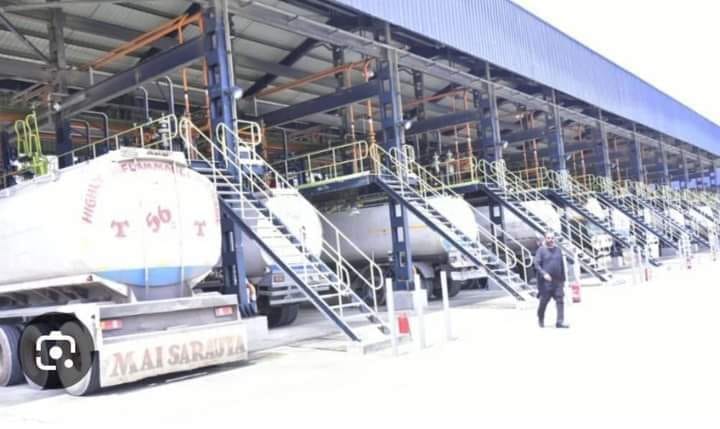
Within ten days in late September and early October, three decisions put Nigeria’s petrol market on a collision course. On September 18, the NMDPRA approved 830,000 tonnes of fourth-quarter petrol imports for six companies. On September 28, a Federal High Court in Abuja ruled that the same regulator’s refusal to license three of those importers was in direct non-compliance with the Petroleum Industry Act. On October 6, Dangote Refinery, which now supplies about three-quarters of the petrol Nigerians buy, asked the Court of Appeal for leave to challenge that judgment. A refinery, a regulator, and a handful of importers are fighting over who may bring fuel into the country, how much, and on what evidence. Yet none of them is the party that pays at the pump. So who protects the Nigerian fuel consumer in the fight over Dangote, the regulator, and the importers?
Decisions about petrol are made in courtrooms and regulatory offices, but they are paid for at filling stations, in bus fares, and in the price of food. The dispute between Dangote Petroleum Refinery and Petrochemicals FZE, three independent marketers, and the Nigerian Midstream and Downstream Petroleum Regulatory Authority, NMDPRA, is therefore not only a commercial quarrel. It is a test of whether Nigeria’s petroleum law protects the consumer through competition, or protects the biggest players from it. The public record, read carefully, shows that the loudest claims on every side are narrower than they sound.
Begin with what the court actually decided. On Monday, September 28, 2026, Justice Inyang Ekwo of the Federal High Court in Abuja delivered judgment in Suit No. FHC/ABJ/CS/1363/2026, brought by Matrix Energy Limited, AA Rano Nigeria Limited, and AYM Shafa Limited against the NMDPRA. Reported accounts say he held that the regulator’s refusal to issue licences was in direct non-compliance with the Petroleum Industry Act 2021, and that any exercise of power contrary to the law was null and void. The order, as reported, directs the regulator to continue to grant, issue, extend, renew, or reissue licences to the three companies, provided they meet all statutory and regulatory conditions.
That condition matters. The Energy Watchdog, an advocacy group, has welcomed Dangote’s move and said the era of automatic import licences must end. But the order as reported is not an automatic entitlement. It ties the licences to compliance with the conditions the law and the regulator set. A fair debate has to be about those conditions, and about how they are applied, not about a licence handed out without them. A statement from an advocacy group is part of the public argument. It is not a finding of fact.
The marketers’ case includes factual claims presented in evidence before the court. In an affidavit, Saidu Mahuta, an executive director of AA Rano, said the regulator had granted or renewed their licences only sporadically since July 2025. The three companies told the court they had collectively invested more than 20 billion dollars in infrastructure, logistics, and retail networks. That figure is the claimants’ own and not an audited finding. Their lead counsel, Raji Ahmed, a Senior Advocate of Nigeria, argued that allowing imports alongside local production would strengthen competition and guard against monopoly and price fixing. The judge held that the case succeeded on its merits, though the claimants’ evidence on investment and licensing history remains their own account.
Dangote’s position is that the Act permits imports only where domestic refining cannot meet local demand, and it relies on sections 317(8) and 317(9). Its chief economist, Hassan Mahmud, said on the day of the judgment that the refinery does not seek protection from competition and wants a level playing field. On October 6, the refinery filed a motion at the Court of Appeal in Abuja asking for leave to appeal as an interested party, because it was not a party to the original suit. Reporting published on October 13 said the Court of Appeal had not ruled on that application and no hearing date had been reported.
Because Dangote was not a party, the first hurdle is standing. Section 243(1)(a) of the Constitution allows a person who was not a party, but has an interest in the matter, to appeal from the Federal High Court with the leave of that court or the Court of Appeal. Authorities digested by Legalpedia hold that only a person whose interest is directly, and not obliquely, affected by a decision can validly seek that leave. The judgment orders the regulator to deal with three named companies. Dangote will have to show how it is directly affected, and the court will decide whether it has.
The statutory language warrants closer scrutiny than the competing public narratives. Section 317(8) of the enacted Act empowers the Authority to implement a Backward Integration Policy aimed at promoting domestic refining, while section 317(9) provides that licences for the importation of product shortfalls may be allocated to companies holding active local refining licences or possessing demonstrable experience in the international trading of crude oil and petroleum products. The final Act departed from earlier legislative formulations, which would have made an active local refining licence an exclusive qualification for import authorisation. The resulting provision, therefore, admits of competing legal interpretations.
Dangote’s position rests on the statutory reference to product shortfalls and the legislative objective of encouraging domestic refining. The marketers, by contrast, can rely on the permissive wording of the provision and its express recognition of established international petroleum traders as a separate qualifying category. The central legal question is consequently whether section 317(9) merely confers discretion on the Authority to allocate import licences among eligible applicants, subject to the statutory framework, or whether section 317(8), read together with the Act’s broader objectives, imposes substantive limits on the exercise of that discretion. Neither position can be conclusively established by selective reliance on the statutory text alone; the provision must be construed in its legislative and regulatory context.
Section 317(10) adds that import volumes are to be allocated according to criteria set by the Authority, taking into account each participant’s refining output in the preceding quarter, its share of active wholesale customers, competitive pricing, and its supply, storage, and distribution record.
The earlier litigation shows where the real fight lies. In the suit Dangote filed in 2024, the Nigerian National Petroleum Company Limited argued that the Backward Integration Policy had to be applied before the refinery could challenge the licences, while Dangote’s counsel rejected that argument.
The regulator’s own record adds to the difficulty. At a January 2025 hearing in the earlier suit, the NMDPRA argued that the refinery’s output was insufficient to meet national demand and that section 317(9) allowed it to license imports to bridge the gap, according to Billionaires. Africa. S&P Global reported a clampdown in October 2025, limited licences in late March 2026 that were left to expire at the end of the first quarter, and then new licences for six marketers on May 6 totalling 720,000 tonnes. Dangote’s Lagos suit alleges that licences issued or renewed on or about May 6 breached an April 29 order to maintain the status quo. That remains an allegation, not a finding that the order was breached. A regulator that changes licensing decisions from one quarter to the next without publicly explained criteria, as far as the reporting reviewed shows, invites exactly this litigation.
The numbers pull in two directions. NMDPRA data reported by Nairametrics show that domestic refineries accounted for about 76.7 percent of the reported petrol supply in the first quarter of 2026. It was reported that domestic refiners supplied nearly 80 percent in the first half, with imports accounting for just over 20 percent. Nairametrics also reports that local refineries supplied about 3.18 billion litres of petrol in the first quarter. These figures cover different periods and may use different measures, so they should not be treated as directly interchangeable. Yet the same regulator approved 830,000 tonnes of petrol imports for the fourth quarter for six companies, including the three marketers, on September 18, ten days before the judgment. Combined allocations for these companies reportedly rose from 180,000 tonnes in the first quarter to 720,000 in the second, above 800,000 in the third, and 830,000 in the fourth. An NMDPRA official told reporters the permits were meant to ensure there are no supply gaps at the end of the year.
Dangote can argue that rising import allowances alongside rising domestic supply do not, on their own, demonstrate a shortfall. The regulator and the marketers can answer that a permit is an authorisation, not proof that the full volume was imported or delivered, and that petrol stock cover of 16 days in May, as reported from NMDPRA data, justified a buffer. The gap between authorised and landed volumes is the missing evidence. Without it, the 3.18 billion-litre figure and the reported market shares cannot settle the legal question. It is also necessary to distinguish production, supply, imports, deliveries, and consumption before comparing the figures.
Competition is more concentrated than the arguments suggest. The same six companies have been named in reported permit rounds throughout 2026, so import competition today includes competition among six firms whose authorised volumes are set by the regulator. On the other side stands a refinery described by Nairametrics as Africa’s largest single-train refinery, reported by Billionaires. Africa is expected to produce about 700,000 barrels of crude a day. That figure refers to crude-processing capacity or throughput as described by the source, not petrol output, and capacity is not the same as actual deliveries. A consumer does not automatically gain when two concentrated blocs contest the market. The gain comes when entry rules are transparent, applied consistently, and open to any qualified entrant, which is consistent with the reported court emphasis on competition.
President Bola Tinubu nominated Rabiu Abdullahi Umar, a former Group Chief Commercial Officer of Dangote Industries, to head the Nigerian Midstream and Downstream Petroleum Regulatory Authority (NMDPRA) in April, and the Senate confirmed his appointment in May.
The appointment raises a legitimate governance question concerning the adequacy of safeguards against actual, potential, or perceived conflicts of interest in the exercise of the Authority’s statutory functions. Where the head of a regulatory institution has previously held a senior position within a corporate group whose commercial interests may be affected by the institution’s licensing and regulatory decisions, public confidence requires transparent, enforceable, and consistently applied rules governing disclosure of interests, recusal, and the management of conflicts of interest.
Accordingly, the relevant issue is not whether the appointment or the appointee’s previous employment, in isolation, establishes impropriety; neither fact is sufficient, without further evidence, to establish bias, preferential treatment, or wrongdoing. Rather, the issue is whether an adequate legal and institutional framework exists to identify, disclose, and manage any conflict that may arise, particularly in relation to petroleum product import licensing and decisions affecting competing market participants. The existence, scope, and practical application of such safeguards are matters of legitimate public interest and warrant scrutiny through verifiable documentary evidence and official clarification.
A rigorous journalistic assessment should therefore distinguish facts from reasonable questions of regulatory governance and from allegations requiring proof. The public is entitled to information sufficient to assess whether the Authority’s decisions are made in accordance with applicable law, objective licensing criteria, and impartial administrative procedures, without presuming misconduct based on prior employment or concluding unsupported by the available evidence.
On the question that matters most to households, the evidence is thin. The NMDPRA has said pump prices reflect crude feedstock costs, the lag between crude procurement and refinery delivery, imported cargo costs, and transport and marine charges. None of the sources reviewed offers a published, like-for-like comparison of imported and domestic petrol prices at the depot level. So the claim that imports lower prices and the claim that imports threaten supply remain unverified by the evidence cited here. Anyone who asserts either owes the public numbers that can be checked.
The record is clear on what should now be published. The full judgment and enrolled order should be made available so the public can see what the court actually ordered and why. Dangote’s motion should be considered under the Constitution and the applicable Court of Appeal Rules. The NMDPRA should publish its licensing criteria, any applicable backward integration policy, and its method for determining a shortfall, including what domestic output it expected, what shortfall it projected, and what stock cover it considered necessary. It should also report authorised and landed import volumes each quarter alongside comparable depot prices. Those documents would answer much of what is now argued through press statements and competing claims.
This report makes no finding that Dangote Refinery, the three marketers, or the NMDPRA acted unlawfully. Allegations remain attributed to those who made them, and the matters before the Court of Appeal and the Lagos Federal High Court should not be prejudged. Dangote filed a notice of discontinuance of its earlier suit dated July 28, 2025, and gave no reason, according to Billionaires. Africa. Gazette NGR reported in early November 2025 that, after the case was reassigned from Justice Ekwo to Justice Mohammed Umar, the court dismissed it without costs on the defendants’ oral application, after the parties had joined issues. A dismissal can carry different legal consequences from a simple striking out, and whether it bears on the Lagos suit is a question for counsel, so this article does not conclude it. The Lagos case, Suit No. FHC/L/CS/857/2026, came before Justice Chukwujekwu Aneke on October 7, but the hearing was adjourned because the judge was indisposed. The latest outcome could not be independently confirmed from the reporting available for this article. The marketers have applied to join that suit, and the NNPC and the Depot and Petroleum Products Marketers Association of Nigeria have accused Dangote of seeking a monopoly over domestic fuel supply, an accusation the refinery’s public position rejects. No public response from the NMDPRA to the September judgment or the appeal motion was located in the reporting reviewed.
So who protects the Nigerian fuel consumer? Not any litigant by default. The courts decide what the law permits. The regulator must show its reasons and its data. The National Assembly and the competition authorities must hold both the refinery and the importers to account. The test of this dispute is not simply who wins at the Court of Appeal. It is whether the rules become clear enough that a Nigerian can know why petrol costs what it costs, whether supply decisions are justified, and who answers when supply fails.
Daniel Nduka Okonkwo is an investigative journalist, human rights advocate, and policy analyst based in Nigeria. He is the founder and publisher of Profiles International Human Rights Advocate (PIHRA), a platform documenting the courage of human rights defenders and examining issues of governance, accountability, security, and fundamental rights.
His reporting on Nigerian governance, security-sector accountability, public finance, and human rights has appeared in Sahara Reporters, Vanguard, Daily Trust, African Defence Forum, Opinion Nigeria, and Daily Intel.
Read more of his work on the PIHRA website:
https://www.profilesinternationalhumanrightsadvocate.com.ng/
For tips, feedback, or collaboration, contact him at dan.okonkwo.73@gmail.com.























You must be logged in to post a comment Login