Africa
As Another July 27 Beckons, Who Remembers Funsho Williams? -By Isaac Asabor
As we mark another July 27, Funsho Williams should not just be a name on a forgotten grave. He should remain a symbol of what could have been, a Lagos led by intellect, not propaganda; by vision, not violence. His story must be told, retold, and remembered, not just for the sake of his family, but for the soul of our democracy. Because in the end, a nation that forgets its heroes has no moral right to complain about the caliber of those who lead it today. So, once again: Who remembers Funsho Williams? Hopefully, more of us will now say: We do.

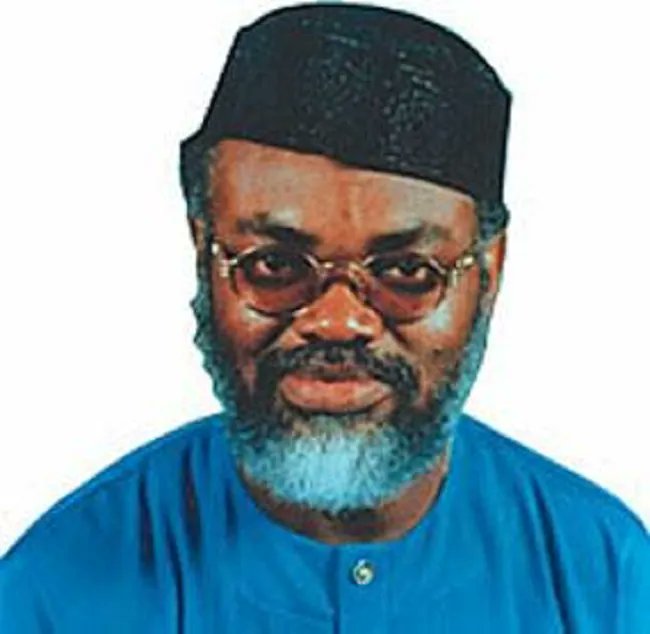
As the calendar inches toward July 27 once again, a question that haunts Lagos’ political conscience surfaces with a dull throb: “Who remembers Funsho Williams?” For many Lagosians, particularly the younger generation caught in the whirlwind of today’s socio-political complexities, the name might barely ring a bell. Yet, for those who lived through the political tides of the early 2000s, the name Funsho Williams evokes memories of a man whose life was violently cut short, and whose death left a gaping wound in the democratic process of Nigeria, one that is yet to heal.
On July 27, 2006, Engr. Anthony Olufunsho Williams was murdered in cold blood at his residence in Dolphin Estate, Ikoyi. The news stunned not just Lagos, but the entire nation. He was not an unknown figure; he was a leading gubernatorial aspirant of the Peoples Democratic Party (PDP) in Lagos State, and many viewed him as the most formidable contender against the political machinery of the then-governing party in the state, the Action Congress (now All Progressives Congress, APC).
His earthly journey was that of service and promise. He was not just a politician; he was a seasoned technocrat with an impressive resume. He graduated from the University of Lagos with a degree in Civil Engineering and later obtained a master’s degree from New Jersey Institute of Technology in the United States. His professional career spanned decades, beginning in the Lagos State Ministry of Works where he rose to become a Permanent Secretary. He later served as Commissioner for Works and Infrastructure in the state. Under his stewardship, major road infrastructure projects were executed, and his commitment to urban development earned him a sterling reputation.
Unlike the many accidental politicians who flood Nigeria’s political space today, Funsho Williams was a man of vision, discipline, and quiet but firm resolve. He was not driven by the desire for personal enrichment, but by a genuine passion to uplift Lagos and improve the lives of its citizens. He spoke about reforming education, tackling urban decay, and ensuring a transparent system of governance. To many, he embodied the hope for a better Lagos, one that could rival any world-class city in infrastructure, management, and inclusiveness.
Unfortunately, his assassination was not just a personal tragedy; it was a national disaster. It signaled that Nigerian politics had taken an even darker turn, where ambition was now lubricated not just by money or influence, but by blood. The scene at his residence, where he was found bound and strangled, painted a chilling image of political desperation. Till this day, no one has been definitively held accountable for his murder. The case, like many other high-profile killings in Nigeria, remains unresolved, gathering dust in the corridors of justice.
The state and federal governments of the time made hollow promises to investigate and deliver justice. There were arrests and statements, but no conviction, no closure, and certainly no resolution that could comfort his grieving family or the hopeful populace that had rallied behind his candidacy. As the years passed, the story was pushed out of headlines and into forgotten footnotes. His campaign posters, once ubiquitous, faded with time. His name is rarely mentioned in political discourse today, unless as a fleeting reference to “that engineer that was killed.”
Who Really Remembers? As another July 27 beckons, it is worth asking why a society forgets its fallen heroes so easily. Why do we only eulogize the dead with flowery speeches and social media posts, only to move on the next day? Why has Nigeria become a country where political assassinations are normalized, where no politician feels truly safe, yet no killer feels truly threatened by the law?
Funsho Williams’ legacy should have lived beyond his death. Yet, there is no annual state-wide memorial service in Lagos, no dedicated day of reflection, no scholarship in his name by the PDP or the Lagos State Government. Even the media, whose role should include immortalizing the memory of men like him, now treats his anniversary as a side note, if it is acknowledged at all.
Let us be frank: the Nigerian political class would rather forget Funsho Williams because remembering him means remembering a broken promise. It means revisiting an unsolved murder that implicates the political elite. It means confronting the rot in our justice system. It means admitting that Lagos lost a golden opportunity to be led by a man who actually cared.
Without a doubt, his death remains a lesson in the perils of Nigerian politics. In fact, the killing of Funsho Williams is more than just a murder story, it is a stark reflection of how deadly Nigerian politics has become. In saner societies, political contestation is based on ideology, competence, and democratic engagement. In Nigeria, it is a blood sport where lives are expendable if they threaten entrenched interests.
His death must be contextualized in the larger narrative of the dangers faced by anyone who dares to challenge the status quo. Nigeria has lost countless leaders to political violence: Bola Ige, Alfred Rewane, Harry Marshal, and more. The trend is clear, when you become too popular, too independent, or too principled, you become a target.
So, how can we truly remember Funsho Williams? Not by holding elite dinners or perfunctory press statements, but by reinvigorating the values he stood for: public service, transparency, and visionary leadership. His name should be taught in civic studies, not just as a victim, but as a patriot. Streets and institutions should be named after him, not merely as a token of remembrance but as a constant reminder of the ideals he died for.
The PDP, in particular, owes him that much. If the party has any moral spine left, it should institutionalize an annual lecture series in his name. Civil society groups must also ensure his name does not fade into oblivion. And most importantly, the Nigerian state must, someday, find the courage to reopen and truly investigate his murder. Even if it means uncovering uncomfortable truths, justice, and no matter how delayed, is better than silence.
As we mark another July 27, Funsho Williams should not just be a name on a forgotten grave. He should remain a symbol of what could have been, a Lagos led by intellect, not propaganda; by vision, not violence. His story must be told, retold, and remembered, not just for the sake of his family, but for the soul of our democracy. Because in the end, a nation that forgets its heroes has no moral right to complain about the caliber of those who lead it today. So, once again: Who remembers Funsho Williams? Hopefully, more of us will now say: We do.