
Africa
Badenoch, A River That Denies Its Source Is Bound To Dry Up -By Isaac Asabor
They lost their father in a tragic car accident in Nigeria in 1988 when Chiwetel was 12 and Zain only 5; she has described her brother’s Oscar nomination for 12 Years a Slave as a bittersweet milestone with their father no longer there to witness it. I hope with this story you should be able to understand that others have being up there before you. So, you are not the first, and you will not be the last.

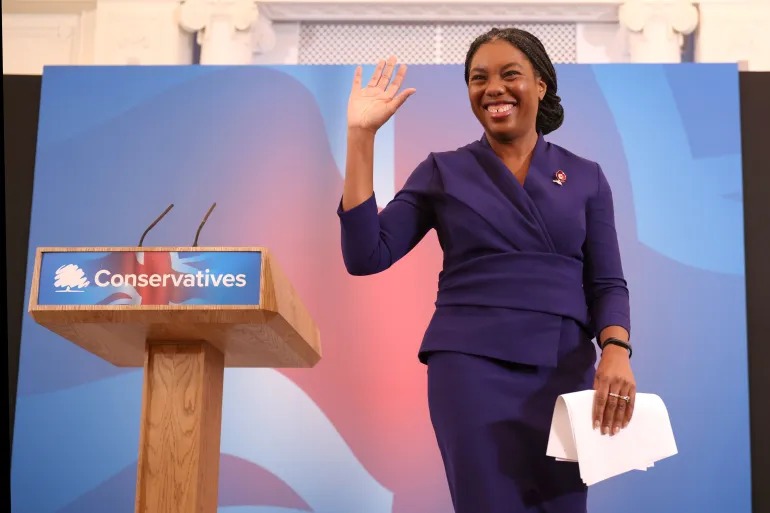
Dear Ms. Badenoch,
This memo is written not out of malice, but out of deep concern, and a need for clarity. Your recent public declaration that you are no longer Nigerian, and your repeated efforts to detach yourself from the country of your upbringing, have stirred discomfort, disappointment, and disbelief, especially among those of us who still value truth, history, and heritage.
You claim to be British. That is your right. What is not your right, however, is to malign Nigeria in the process of defining your Britishness.
You were raised in Lagos. You benefitted from its culture, education, and communal values. Yet, in interview after interview, you have painted Nigeria as a land of “fear,” “disorder,” and dysfunction. That is not critique that is calculated contempt.
Your comment about Nigerian citizenship laws, particularly the claim that women cannot pass on citizenship to their children, was not only incorrect, it was reckless. The Nigerian Constitution makes no such discrimination. Prominent legal minds, including Femi Falana SAN, have publicly debunked your claims. That level of misinformation is unworthy of someone in your position.
The political context is not lost on anyone. In seeking to climb higher in Britain’s Conservative Party, it appears that distancing yourself from Africa, and Nigeria specifically, is part of the strategy. But here is the uncomfortable truth: no amount of disavowal can erase your origin. You may never renew your Nigerian passport, but you will always carry your Nigerian name. Your roots are not optional, they are historical.
Let us be clear: Nigeria is not a failed state. It is a nation in struggle, yes, but it is also a nation of extraordinary achievers who are making us proud across the globe. Dr. Ngozi Okonjo-Iweala, a proud Nigerian and former finance minister, currently serves as Director-General of the World Trade Organization (WTO), making history as the first African and the first woman in that role. Chimamanda Ngozi Adichie, a literary powerhouse, continues to shape global conversations around feminism, identity, and African narratives through her award-winning books and speeches.
From the Yoruba community, we have Professor Olawale Sulaiman, a world-renowned neurosurgeon who returned from the United States to perform complex surgeries in Nigeria at personal cost. From the Hausa region, Amina J. Mohammed, former Nigerian Minister of Environment and now Deputy Secretary-General of the United Nations, stands tall as a symbol of Nigerian excellence and diplomacy on the world stage. Then there is Dr. Akinwumi Adesina, also of Yoruba descent, whose leadership at the African Development Bank is transforming agriculture and finance policy across the continent.
More importantly, you are not the only Black or African-born individual to have risen to high political office in the United Kingdom. Many before you have done so without disowning their origins: Paul Boateng, of Ghanaian descent, became the UK’s first Black Cabinet Minister in 2002. Chuka Umunna, of Nigerian (Igbo) heritage, served as a prominent Labour MP and Shadow Business Secretary. Helen Grant, whose father was Nigerian, was appointed Minister for Sport and Tourism under David Cameron. Chi Onwurah, of Nigerian descent, has served as Labour MP for Newcastle upon Tyne Central since 2010, while remaining vocal about her heritage and its importance. Kate Osamor, of Nigerian heritage, served in Jeremy Corbyn’s Shadow Cabinet and has never been shy about her African roots.
None of them needed to insult their countries of origin to validate their Britishness. Their achievements have stood on their own. Their heritage was not a stain, it was part of the tapestry of who they are.
Kemi, I know you watch CNN, and on that note you might have been seeing Zain Asher on Screen. Let me tell you her story. She is proudly of Igbo descent, her family hails from Enugu State in Nigeria, and she spent formative years attending primary school in Enugu around age 10–12 to immerse herself in her cultural roots and build resilience
As gathered, she is fluent in Igbo (in addition to English, French, and Spanish), she has even spoken on camera in Igbo to affirm, “I’m 100 per cent Nigerian.”
To throw more insight to her Nigerianess, it is germane in this context to let you know that she is related to Chiwetel Ejiofor, by virtue of being his younger sister, and Chiwetel is the award‑winning British actor of Igbo Nigerian heritage.
They lost their father in a tragic car accident in Nigeria in 1988 when Chiwetel was 12 and Zain only 5; she has described her brother’s Oscar nomination for 12 Years a Slave as a bittersweet milestone with their father no longer there to witness it. I hope with this story you should be able to understand that others have being up there before you. So, you are not the first, and you will not be the last.
Your story could have been one of global success rooted in cross-cultural identity. Instead, it risks becoming a cautionary tale of someone who made it to the top by severing the very foundation that lifted her.
You do not have to embrace Nigeria publicly if it no longer serves your sense of identity. But you must not destroy its image to elevate your standing. That is not leadership that is betrayal.
As a Journalist who has reported on identity, leadership, and justice, I urge you to reflect, not for Nigeria’s sake, but for your own. As an African proverb says, a river that forgets its source will surely dry up.
Yours sincerely,
Isaac Asabor
Journalist | Lagos, Nigeria

















You must be logged in to post a comment Login