Opinion
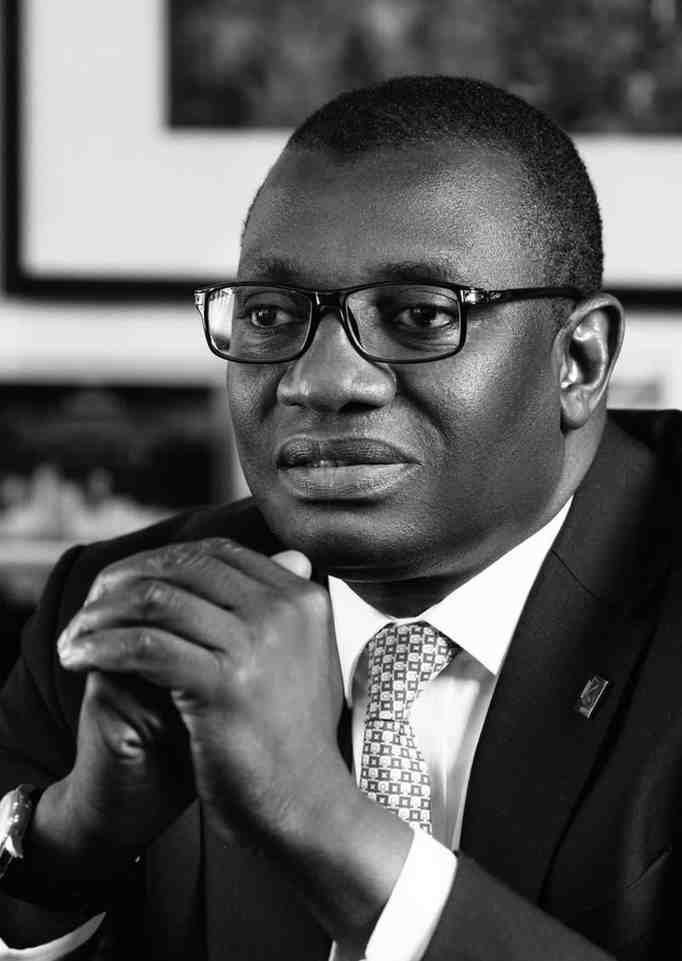
Bala Wunti: Bauchi’s Unifying Force -By Usman Abdullahi Koli
There is also a discipline in his personal conduct that deserves attention. He does not champion causes he does not believe in. He does not bend for advantage. In a political and professional culture where flexibility is often mistaken for wisdom, this restraint is rare and powerful. It gives his actions credibility and his decisions weight. His faith, central to his life, reinforces this clarity. It is visible not in words alone, but in choices that remain steady under pressure.

At a time when many are engulfed with fear of impending internal rancor that is probably capable of causing disunity and despair among key players, a time of reorganisation of the political landscape at both the national and subnational levels, comes a unifying figure who brings solutions to the upheaval experienced, particularly in the recent electoral outing.
The political atmosphere, particularly in Bauchi State, is known for turbulence and vested interests. As the state faces numerous challenges that demand more urgent structural readjustment, and as this is pertinent, it is accompanied by the question of who can deliver these set goals. That is why Bala Wunti matters.
Among the political players who roll up their sleeves in aspiration to win elections, one critical issue is unity of purpose. Unity against the monster of poverty, insecurity, hunger, unemployment, and others that are clogging the wheel of our development.
There are individuals whose presence is an answer to questions that institutions struggle with and whose conduct reassures even the most cynical that character still matters in public life. Dr. Bala Maijama’a Wunti belongs to that rare category. His story is not merely one of rise, but of formation. It is a journey shaped by early trials, sharpened by discipline, and guided by a clarity of purpose that has endured across decades.
Born into circumstances that offered little in terms of advantage, early life required resilience and self-reliance. Across every stage of his life, it is punctuated with uncertainty. Yet, instead of breeding bitterness, these experiences shaped restraint, empathy, and a steady internal discipline that would later guide his every choice. Where others might have faltered, he remained composed. Where others might have hardened, he stayed measured.
Profile, professional and industry roles
His pursuit of education must be seen in that light. It was not a smooth path through institutions, but a determined journey through obstacles. From his studies in Chemistry at Ahmadu Bello University to advanced training in management at Abubakar Tafawa Balewa University and beyond, each step reflected commitment, not convenience. What emerged was not simply an educated man, but a prepared mind, one that understands complexity, respects structure, and values clarity over noise. In a world that often rewards speed, he chose depth. In a system that often tolerates shortcuts, he insisted on process.
When he joined the Nigerian National Petroleum Company Limited in 1994, he entered one of the most demanding environments in the country. He did not arrive at prominence; he earned it. From his early role as the Production Programming Officer to his eventual position as Chief Upstream Investment Officer, his trajectory shows a rare pattern in public service: steady progress built on competence rather than visibility. He learned the system from within, understood its contradictions, and positioned himself not as a spectator but as a contributor to its reform. While others chased recognition, he built relevance. While others pursued titles, he mastered responsibility.
His contributions to the oil and gas sector are best measured through results. He was part of efforts that strengthened investment frameworks, restored operational discipline, and brought structure to systems long plagued by inconsistency. Initiatives such as Operation White did more than fix technical inefficiencies. They proved that accountability was possible, even in the most complex spaces. In a sector where decisions carry national consequences, his approach has always been cautious, forward-thinking, and committed to long-term value over short-term applause. That distinction separates those who merely manage systems from those who shape them.
Yet, to reduce his life to professional milestones would be to miss the larger picture. What distinguishes Bala Wunti is not only what he has done within institutions, but what he has done beyond them. The memory of hardship has stayed with him, not as a weight, but as a compass. It informs his giving, shapes his interactions, and explains the consistency of his interventions in the lives of others. His philanthropy is not occasional; it is part of who he is. Students have been supported, communities uplifted, and individuals in distress assisted through actions that are rarely announced but widely felt. The recent support for students across tertiary institutions is not a single act; it is part of a pattern that reflects a deep conviction: opportunity should not be determined by circumstance alone. Many give when it is convenient. He gives because it is necessary.
There is also a discipline in his personal conduct that deserves attention. He does not champion causes he does not believe in. He does not bend for advantage. In a political and professional culture where flexibility is often mistaken for wisdom, this restraint is rare and powerful. It gives his actions credibility and his decisions weight. His faith, central to his life, reinforces this clarity. It is visible not in words alone, but in choices that remain steady under pressure.
When he stepped out of public service on May 30, 2025, he did so quietly. There was no spectacle, no fanfare. The moment felt calm but confident, the kind of confidence that comes from knowing your work speaks for itself. Influence does not depend on the office, and in his case, it had already moved beyond it. What he carries into the next phase is not a title, but a reservoir of experience, credibility, and trust. These qualities are far more valuable than any position could ever be.
The emerging political conversation around Bauchi State must be seen through this lens. The state is no longer at a point where familiar patterns can be recycled without consequence. The challenges are deeper, expectations sharper, and the margin for error thinner. This is not a time for comfort; it is a time for deliberate choice. What is required is not just political skill, but administrative depth, economic understanding, and the ability to translate intention into results.
Bala Wunti presents a compelling case, not because he seeks attention, but because his life commands consideration. He understands systems at a level that allows him to engage governance beyond slogans. He has managed scale and complexity in ways that meet the demands of statecraft. He carries a social awareness rooted in lived experience rather than abstract empathy. Most importantly, he stands outside the entrenched rivalries that have defined political competition in the state. That distance is not detachment; it is clarity. It allows him to be seen not as a continuation of old conflicts, but as a bridge beyond them.
The argument for his consideration is therefore not emotional, even though his story moves the heart. It is rational, grounded, and difficult to dismiss. It rests on capacity, consistency, and a record that proves he can think, act, and deliver. In a context where trust is scarce, his credibility becomes stabilizing. In a climate where division is costly, his neutrality is strategic. At a time that demands both firmness and thoughtfulness, his temperament aligns perfectly with the responsibility ahead.
This is not to suggest perfection. Leadership is not shown by ambition; it is revealed by preparation. In his case, the evidence is alive. From a childhood shaped by absence to a career defined by impact, his path is intentional, tested, refined, and sustained.
Bauchi faces a choice deeper than personalities. It is a choice between repetition and recalibration, between what is familiar and what is necessary. If the state is to move toward a future defined by stability, competence, and inclusive progress, it must recognize preparation when it sees it.
In Bala Wunti, experience, character, and capacity converge in a rare combination. He does not need to declare his worth. It is evident in the systems he has strengthened, the lives he has impacted, and the consistency he has maintained. The question, therefore, is not whether he has something to offer. The question is whether Bauchi is ready to choose what it truly needs.
If it is, then the answer is already in front of it.
Usman Abdullahi Koli
mernoukoli@gmail.com.