
Africa
Before Passing Judgment: Let Us Hear from Imasuen -By John Egbeazien Oshodi
Stepping Aside for the Nation’s SakeI take no joy in saying this—but both Imasuen and Akpabio should temporarily step aside. They might believe that anything goes in Nigeria, that this too shall pass, but I implore them: have some dignity. If they fail to act with honor, the way global legal systems are evolving, they may eventually find themselves disgraced beyond repair. The honorable step for them is to resign—now, before the walls close in.


The ongoing controversy surrounding Senator Neda Bernards Imasuen is a glaring reflection of Nigeria’s democratic contradictions. A man disbarred by the New York State Supreme Court in 2010 for fraudulent activities now leads the Senate Committee on Ethics, Privileges, and Public Petitions. The irony is staggering—how does an individual deemed unfit to practice law in the U.S. assume responsibility for upholding ethical standards in Nigeria’s legislature? His role in dismissing Senator Natasha Akpoti-Uduaghan’s sexual harassment petition against Senate President Godswill Akpabio exposes deep-seated issues of power abuse, institutional corruption, and gender-based oppression.
But this is bigger than Imasuen or Akpabio—it speaks to the broader erosion of governance in a country that continues to recycle tainted individuals into positions of power. Nigeria’s democracy, already struggling against systemic corruption, is being steadily dismantled by those entrusted to protect it. Public trust is continually eroded, impunity is normalized, and disgraced figures are rewarded instead of held accountable. This is the slow poisoning of a nation.
The Ethical Contradiction: A Man Barred for Misconduct Overseeing Ethics
Despite Imasuen’s reckless declaration of Natasha’s petition as ‘dead on arrival,’ his blatant mistreatment of a female senator, and his disregard for a court order, I do not want to rush to judgment. He not only ignored judicial directives but proceeded to push a six-month suspension recommendation before the Senate—an act of defiance that speaks volumes about how power is wielded in Nigeria.
However, we should not crucify him just yet. He is a product of a system that has allowed corruption to fester at every level. The same Nigerians now condemning him are themselves trapped in institutions riddled with corruption, ethical decay, and abuse of power. That said, let us hear from him. Before passing full judgment, he might have insights Nigerians do not yet have, particularly concerning his New York disbarment and other unresolved aspects of his past. If there is any credibility left in him, he should step forward and explain himself.
Yes, he was disbarred. Yes, he concealed it. Yes, he mistreated Natasha. But let us give him a chance to speak. He might possess information that the Nigerian public lacks. He should return to Arise TV or another credible platform to offer his defense. Silence will only deepen suspicions. If he believes his actions are defensible, let him make his case publicly.
Yet no amount of justification can erase the glaring contradiction of his past. His misconduct is not speculation—it is documented. He abandoned a client, embezzled funds, refused to comply with disciplinary authorities, and fled justice in America. This is the man charged with overseeing ethical matters in Nigeria’s Senate. His disbarment was not a minor infraction—it was a judicial decision marking him unfit to practice law. And yet, in Nigeria, such a person is seen as worthy of enforcing accountability.
Democratic institutions thrive on transparency, accountability, and ethical integrity. The Nigerian media, as a watchdog, must balance due process with a refusal to let critical ethical concerns be swept aside. The dismissal of Natasha’s petition is not just about political maneuvering; it reflects deep psychological barriers to addressing gender-based violence within Nigeria’s power structures.
When a woman in power is silenced, when due process is manipulated to shield the powerful, and when institutions meant to provide justice instead suppress the vulnerable, democracy itself is under siege. Natasha’s suspension is not an isolated event—it is a warning of the continued weaponization of power against those who refuse to conform to corrupt political hierarchies.
The Political Class: A System That Enables Corruption
The Nigerian political class has perfected the art of concealing scandals under the cover of new appointments. Those who should be facing consequences for their past misdeeds are instead elevated to higher offices. Imasuen is not an anomaly—he is a reflection of a system that thrives on impunity. Politicians with criminal backgrounds, unresolved fraud cases, and ethical stains continue to occupy powerful positions. Figures like Akpabio, with alleged unresolved cases with law enforcement, remain untouchable, shielded by institutional control over the media, police, and judiciary. But I say to them: time will catch up with you.
Nigeria has become a refuge for individuals who cannot survive in functional democracies due to their past crimes. They return, rebrand themselves, and flourish in a system that rewards rather than punishes corruption. The difference between Imasuen and other political figures is that he was reportedly barred for life. That he now chairs the Ethics Committee in the Senate—an institution meant to uphold accountability—is not just hypocrisy; it is an insult to governance.
The Call for Dignity
Stepping Aside for the Nation’s SakeI take no joy in saying this—but both Imasuen and Akpabio should temporarily step aside. They might believe that anything goes in Nigeria, that this too shall pass, but I implore them: have some dignity. If they fail to act with honor, the way global legal systems are evolving, they may eventually find themselves disgraced beyond repair. The honorable step for them is to resign—now, before the walls close in.
A Test for Nigeria’s Democratic Future
Nigeria’s democracy must rise above legal technicalities that allow ethically compromised individuals to infiltrate its highest offices. The unchecked abuse of power is a disease—one that spreads, corrodes, and ultimately dismantles any hope for justice and governance. The media, civil society, and political stakeholders must push for structural reforms that prioritize accountability, gender equity, and psychological fairness in addressing misconduct allegations.
This moment is a defining test for Nigeria’s democratic future. The world is watching, history is recording, and the window for impunity is closing. The question remains—will Nigeria finally hold its leaders accountable, or will it continue to enable the very forces that undermine its progress?
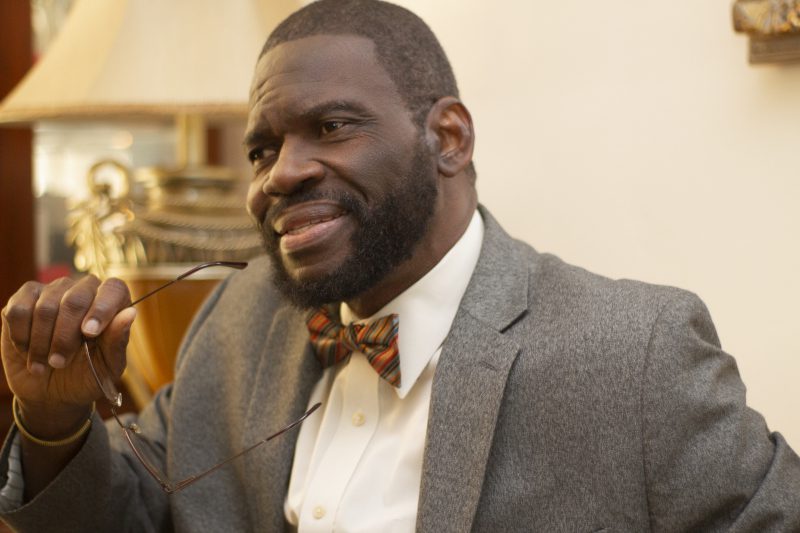
John Egbeazien Oshodi
Oshodi Open Door, also known as Oshodi Open Door Public Training (OOPDT, pronounced opidt), is a public awareness initiative promoting transparency, accountability, and integrity in Africa through educational articles and resources at jos5930458@aol.com, and offers specialized Timely Response Solutions (TRS) training at minimal or no cost.
Professor John Egbeazien Oshodi is an American psychologist, educator, author specializing in forensic clinical psychology, cross-cultural psychology, police prison science, social justice. Born in Uromi, Edo State, Nigeria, he is the son of a 37-year veteran of the Nigeria Police Force, a background that shaped his commitment to justice, security, psychological research.
A pioneer in forensic psychology, he introduced state-of-the-art forensic psychology to Nigeria in 2011 through the National Universities Commission (NUC) Nasarawa State University, where he served as an Associate Professor in the Department of Psychology. His contributions extend beyond academia into psychological health behavioral change initiatives through the Oshodi Foundation the Center for Psychological Forensic Services.
Professor Oshodi has held faculty positions at Florida Memorial University, Florida International University, Broward College, Nova Southeastern University, Lynn University. He is also a contributing faculty member in the doctoral undergraduate psychology programs at Walden University serves as a virtual professor with Weldios University and Iscom University.
Beyond academia, he is a government consultant for forensic-clinical psychological services in the USA previously served as Interim Associate Dean Assistant Professor at Broward College, Florida.
He has published extensively on mental health, justice, institutional reform is the founder of the Psychoafricalysis theory, which integrates African sociocultural perspectives into psychology.
Professor Oshodi remains an influential force in advancing psychology institutional reform globally, particularly in Africa.
























You must be logged in to post a comment Login