Politics
Benue Has Turned the Corner: The Politics of Yesterday Is No Longer Enough -By Leonard Karshima Shilgba
The State needs imagination without recklessness, ambition without vanity, criticism without destruction, partnership without surrender of principle, and political competition without the weaponization of every challenge confronting our people. Most importantly, Benue needs people who genuinely believe that the State can become considerably better than it is today—and who are prepared to contribute the knowledge, resources, integrity, and hard work necessary to make that possibility real.

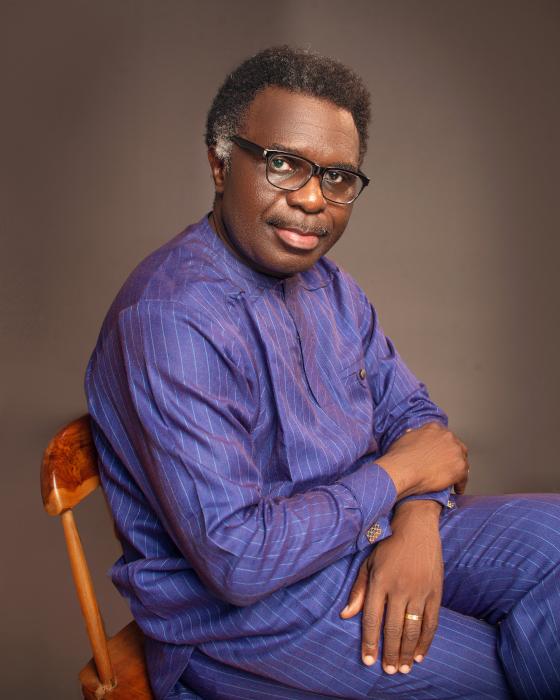
Benue stands at an important moment in its history.
The question before the State is no longer simply who will occupy political offices or which political camp will prevail in the next electoral cycle. The more consequential question is this:
What kind of leadership does Benue require to become a more secure, productive, competitive, and prosperous State?
That question demands that we move beyond the politics of yesterday.
Benue cannot afford a politics built principally around old slogans, familiar political calculations, personality contests, and the recycling of ideas that have failed to address the structural challenges confronting our people. The circumstances of the State demand a new imagination in leadership—one capable of connecting policy, expenditure, institutions, partnerships, and political decisions to a coherent developmental objective.
That objective should be straightforward:
How do we make Benue increasingly competitive—not only as a destination for investment, but also as a destination for the human beings, skills, technologies, and enterprises required to drive development?
This requires leadership at every level.
A governor cannot build a new Benue alone. The quality of governance at the local-government level matters enormously. Commissioners and other political and administrative leaders must possess the competence, discipline, and developmental orientation necessary to translate government policy into tangible outcomes. Local government must become an active instrument of development rather than merely another arena for political distribution.
The same standard must apply to those seeking to lead the State.
Anyone aspiring to govern Benue should be challenged to articulate, with specificity, what he or she intends to do about agriculture and agro-processing, education and skills, healthcare, infrastructure, industrialization, technology, social protection, investment promotion, youth enterprise, and institutional effectiveness.
The people of Benue deserve more than declarations of intention.
They deserve ideas that can be implemented, institutions that can deliver them, financing models that can sustain them, and measurable outcomes by which they can be judged.
There is also an important development in Benue that deserves sober acknowledgement: the improving security environment in significant parts of the State.
Having spent considerable time in Benue since June, I have personally observed a level of peace and normalcy that deserves recognition. This does not mean that security challenges have disappeared, nor should any security breach be ignored or minimized. Every loss of life, displacement or threat to a community deserves an appropriate and timely response.
But security challenges should be confronted as problems to be solved—not converted automatically into instruments of political warfare.
There is a difference between acknowledging insecurity honestly and weaponizing insecurity politically.
Benue needs the former.
The State also needs the same intellectual honesty in evaluating government.
Where policies are working, they should be acknowledged. Where they are failing, they should be identified. Where government needs better ideas, better ideas should be supplied. Where institutions require reform, reform should be demanded. Where public resources are being deployed, citizens should ask whether they are producing commensurate public value.
This is not partisan thinking.
It is what responsible citizenship requires.
Governor Hyacinth Alia’s repeated emphasis on solutions and partnerships provides, at least in principle, an opportunity for a different relationship between government and the people who possess the knowledge and capacity to help solve Benue’s problems.
The question should therefore not merely be:
“Who supports the government?”
The more useful question is:
“Who can help Benue solve its problems?”
That distinction matters.
Benue needs agricultural scientists who can help farmers move up the value chain. It needs entrepreneurs who can create enterprises rather than wait for government contracts. It needs educators who understand the skills required by the economy of the future. It needs doctors, engineers, technologists, economists, lawyers, administrators, investors, researchers, and community leaders who are prepared to contribute their competence to the development of the State.
It needs a political class that understands that public office is ultimately an instrument for producing public value.
And it needs citizens who are prepared to demand this higher standard from everyone who seeks their confidence.
The emerging Benue should therefore not be defined merely by roads, buildings or government projects, important as those are. Its deeper measure should be whether Benue is becoming a place where businesses want to invest, talented people want to work, young people can acquire relevant skills, farmers can build profitable enterprises, families can access quality healthcare, children can receive functional education, innovators can establish businesses, and vulnerable citizens can live with dignity.
That is the real meaning of competitiveness.
A competitive Benue will not be created by government alone. It will emerge from the interaction of competent government, productive citizens, responsible businesses, universities and research institutions, investors, development partners, civil society, the diaspora, and communities.
This is why the quality of leadership matters so profoundly.
Benue has spent too much time debating political personalities and too little time debating the architecture of development.
The next phase must be different.
Every major policy should answer a simple question:
Does this make Benue more capable, more productive, more secure, more attractive to investment, or better equipped with the human capital required for sustained development?
Every major expenditure should invite another:
What public value will this expenditure create?
Every political strategy should ultimately confront the larger question:
Does this strengthen or weaken the institutions and conditions required for Benue’s long-term prosperity?
This is the new standard that Benue should demand—not only from the incumbent administration, but from every person who seeks to lead the State.
Benue has experienced enough politics for politics’ sake.
What the State needs now is politics in the service of development.
The State needs imagination without recklessness, ambition without vanity, criticism without destruction, partnership without surrender of principle, and political competition without the weaponization of every challenge confronting our people.
Most importantly, Benue needs people who genuinely believe that the State can become considerably better than it is today—and who are prepared to contribute the knowledge, resources, integrity, and hard work necessary to make that possibility real.
Benue has turned a corner when its people begin to demand more than political promises.
They begin to demand competence.
They begin to demand solutions.
They begin to demand evidence.
They begin to demand institutions that work.
And they begin to understand that the future of Benue cannot be entrusted indefinitely to the politics of yesterday.
The challenge before us is therefore not simply to choose between yesterday’s political formulas.
It is to imagine—and build—the Benue of tomorrow.
Leonard Karshima Shilgba, PhD (Yokohama)





![Israeli Prime Minister Benjamin Netanyahu holds a press conference in Tel Aviv , Israel [File: Abir Sultan/Pool via Reuters]](https://www.africansangle.com/wp-content/uploads/2023/10/Israeli-Prime-Minister-Benjamin-Netanyahu.webp)