
Africa
Between Diplomacy and Denunciation: Reassessing President Trump’s “Killing of Christians” Message, the Nigeria Designation, and the Genocide Debate -By Henry Onyedika Adibe, LL.M
President Trump’s avoidance of the word “genocide” was not accidental; it stemmed from diplomatic, legal, and political considerations. Nigerians interpreting his message as implying genocide reflect the lived reality of suffering but not necessarily the legal criteria under international law. President Tinubu’s response attempted to balance national image with acknowledgment of security challenges.

Introduction
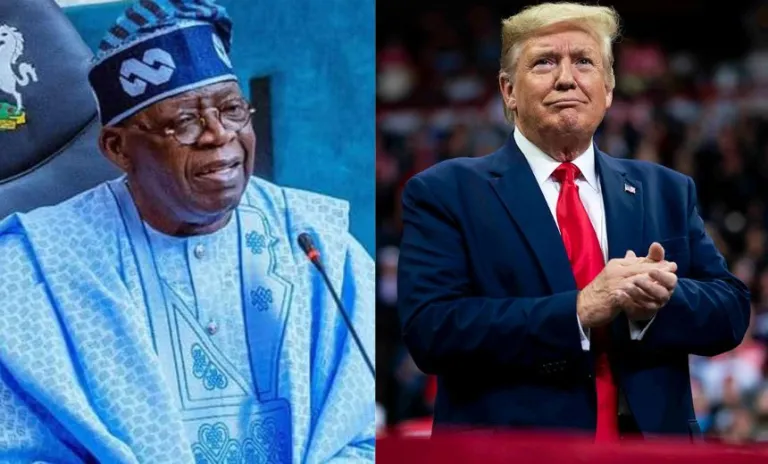
In late 2020, the United States designated Nigeria a “Country of Particular Concern” (CPC) under the International Religious Freedom Act. Fast forward to few weeks ago, President Trump once again designated Nigeria as a “Country of Particular Concern” (CPC). In a recent tweet, while President Donald Trump publicly condemned the “killings of Christians” in Nigeria, he particularly avoided the term “genocide,” However, numerous Nigerians and global discussants who viewed the violence as rising to genocidal levels interpreted President Ttump’s tweet as warning about genocide in Nigeria. This piece examines the political, diplomatic, and legal reasons behind Trump’s choice of word, evaluates Nigerian interpretations of his message, analyzes President Bola Ahmed Tinubu’s response, and proposes reforms and cooperative frameworks to address terrorism and sectarian violence in Nigeria. For clarity, no international court or UN organ has formally concluded that the killings in Nigeria legally amount to “genocide,” and no U.S. government body has issued a formal legal “genocide” determination. Although currently, there is intense political and NGO debate, and U.S. congressional and advocacy activity is ongoing.
1. Background: The Road to the CPC Designation
Nigeria has faced persistent ethno-religious violence for over a decade. Boko Haram, ISWAP, Militants and various armed non-state actors have perpetrated widespread killings, including attacks on rural Christian communities, the abduction of schoolgirls, and mass killings across the North, Middle Belt, kidnappings and killings in the South East, South South and South West, to mention but a few.
In December 2020, the United States, invoking the International Religious Freedom Act (IRFA), designated Nigeria a Country of Particular Concern for “systematic, ongoing, egregious violations of religious freedom.” The designation placed Nigeria alongside nations such as Iran and North Korea, signalling the severity with which Washington viewed the situation.
Reintroducing this designation, few weeks ago, former President Donald Trump issued a public statement on social media condemning the “killing of Christians in Nigeria”. Numerous discussants on Trump’s message appeared to use the word genocide in reacting to the import of President Trump’s message. Surprisingly, what is missing in majority of the debates is the choice of the wordings s of President Trump’s message. The debates ought to shift to: Why did Trump avoid calling it genocide? Was he being diplomatic, strategic, or constrained by international law?.
2. Trump’s Choice of Word: “Killing” vs. “Genocide”
2.1 The Legal Weight of “Genocide”
Under Article II of the 1948 Convention on the Prevention and Punishment of the Crime of Genocide, genocide means acts committed “with intent to destroy, in whole or in part, a national, ethnical, racial or religious group”. The legal threshold is intentionally high: it requires proof of specific intent (dolus specialis).
Generally, States avoid using the term unless they are willing to trigger legal, diplomatic, and sometimes military consequences including obligations to act under Article I of the Genocide Convention, which requires states to “prevent and punish” genocide and under Paragraph 139 of the Responsibility to Protect (R2P) when a State fails in its duty to protect civilians.
2.2 Diplomatic and Strategic Restraint
Presidents rarely make unilateral genocide determinations. For example, the U.S. uses an interagency process involving the State Department, intelligence assessments, and legal teams. The word “genocide”, signals a commitment to intensified action, often including sanctions, international pressure, and possibly UN-level engagement.
Trump’s avoidance of the word therefore reflects:
1. Diplomatic caution- Using “genocide” could have strained the U.S.- Nigeria relations at this time when both countries are cooperating on counterterrorism.
2. Legal caution- A genocide declaration would require stronger U.S. action, including sanctions beyond the CPC designation.
3. United Nations (UN) dynamics- Genocide declarations elevate issues to the United Security Council (UNSC), where geopolitical interests (especially China and Russia’s ties to Nigeria) would complicate resolutions and may lead to threats to use veto or outright use of veto.
4. Avoiding precedent- The U.S. is selective in calling events genocide. For example in Rwanda 1994, the U.S avoided the use of the word genocide and pressured the UN to refrain from describing events in Rwanda as genocide was avoided. In UNSC resolution 1556 (Darfur) 2004, China and Russia threatened the use of veto and extensively ensured the wordings of the resolution was watered down without the use of, “genocide”. Even when the US had described the Darfur crisis as genocide, many member States saw the description as one clothed with interests. However, ISIS-Yazidi killings were declared only after extensive review.
2.3 Did Trump Intend to Soften the Message?
Trump’s language often emphasizes simplicity and political messaging rather than legal terminology. By saying “killing of Christians,” it is the considered opinion of this piece that the intendment of President Trump’s choice of word was to draw attention to religious persecution without triggering the obligations or controversies associated with a genocide declaration.
3. Nigerians’ Use of the Term “Genocide”: Appropriate or Premature?
Nigerians interpreting Trump’s message as implying “Christian genocide” reflects genuine frustration with years of suffering. Thousands have lost their lives, families deserted their homes and made to live as Internally Displaced Persons (IDP), school children kidnapped, women raped, Churches and Mosques burnt with attacks and killings persistent up to the moment of this piece. However, legal and scholarly assessment requires separating political language from legal terminology.
3.1 When “Genocide” Is Appropriate
There are scenarios where violence “may” appear genocidal- targeted killings, destruction of churches, community displacement, and ideological motives. For example, Boko Haram has explicitly declared its intention to eliminate Christians from certain regions, which may support genocidal intent. Boko Haram which loosely translates to “westernization is forbidden” fits the description of a terrorist group with intent to destroy in whole or in part. Given that Christianity is a religion imported from the west, it follows that the targeted killings and destruction of Churches by Boko Haram is appropriate to be labeled a case of genocide.
3.2 When “Genocide” May Be Legally Unsustainable
Not all mass killings meet the legal threshold. When violence is mixed with territorial conflicts, like herdsmen-cattle disputes, retaliation cycles, or criminal banditry like kidnapping for ransom, the nexus to genocidal intent becomes less clear. In this context, some Nigerians invoking the word “genocide” express moral truth, but not necessarily a legal classification.
4. President Tinubu’s Response: A Diplomatic Balancing Act
President Bola Ahmed Tinubu responded by subtly downplaying Trump’s characterization, insisting that Nigeria is committed to protecting all citizens and that the situation does not amount to genocide. His reply reflects: State obligation to maintain international reputation, Economic concerns including foreign investment, Desire to prevent sectarian panic, Political positioning given domestic sensitivities around ethno-religious labels and Recognition of legal implications (Admitting genocide invites scrutiny under the Genocide Convention and potentially UNSC action). President Tinubu’s response reflects a common governmental instinct: to acknowledge violence while rejecting terminology that implies state failure or responsibility.
5. International Law and the CPC Framework
5.1 IRFA and U.S. Responsibility
The International Religious Freedom Act (IRFA) reflects the United States’ commitment to advancing religious freedom globally and establishes a statutory framework for responding to severe violations of this right. Under IRFA, the U.S. government is required to designate states that engage in or tolerate “systematic, ongoing, egregious violations of religious freedom” as Countries of Particular Concern (CPCs), activating and prompting a range of diplomatic and punitive measures. Despite the fact that IRFA is a domestic statute, it operates within the wider framework of international law governing state responsibility for internationally wrongful acts. In this sense, the Act serves as a mechanism through which the United States formulates and triggers legal and policy responses to perceived breaches of international norms, particularly those relating to the protection of religious freedom. Therefore, The CPC designation allows the U.S. to impose sanctions, negotiate bilateral agreements, or apply targeted measures.
5.2 UN Charter and Collective Security
Under Article 55(c) of the UN Charter, the UN is obligated to promote “universal respect for, and observance of, human rights”. Under Article 56 of UN Charter, Member States pledge to take joint action toward these purposes. Once the killings in Nigeria is classified as genocide, Article VIII of the Genocide Convention allows states to call upon the UN “to take action” for prevention and suppression of the crime of genocide. However, as seen in Rwanda and Darfur, practical realities like political paralysis of the UNSC often override legal provisions, thereby undermining the effectiveness of the UNSC mechanisms in combating genocide.
6. Recommendations and Reforms
The first is the need to Strengthen Nigeria’s Domestic Counterterrorism Architecture. This can be done through expanding early-warning systems in vulnerable regions, enhancing intelligence sharing between DSS, police, and military and improving judicial processes for terrorism trials.
The second is the Constitutional and Governance Reforms. This entails the long overdue decentralization of policing to enable state-level security response, strengthening oversight of military operations to prevent abuses and enhancing Federal-State coordination on crisis management.
The third is the areas of U.S.- Nigeria and Global Community Cooperation. This will entail Joint counter-terrorism training, intelligence and surveillance technology support, humanitarian aid to internally displaced persons (IDPs), deradicalization and reintegration programs. For example, these terrorist use mobile phones and post the dastardly acts on social media, with the use of AI algorithm, satellite imagery, and the likes, the base and armoury of these terrorists can be easily detected, destroyed and reduced to ashes. The Nigerian government as a matter of urgency must seek the assistance of the US and the global community in ensuring modern warfare technologies are acquired and used to end terrorism in Nigeria. The days of adopting guerrilla warfare are over.
The last recommendation and reform is Community-Level Solutions. This involves promoting interfaith dialogue in Northern and Middle Belt communities, supporting local peacebuilding initiatives and strengthening rural security infrastructure. For example, forest and community guards can be established under strict regulation, supervision and monitoring.
7. Conclusion
President Trump’s avoidance of the word “genocide” was not accidental; it stemmed from diplomatic, legal, and political considerations. Nigerians interpreting his message as implying genocide reflect the lived reality of suffering but not necessarily the legal criteria under international law. President Tinubu’s response attempted to balance national image with acknowledgment of security challenges.
Finally, combating terrorism and sectarian violence demands and requires coordinated domestic reforms, international cooperation, and a commitment to constitutional principles of protection for all citizens. Section 14(2)(b) of the 1999 Constitution of the Federal Republic of Nigeria (as amended), states that the “security and welfare of the people shall be the primary purpose of government”. Therefore, the CPC designation, while politically charged, should serve as a catalyst for improving security governance and strengthening Nigeria’s role as a stable, multi-religious democracy.
Henry Onyedika Adibe LL.M, is a researcher in International Law, and a public affairs analyst.




















You must be logged in to post a comment Login