
Forgotten Dairies
Beyond the Wushe Wushe: The Heart of a Kanuri Wedding -By Aisha Ibrahim Muhammad
The fatiha itself is brief. An Imam, two witnesses, a few words in Arabic, and the contract is made. It often happens in a quiet room while the courtyard is still being swept for the party. This is the hinge everything before it was preparation; everything after is celebration. And only then does wushe wushe have a place to enter. It is the joy that spills over once the foundation is laid. Money is sprayed not to buy attention, but to release it. The dance is not the marriage. It is the community saying, “We saw it, we bless it, we will remember it.”

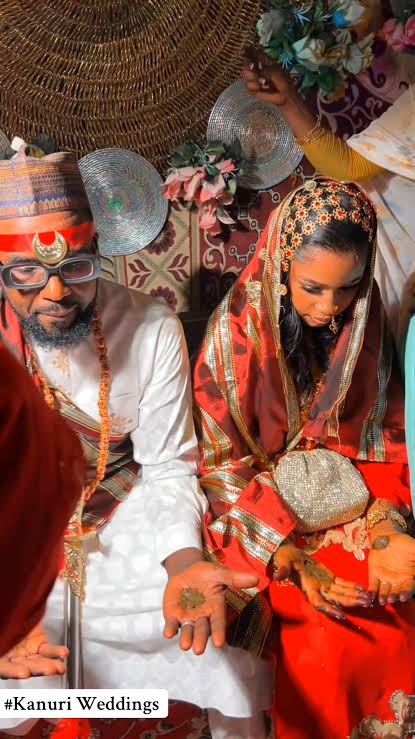
To a stranger at the gate, a Kanuri wedding is all color and cadence. The air is thick with perfume and praise-singing. Notes of naira flutter and fall like bright leaves. Hands clap, voices rise, and the circle of wushe wushe widens to take in aunties, friends, and anyone with a good laugh. It is easy to believe that this the spray, the dance, the shimmer is the wedding. But ask the elders seated under the canopy, the ones counting silently on their fingers, and they will tell you: the wedding happened before the music started.
The Kanuri marriage begins in rooms, not in courtyards. It begins with kule lema the formal knocking on the door of the bride’s family. Words are chosen carefully, proverbs folded into requests. Consent is not a moment; it is a process of conversations between compounds, of uncles who remember which family gave a daughter to which house two generations ago. When agreement is reached, it is sealed with sadaqi the bride price that the Qur’an calls a gift. It is not a transaction. It is a declaration of responsibility, counted and witnessed, often in modest sums because the weight is in the intention, not the amount.Then comes lefe and this is where the eye catches. Not because it is loud, but because it is lavish in detail. Lefe is the trousseau trunk after trunk of wrappers, veils, gold-threaded zani,prayer mats, and bottles of scent lined like jewels. Each piece is chosen by the groom’s women to clothe the bride’s new life. The fabrics are language: brocade for respect, lace for celebration, cotton for the daily work of a home. When the boxes are opened in the bride’s house, the room fills with the rustle of unfolding futures. Neighbors come to look, to touch, to murmur prayers over the colors. This is where a girl becomes a wife in the eyes of her community.
The night before the fatiha,the women gather for sa lalle. Henna is not just decoration; it is inscription. Patterns flow across palms and feet, each swirl a wish for patience, for fertility, for peace in the home. Older women sing, their voices low and certain. They sing of the first wife of the clan, of how she settled quarrels with a pot of ngu tada the rich pepper soup that cools tempers. They sing instructions too: how to fold a husband’s babban riga how to serve elders without breaking eye contact, how to keep a house quiet when the world outside is not. The bride listens, her hands open, taking it all in.Food is a chronicle of its own. In the days leading to the wedding, firewood stacks grow taller. Women gather to cook shinkafa da wake rice and beans, in pots large enough to feed a street. Dambu steamed, shredded maize or rice grains is prepared with moringa and spices for guests who arrive in waves. Masa the soft rice cakes, are fried at dawn so they are warm when the first praisesingers appear. And always, there is tuwo served with miyan karashi or miyan zogale because a Kanuri gathering without tuwo is like a sentence without a verb. The recipes are not written. They are remembered in the hands of grandmothers who measure by eye and by heart.
The fatiha itself is brief. An Imam, two witnesses, a few words in Arabic, and the contract is made. It often happens in a quiet room while the courtyard is still being swept for the party. This is the hinge everything before it was preparation; everything after is celebration. And only then does wushe wushe have a place to enter. It is the joy that spills over once the foundation is laid. Money is sprayed not to buy attention, but to release it. The dance is not the marriage. It is the community saying, “We saw it, we bless it, we will remember it.”
So is a Kanuri traditional wedding about wushe wushe? No more than a book is about its laughter. Wushe wushe is the comma, the exclamation, the margin note in a text whose main body is sadaqi lefe sa lalle and Fatiha It is the scent that lingers after the ink has dried. To know a Kanuri wedding, you must look past the spray of naira and see the spray of rosewater on a bride’s hands. You must hear past the drums and catch the murmur of prayer when the elders say “Amen” to a union. The beauty is not in the spectacle. The beauty is in the structure that lets the spectacle stand.

























You must be logged in to post a comment Login