Africa
BRICS at Rio de Janeiro: And What Next? -By Kestér Kenn Klomegâh
The 126 point-document passed on the Chairmanship to India in 2026 and the holding of the XVIII BRICS Summit in India. The document acknowledged the significance of (i) Strengthening Multilateralism and Reforming Global Governance (ii) Promoting Peace, Security and International Stability (iii) Deepening International Economic, Trade and Financial Cooperation (iv) Combating Climate Change and Promoting Sustainable Development (v) Partnerships for the Promotion of Human, Social and Cultural Development

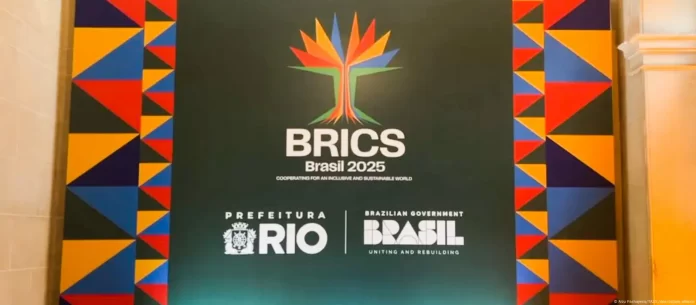
Popularly referred to as BRICS, the informal group of emerging-market economies (Brazil, Russia, India, China and South Africa), meeting in Rio de Janeiro, has outlined a new unprecedented multitude of goals to challenge unipolar system. In the context of rising uncertainty, BRICS has further set up new models to change the economic architecture through South-South cooperation.
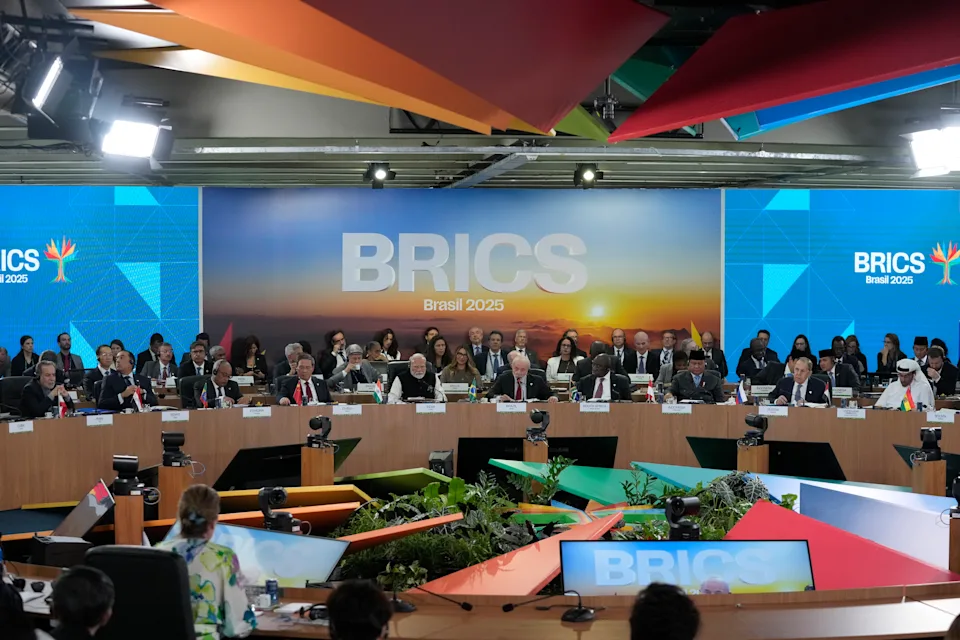
Brazilian President Luiz Inacio Lula da Silva hosted early July BRICS summit in Rio de Janeiro, capital city of Brazil. U.S. President Donald Trump’s position on many sensitive issues has offered the association something of a dilemma. In a joint statement decried “the rise of unjustified unilateral protectionist measures” and the “indiscriminate raising” of tariffs. BRICS members all agree that “these tariffs are not productive,” Ambassador Xolisa Mabhongo, South Africa’s lead negotiator, or sherpa, said in an interview. “They are not good for the world economy. They are not good for development.”
President Luiz Inácio Lula da Silva has a raft of controversies with United States over the introduction of single BRICS currency, a suggestion he mooted in 2023. Besides that Brazil is currently facing steep economic challenges in the face of trade frictions with the United States. Majority of his citizens are facing deportation, it implies significant fallen in remittances and that would worsen social and financial standing of families across Brazil. It has had diverse criticisms, so are other new BRICS members with vastly different political and economic systems, and yet advocating for reshaping the global balance of power. Most of them are negotiating to be at discussion table, to straighten economic ties, with President Donald Trump.
On one hand, BRICS leaders seriously Trump’s “indiscriminate” import tariffs and other trade policies. On the other hand, Trump has also warned that countries which sideline with the policies of the BRICS alliance against United States interests will be hit with an extra 10% tariffs.
BRICS summit further called for strengthening multilateralism. China unreservedly underscored its desire to work with member states to “strengthen the BRICS strategic partnership and safeguard multilateralism,” Foreign Ministry spokesperson Mao Ning said in a briefing in Beijing. With noticeable policy and economic disparities, its rapid expansion to include Egypt, Ethiopia, Iran, Indonesia and the United Arab Emirates bolstered its representation — the new BRICS accounts for about 40% of global GDP and roughly half the planet’s population.
BRICS policy to build a multipolar world has attracted developing countries. Trade among the five original BRICS nations grew 40% between 2021 and 2024 to US$740 billion a year, according to International Monetary Fund data.
Emerging Tasks from Rio de Janeiro
Brazil took over from Russia last year December, promised to put in complete order housekeeping issues — officially termed institutional development — on the agenda to better integrate new members and boost internal cohesion. With ten (10) partner members that includes Belarus, Cuba and Vietnam, BRICS plans to work ‘ad hoc practical cooperation’ basis. These partner states have absolutely no decision-making authority as full members. The enlarged bloc is now characterized by emerging potential opportunities but deepening frictions. BRICS is increasingly experiencing complexities based on their individual priorities and geopolitical orientations. Yet the bloc, often denying the unpredictable stage of stark realities, continues boasting of coherence and systemic efforts toward creating a multipolarity.
BRICS boasts of huge resources, and substantially claims to be ahead of other groups in this parameter, including G7 with US$57 trillion. Further to that, BRICS has many supporters in the Global South and East.
At the tail-end of the July 6th to 7th summit, BRICS reset new tasks, little achievements were highlighted by speakers, in addition to those previously rattled phrases such as BRICS leads ‘multipolar world’ and be guided as key centres of global governance and work collective towards economic growth, and further gravitate the development of markets in the Global South. The question of payment in local currencies was underscored while BRICS members emphasized reducing the use of dollar in currency transactions. In fact, several promising initiatives have, thus become future responsibilities of India, who takes up the BRICS Chairmanship.
Russia’s Achievements
During the final summit at Kazan, which was held in October 2024, Russia established a category of BRICS partner states. In addition, Russia proposed creating a whole new BRICS investment platform. The idea behind it is to jointly develop coordinated instruments to support and to bring in the funds from the economies of BRICS countries and from the Global South and Global East countries. It suggested launching a special mechanism for holding consultations on World Trade Organisation matters. The processes for creating a grain exchange, a climate research centre, a permanent logistics platform, and a sports cooperation programme in BRICS are moving forward.
There are other valuable ideas proposed by Russia, which include the formation of a carbon market partnership, an arbitration investment centre, a fair competition platform, and a permanent tax secretariat within BRICS.
In September, Moscow will host Intervision, a popular international television song contest which has got the attention of numerous performers from BRICS and BRICS partner countries who confirmed their willingness to participate in it. A humanitarian project of that magnitude is designed to promote universal, cultural, family, and spiritual values shared by members.
India’s Proposals
With participation of BRICS members, partners and outreach invitees, India proposed the creation of BRICS Science and Research Repository to promote collaboration in critical areas, highlighted its initiatives in agri-biotech and digital education access, calling on BRICS to adopt a demand-driven approach and ensure long-term financial sustainability in New Development Bank (NDB) projects.
China’s Suggestions
Chinese Premier Li Qiang praised the complementary advantages and suggested broader forms of cooperation in such areas as digital economy, green economy, sci-tech innovation and aerospace. From notable indications, China stands ready to closely work with members and partners in enriching the dimensions both on bilateral basis and multilateral relations. China expressed high concerns over achieving concrete results, rather than mere high-quality rhetoric. Premier Li Qiang further talked about BRICS working within multilateral frameworks such as the United Nations, the G20 and the African Union (AU), Eurasia and the Community of Latin American and Caribbean States.
New Development Bank
The BRICS Bank President, Dilma Rousseff, has officially welcomed Colombia and Uzbekistan as new members. The membership now totalled 11 members, including Brazil, Russia, India, China, South Africa, Bangladesh, the United Arab Emirates, Egypt, and Algeria. “We have several other countries under observation and review, and they may join the bank in the future,” Rousseff stated at the briefing in Rio de Janeiro, Brazil.
The NDB, established in 2015 as a multilateral development bank, operates with full respect for the sovereignty and development priorities of its member countries. Based in Shanghai, the bank has already approved over 120 projects worth a total of US$40 billion, focusing on areas such as clean energy, transport infrastructure, environmental protection, and social infrastructure.
Final Declaration
After the plenary session the final Declaration of the 17th BRICS summit – “Rio de Janeiro Declaration” – was adopted on 6th July 2025. The document welcomed Indonesia as a new BRICS member, and the following Belarus, Bolivia, Kazakhstan, Cuba, Nigeria, Malaysia, Thailand, Vietnam, Uganda, and Uzbekistan as BRICS partner countries.
The 126 point-document passed on the Chairmanship to India in 2026 and the holding of the XVIII BRICS Summit in India. The document acknowledged the significance of (i) Strengthening Multilateralism and Reforming Global Governance (ii) Promoting Peace, Security and International Stability (iii) Deepening International Economic, Trade and Financial Cooperation (iv) Combating Climate Change and Promoting Sustainable Development (v) Partnerships for the Promotion of Human, Social and Cultural Development
Conclusion: Analysts say, in a summarized comments, that despite the glaring inconsistencies among the group, even as they have, somehow, managed to speak with one voice on major international issues, China and India both interested to lead the BRICS and the Global South as a whole. India Prime Minister Narendra Modi takes over the BRICS presidency for 2026, as he explained that the group’s diversity is its strength, and shares collective commitment to emerging multipolar world. Original members of the bloc Brazil, Russia, India, and China have been joined by South Africa and, more recently, by Saudi Arabia, Iran, the United Arab Emirates, Egypt, Ethiopia and Indonesia.
*Kestér Kenn Klomegâh has a diverse work experience in the field of business intelligence and consultancy. His focused research interest includes geopolitical changes, foreign relations and economic development related questions in Africa with external countries. Klomegâh has media publications, policy monographs and e-handbooks.
—