Africa
Campaigns Without Elections: How Nigeria’s Politicians Are Breaking The Law In Plain Sight -By Isaac Asabor
Nigeria cannot afford a perpetual campaign cycle. The country is grappling with economic hardship, insecurity, and institutional fatigue. This is the time for governance, not grandstanding. Political ambition is not a crime, but violating the law to satisfy it should not be normalized.

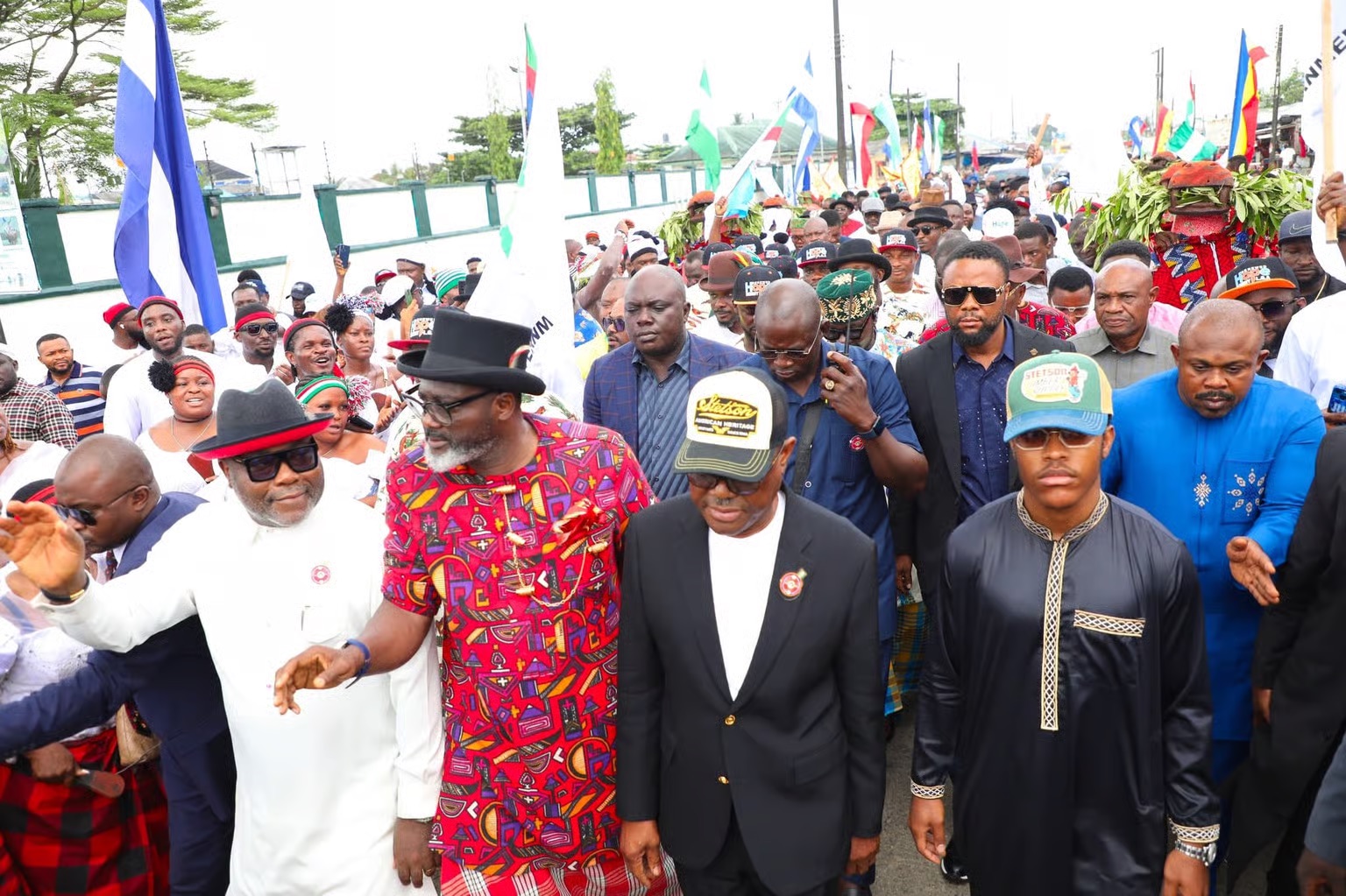
Nigeria has not entered campaign season. The Independent National Electoral Commission (INEC) has not released a timetable for the 2027 general elections. Yet across the country, politicians are already behaving as if the starting gun has been fired. Rallies are being held. Stakeholders’ meetings are multiplying. Local government tours are being dressed up as “consultations.” What should be governance has been hijacked by ambition.
At this juncture, it is expedient to unambiguously opine that the law is clear. The behavior is not. For instance, in Rivers State, Governor Nyesom Wike’s recent local government tour, complete with political choreography and partisan undertones, fits squarely into what can only be described as premature campaigning. The same applies to the gathering of APC South-East stakeholders held today, January 10, 2026, which, despite careful branding, was unmistakably political. These are not isolated incidents; they are part of a growing national pattern of politicians jumping the gun, testing the limits of the law, and daring institutions to stop them.
INEC itself has been unequivocal. As of January 2026, the commission has not released the official timetable or schedule of activities for the 2027 elections. Any document circulating online or quoted in the media is unofficial and false. INEC has publicly distanced itself from such reports and has repeatedly warned political actors to desist from early campaigning.
More importantly, the Electoral Act 2022 leaves little room for interpretation. Section 94(1) explicitly states that political campaigns shall commence “no earlier than 150 days before Election Day” and must end 24 hours before polling. With presidential and National Assembly elections scheduled for February 20, 2027, and governorship and state assembly elections for March 6, 2027, the legal campaign window is still far off. What is happening now is unlawful, no matter how cleverly it is packaged. Yet, politicians continue.
They do so because Nigeria’s political culture rewards impunity. Over the years, electoral laws have been treated less as binding rules and more as suggestions. Politicians have learned that if they move early, shout loudly, and mobilize aggressively, consequences rarely follow. The worst that usually happens is a warning, and warnings do not restrain ambition.
Governor Wike’s Rivers tour is a textbook example of how incumbency is abused under the guise of governance. Officially, such tours are framed as inspections, project assessments, or grassroots engagement. In reality, they are carefully stage-managed political outings, designed to assert dominance, send signals to rivals, and keep party structures in a permanent state of mobilization. When a sitting governor embarks on repeated local government tours amid rising political tension, it stretches credibility to claim neutrality. The same logic applies to the APC South-East stakeholders’ gathering. Stakeholders’ meetings are not illegal in themselves, but context matters. When such meetings occur well ahead of the campaign window, are heavily publicized, and are laced with endorsements, alignments, and strategic messaging, they cross the line from internal party administration into early campaigning. Calling it a “stakeholders’ engagement” does not change its political purpose.
Why is this happening? To answer the foregoing question, it is germane to opine that first; there is the race for early advantage. Nigerian politicians believe, often correctly, that visibility equals viability. Early movement is meant to intimidate opponents, attract defectors, and signal strength to financiers. Politics has become a permanent contest, with no off-season.
Second, the Electoral Act, while clear on timing, is weak on enforcement. It specifies when campaigns may start, but it does not provide robust, unambiguous penalties for early campaigning. This loophole has emboldened politicians to act first and apologize later, if they apologize at all.
Third, governance has been reduced to a sideshow. When leaders are more focused on positioning for 2027 than on delivering for 2026, citizens suffer. Roads remain unfinished. Hospitals are neglected. Schools decay. Yet politicians find endless time for meetings, tours, and political gatherings that serve no immediate public good.
INEC is not blameless in this unfolding charade. While the commission has issued warnings at consultative meetings with political parties, it has stopped short of decisive action. Observers are increasingly frustrated by INEC’s inability, or unwillingness, to confront violators head-on. A regulator that only warns but never enforces eventually becomes background noise.
The danger of allowing this trend to continue is profound. Early campaigning distorts the electoral environment, entrenches money politics, fuels political tension, and distracts leaders from their constitutional responsibilities. It also deepens public cynicism about democracy, reinforcing the belief that laws exist only for the powerless.
Nigeria cannot afford a perpetual campaign cycle. The country is grappling with economic hardship, insecurity, and institutional fatigue. This is the time for governance, not grandstanding. Political ambition is not a crime, but violating the law to satisfy it should not be normalized.
If the Electoral Act is to mean anything, INEC must move beyond warnings. Political parties must be held accountable. Governors, ministers, and party leaders must be reminded that power does not place them above the law.
Until that happens, what Nigerians are witnessing is not politics as usual, it is lawlessness in tailored suits, amplified by microphones, and justified with empty phrases. And every illegal rally, tour, or “stakeholders’ meeting” pushes the country further away from credible elections and responsible leadership.