
Africa
Can Kemi Badenoch’s De-marketing Of Nigeria Be Justified?, by Isaac Asabor

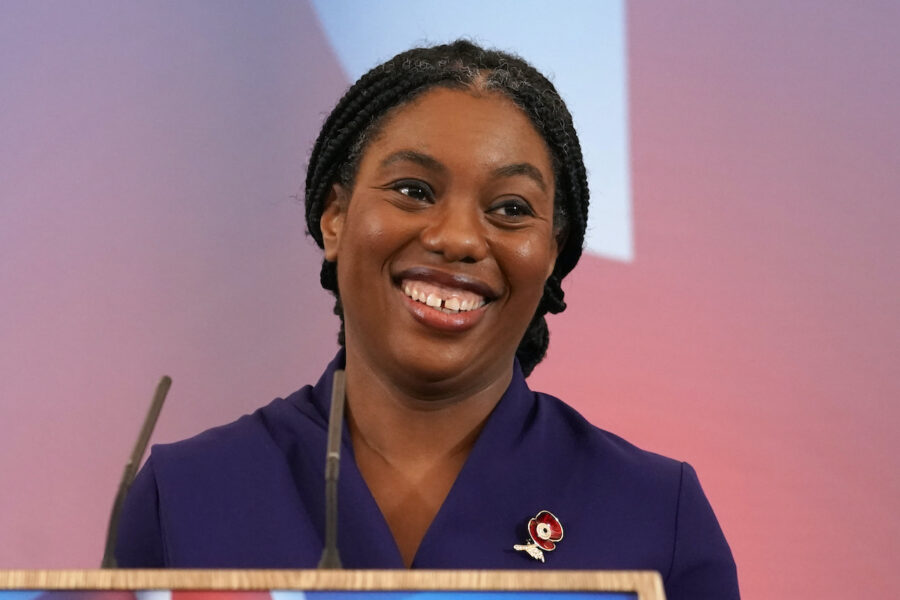
It is no more news that Kemi Badenoch, the British Secretary of State for Business and Trade, recently sparked a heated debate when she made controversial comments about Nigeria during an official engagement. Badenoch, of Nigerian descent, seemed to paint a grim picture of Nigeria, citing governance challenges, corruption, and the country’s economic struggles. While her words may have resonated with those familiar with Nigeria’s woes, they also struck a nerve, raising questions about the fairness and implications of her remarks.
But can Kemi Badenoch’s de-marketing of Nigeria be justified? To answer this, we must critically examine the context of her comments, the accuracy of her observations, and whether her criticisms align with her role as a high-ranking official in a foreign government.
Given the foregoing backdrop, it is germane to opine that Badenoch’s statements came during a speech at an international forum aimed at fostering trade and investment partnerships. Her criticisms of Nigeria’s economic and governance challenges may have been intended to emphasize the need for systemic reforms in the country, possibly as a cautionary tale for investors.
However, the setting of her comments raises questions about their appropriateness. While it is vital to acknowledge and address a nation’s flaws, airing these grievances on a global stage can inadvertently harm the country’s reputation and economic prospects. In an era where perceptions shape global investment flows, Badenoch’s remarks risk reinforcing stereotypes about Nigeria as a high-risk and unreliable investment destination.
It is undeniable that Nigeria faces significant challenges. The country grapples with widespread corruption, infrastructural decay, insecurity, and an unstable economic climate. Successive administrations have struggled to address these issues, and public trust in government institutions remains low. Transparency International consistently ranks Nigeria poorly on its corruption perception index, while the World Bank has highlighted governance inefficiencies as a critical barrier to economic growth.
Yet, despite the foregoing which Nigeria is no doubt characterized with, she is not a monolithic failure. This is as she boasts Africa’s largest economy, a burgeoning tech sector, and a youthful, entrepreneurial population. Her entertainment industry, Nollywood, is one of the largest in the world, and Nigerian music dominates charts globally. Foreign direct investment, while inconsistent, still trickles into sectors like fintech, agriculture, and manufacturing.
Badenoch’s comments appear to focus solely on Nigeria’s negatives, ignoring these significant achievements. By failing to provide a balanced perspective, her remarks risk perpetuating a one-dimensional narrative about Nigeria that does not capture its complexity.
As a British minister of Nigerian descent, Badenoch occupies a unique position. She embodies the diaspora’s contributions to global leadership while serving as a potential bridge between the United Kingdom and Nigeria. With this dual identity comes a responsibility to navigate both roles carefully.
Critics argue that Badenoch’s comments reflect a lack of sensitivity to this role. By publicly denigrating Nigeria without acknowledging its successes or potential, she risks alienating the diaspora community and Nigerians striving for progress. Her words may also give ammunition to those who wish to marginalize Africa on the global stage, reinforcing biases that undermine the continent’s global standing.
On the other hand, some defend Badenoch’s candor. They argue that sugarcoating Nigeria’s problems does a disservice to its citizens, who bear the brunt of poor governance. From this perspective, her comments could be seen as a wake-up call for Nigerian leaders to address systemic failures and foster genuine development.
Despite the support she is garnering from some Nigerians, there is no denying the fact that in international relations that diplomacy often requires a delicate balance between critique and collaboration. Unfortunately, Badenoch’s remarks lean heavily toward critique, with little indication of a collaborative or constructive approach. While it is crucial to address Nigeria’s flaws, doing so in a manner that alienates rather than engages stakeholders, both within and outside Nigeria, is counterproductive.
Constructive criticism must be framed with empathy and an eye toward solutions. For instance, Badenoch could have highlighted Nigeria’s challenges while also emphasizing the opportunities for reform and collaboration. By pointing to success stories, such as the rise of Nigerian tech startups or the nation’s resilience in the face of adversity, she could have provided a more nuanced and balanced perspective.
Without a doubt, narratives shape perception, and perception drives action. Therefore, negative narratives about Nigeria have tangible consequences. They can deter foreign investment, isolate the country diplomatically, and erode national pride. As a prominent public figure, Badenoch’s words carry significant weight. Her comments contribute to the global narrative about Nigeria, influencing how the country is viewed and engaged with internationally.
Conversely, positive narratives can inspire confidence, attract investment, and motivate citizens to take ownership of their nation’s progress. While honesty about Nigeria’s challenges is essential, it must be balanced with stories of hope and resilience to counteract the damaging effects of negativity.
Whether intentional or not, Badenoch’s remarks highlight the responsibility of public figures to consider the impact of their words. Criticizing Nigeria is not inherently wrong; indeed, accountability is crucial for progress. However, the manner, context, and tone of such criticism matter greatly.
For Badenoch, the question is not whether Nigeria deserves critique, it undoubtedly does, but whether her approach serves the best interests of Nigerians and the global community. In this case, her comments risk overshadowing efforts to foster constructive dialogue and collaboration between the United Kingdom and Nigeria.
Without a doubt, Nigeria’s challenges are real and must be addressed. However, addressing them requires a balanced approach that acknowledges both the problems and the potential solutions. Public figures like Kemi Badenoch must be mindful of their dual roles as critics and advocates, particularly when engaging with their countries of heritage.
Ultimately, the de-marketing of Nigeria is not justifiable if it perpetuates a one-sided narrative that harms the nation’s prospects. While candor is important, it must be tempered with empathy, balance, and a commitment to fostering progress. Therefore, for Nigeria to thrive, its flaws must be addressed, but so too must its strengths be celebrated.


























You must be logged in to post a comment Login