Africa
Caught Between Truth And Duty: The Ethical Crossroads Of Journalist, by Isaac Asabor

Journalism holds a powerful position in society. It informs, educates, and serves as a vital check on power. Yet, despite its role as a cornerstone of democracy, journalism is not without its ethical dilemmas, especially for those who seek to balance their faith with their professional responsibilities. At the heart of this conflict lies the tension between two distinct approaches to journalism: developmental journalism and adversarial journalism. Each has its own set of challenges, and each places journalists at a crossroads, forcing them to choose between truth and duty.
For Christians, the call to truth is non-negotiable. Scripture teaches that truth is central to faith and practice (Exodus 20:16), a principle that all Christians strive to uphold. But for journalists, truth becomes entangled in a web of professional pressures, editorial choices, and expectations from both the public and government. While journalists are tasked with reporting the truth, the realities of the profession, just like that of lawyers, often compel them to compromise, creating a tension that many find difficult to navigate.
Developmental journalism, a model that seeks to highlight national achievements and foster growth, demands a specific narrative. Practitioners of developmental journalism are often asked to paint a rosier picture than reality might suggest, sometimes even portraying the nation’s economy as thriving despite evidence to the contrary. In a country grappling with economic challenges, for instance, journalists who adopt this model might be expected to emphasize growth and stability, even when the facts tell a different story.
This expectation is not limited to journalists alone. Just as Davido, a popular Nigerian singer, has recently been labeled for his comments during an interview in America, the pressure to present a certain narrative can transcend professions. During his interview, Davido was seemingly accused of not portraying Nigeria to be in state of Eldorado. Some critics suggested that his global platform should have been used to speak more glowingly about the state of the nation. Similarly, journalists following the developmental model are sometimes expected to echo a version of national success, even when such a narrative risks obscuring pressing social and economic issues. The case of Davido highlights a broader tendency to demand loyalty to a polished, often idealized portrayal of national progress, at the cost of confronting uncomfortable truths.
But this model comes with ethical implications. For journalists of faith, presenting misleading or partial truths raises difficult moral questions. Can one genuinely say the economy is thriving when so many are struggling? Can a journalist faithfully report on the benefits of government policies when the public is not experiencing those benefits?
In this context, journalists are often caught in a dilemma: do they fulfill their duty to support national development, or do they uphold their ethical commitment to truth? When speaking the truth might harm national pride or image, the answer is not always clear.
On the other hand, there are adversarial journalists, those who view their role as standing apart from the powers that be and holding them to account. These journalists are willing to expose the truth, even when it risks damaging the reputation of government officials, powerful corporations, or society as a whole. Their job is to uncover corruption, report on injustice, and speak out when the system fails.
From an ethical standpoint, adversarial journalism aligns more closely with Christian principles. The Bible calls for justice and righteousness (Isaiah 1:17), and many adversarial journalists see their work as fulfilling this divine mandate. They understand that sometimes, exposing uncomfortable truths is necessary for the greater good. By reporting on societal wrongs, they hope to provoke change and bring about accountability.
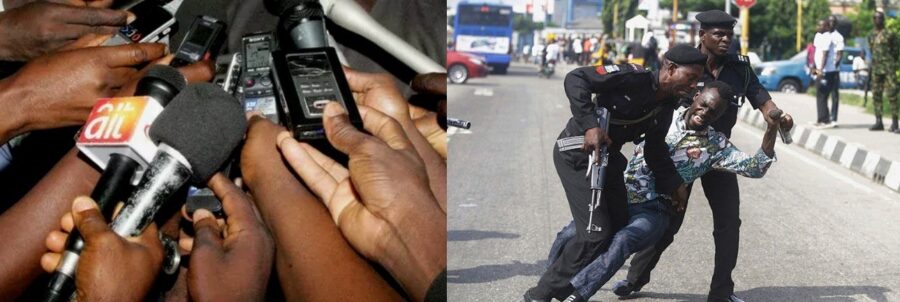
However, the path of the adversarial journalist is fraught with danger. Adversarial journalism can cost a reporter his or her career, freedom, or even his or her life. In authoritarian regimes or politically charged environments, journalists who refuse to tow the official line often face retaliation. In less extreme cases, journalists working for media outlets owned by the government, or sympathetic to it, may find their careers stifled or their jobs at risk.
For those in government-controlled media, taking an adversarial stance can be akin to professional suicide. The pressure to conform to the government’s narrative can be overwhelming, and any journalist who dares to speak out may find himself or herself marginalized or fired. In this environment, speaking the truth becomes a dangerous game, where the stakes are higher than simply reporting facts.
The dilemma faced by journalists is not unique to the media industry. In many professions, individuals are often forced to balance personal values with professional requirements. But in journalism, this conflict is particularly acute. Journalists must decide whether to prioritize their professional duty to inform the public or adhere to the ethical principles of honesty and integrity. For instance, what kind of reportage is expected from a journalist who has been promised an advertisement space?
The cost of this compromise can be steep. Journalists who choose developmental journalism over adversarial reporting may find themselves compromised by a system that encourages the distortion of facts for the sake of national unity or pecuniary gain. Those who opt for the adversarial path may risk their careers, reputation, or even personal safety.
For Christian journalists, the decision is even more profound. Their faith calls them to truthfulness and integrity in all aspects of life. But the very nature of journalism often forces them to choose between doing what is right and doing what is professionally expedient.
The dilemma is not just about ethics but about survival. Can one remain faithful to Christian principles in a profession that sometimes rewards deceit or silence? Can a journalist navigate the tension between personal integrity and professional duty without losing his or her soul?
Be that as it may, the expediency of striking a balance between faith and professionalism is not negotiable.
In fact, the key to navigating this dilemma lies in balance. Journalists can, and should, adhere to ethical guidelines that prioritize truthfulness, fairness, and transparency. The practice of journalism must always be rooted in integrity, even if it means going against the grain. But journalists also need to be strategic in their approach, especially when dealing with powerful interests.
Adversarial journalism, while important, should be practiced with care. While it is crucial to hold power to account, it is also important to provide context, avoid sensationalism, and seek constructive solutions. Likewise, developmental journalism can be a powerful tool for promoting national growth, or protecting the interest of an organization where a media house has a pecuniary interest, but it must not be used as an excuse to ignore systemic issues or suppress critical voices.
For Christian journalists, the answer is clear: Truth must always be the foundation of their work. However, they must also be mindful of the consequences of their reporting and the ethical dilemmas that arise. Journalism, like any other profession, particularly the law profession, is not without its compromises. But by adhering to a strong moral framework and seeking guidance from their faith, journalists can navigate the difficult terrain between truth and duty.
Journalism, in all its forms, demands that its practitioners confront ethical crossroads on a daily basis. The choice between developmental journalism and adversarial journalism represents a profound moral dilemma for those who seek to stay true to their profession while adhering to their faith. But the ethical challenge goes deeper than the question of which path to follow; it is about finding the courage to remain truthful, even when the consequences are steep.
For Christian journalists, the question is not just about what they report, but how they report it. Can they be faithful to their calling as truth-tellers, even when the truth is uncomfortable? Can they navigate the treacherous waters of professional compromise without sacrificing their integrity? In the end, the answer lies in their commitment to the principles of truth, justice, and righteousness, a commitment that must guide every decision they make, both as journalists and as people of faith.