
Africa
Defamation Law In Nigeria: Bridging Classroom Theory And Real-World Practice for Journalists, by Isaac Asabor

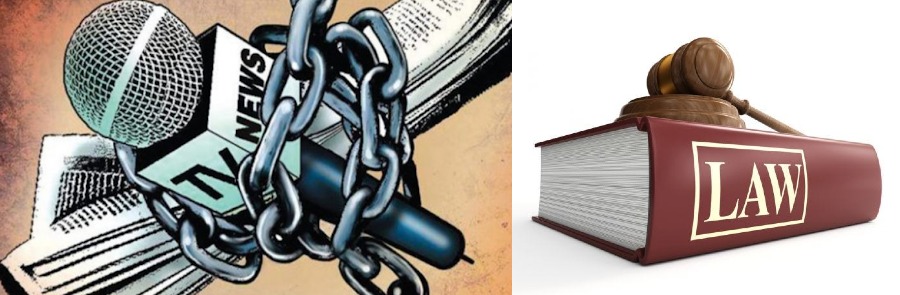
In Nigeria, the media landscape is as dynamic as it is fraught with challenges. Among these challenges, the misinterpretation and practical application of defamation laws often leave journalists in a precarious position. While theoretical understanding gained in journalism schools equips media practitioners with foundational knowledge, the realities in the field often reveal stark gaps between what is taught and how defamation law is applied.
The present case between renowned legal luminary Afe Babalola and activist Dele Farotimi, though not involving a journalist, serves as a powerful inspiration for this discussion. The defamation allegations in this case are being viewed through the prism of criminality rather than civility, a departure from what is taught in journalism classes. In journalism schools, defamation is addressed within a civil framework aimed at restitution and reputation repair, not criminalization. The handling of the Babalola-Farotimi case underscores the urgent need to critically examine how defamation laws are interpreted and applied in Nigeria.
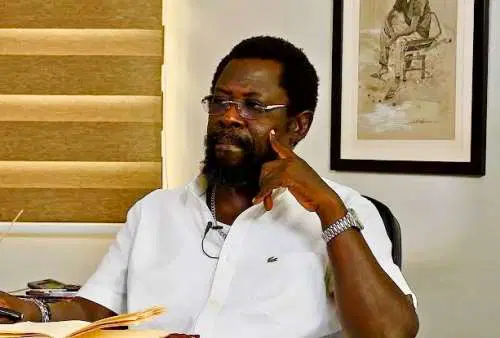
Defamation, under Nigerian law, refers to any published or spoken statement that injures the reputation of another person, exposing them to hatred, ridicule, or contempt. It is divided into two categories: “libel”, which covers written statements, and “slander”, which pertains to spoken words. In legal theory, for a statement to be deemed defamatory, it must be proven to be false, published to a third party, and damaging to the plaintiff’s reputation.
Journalism schools emphasize the civil nature of defamation cases, teaching that redress is sought through the courts to repair reputations or seek monetary compensation. Criminalizing defamation, as seen in certain Nigerian cases, deviates from these foundational principles, creating an atmosphere of fear and intimidation among journalists and other commentators.
In journalism schools, aspiring reporters are taught the importance of verifying facts, seeking the truth, and exercising caution when reporting stories that could damage an individual’s reputation. Students are also introduced to defenses against defamation, such as the truth of the statement, privilege (absolute or qualified), fair comment on a matter of public interest, and lack of malice.
These principles instill a sense of responsibility and accountability, yet the real world often presents journalists with a different and more hostile reality.
Once in the field, Nigerian journalists face a different reality. They often work in an environment characterized by inadequate legal protections, institutional corruption, and an uneven judicial system. The interpretation and enforcement of defamation laws are frequently skewed to favor the influential and powerful.
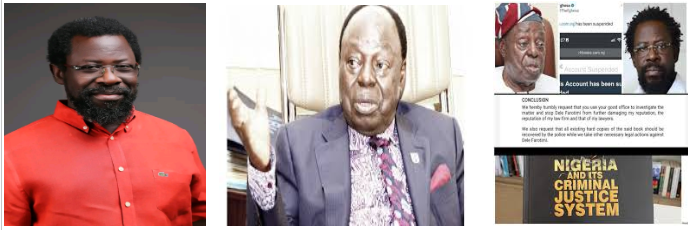
The ongoing legal battle between Afe Babalola and Dele Farotimi underscores the disparity between theoretical understanding and real-world practice. Farotimi, known for his vocal activism, has been accused of making defamatory remarks about Babalola. Instead of handling the matter civilly, as defamation cases are traditionally managed, the case has been treated with undertones of criminality.
This approach not only intensifies the ordeal for the accused but also sends a chilling message to journalists and public commentators. When defamation is treated as a criminal matter, it raises questions about the erosion of free speech and the weaponization of legal frameworks to stifle dissent.
Cases to be referenced in this context cut across that of Rufai Oseni and the N5 Billion Libel Suit, “People Gazette and the Malami Report”, and “Agba Jalingo’s Prolonged Legal Battle”.
Detailing the foregoing cases, it is germane to explain in this context that Arise TV journalist Rufai Oseni faced a N5 billion lawsuit from Ogun State Governor Dapo Abiodun over comments questioning the governor’s qualifications. This case exemplifies the disproportionate financial claims often leveraged to silence journalists.
In a similar vein, an investigative report implicating Nigeria’s Attorney General, Abubakar Malami, led to threats of legal action, despite being evidence-backed. The threat of lawsuits like this stifles investigative journalism and undermines public interest reporting.
Also, Cross River State journalist Agba Jalingo faced both defamation and cybercrime charges for his critical reports on the state governor. The drawn-out legal proceedings highlight how defamation laws can be weaponized to deter critical reporting.
Against the foregoing backdrop, it is not a misnomer to opine that challenges Journalists face in practice are varied, and manifest in the form of cost of legal defense. This can be explained from the perspective of the fact that the financial burden of defending against defamation lawsuits often cripples journalists and media houses, leaving them vulnerable to coercion or settlements.
Looking at the issue from the perspective of lack of legal knowledge, it is germane to opine that not a few journalists lack a deep understanding of how to navigate legal disputes, exposing them to exploitation by litigants.
In a similar vein is the weaponization of the law as defamation laws are frequently wielded as tools of intimidation, particularly by the powerful, to suppress unfavorable reports.
Also, is weak institutional support, and this can be seen in Journalists who often face legal battles alone, as media organizations and unions fail to provide adequate backing.
Without a doubt, there is the need for reform. In fact, the cases highlighted above, particularly Afe Babalola versus Dele Farotimi, show the urgent need for reforms in the interpretation and application of defamation laws.
Given the foregoing, recommendations in this context include enhanced legal training. Therefore, Journalism schools should include practical workshops on defamation law, featuring legal professionals to prepare journalists for real-world scenarios.
In a similar vein, media organizations and unions must create frameworks to provide legal assistance to journalists by providing Pro-Bono legal support.
Also, there is need for judicial reform, and to achieve this, Nigerian courts should prioritize distinguishing valid defamation claims from those designed to harass journalists.
Close to the foregoing is the entrenchment of law review. This is as a review of Nigeria’s defamation laws is necessary to ensure alignment with international best practices that balance free speech with protection against reputational harm.
In fact, there is the need for media accountability. Meaning, Journalists must adhere to ethical standards, including fact-checking and fairness, to avoid genuine defamation claims.
The gap between theoretical understanding and real-world application of defamation laws poses significant risks to free speech and journalism in Nigeria. Cases like Afe Babalola versus Dele Farotimi expose the tendency to weaponize the law, moving away from its intended purpose as a civil remedy. Bridging this gap requires systemic reforms, stronger institutional support, and a renewed commitment to ethical journalism. Only then can Nigerian journalists effectively fulfill their watchdog role without fear of undue legal intimidation.






















You must be logged in to post a comment Login